Thursday, August 13, 2026



News and Views from the Global South
Q&A: 'Multicultural Society Can't Be Dissolved Like a Marriage'
Interview with Rachida Azough, creative director of Kosmopolis Netherlands
- "This looks like a toothpaste commercial. People in the Netherlands don't buy that." Rachida Azough shows a flyer of the European Union to promote the European Year of Intercultural Dialogue. It depicts a model with a bright smile holding a camera, with the tag line 'Cultures in my street'.
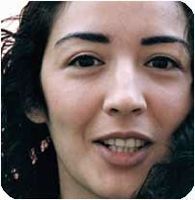
Rachida Azough Credit:
IPS: For every member state, the programme for the European Year is geared towards that country's specific situation, although some promotion materials are distributed integrally. So why wouldn't this flyer work? And what would?
Rachida Azough (RA): This almost cliché image of happily living together does no longer work in the Netherlands. People have become extremely critical of our multicultural society. In the past seven years, I have seen the debate on assimilation grow harsher, and the general attitude toward immigration change. That is why we have themed the European Year 'Together Forever' here. It conveys the message that in this increasingly globalised and transcultural world, you need to accept that you have to live together, whether you like it or not. This multicultural society is not like a marriage you can dissolve. We might have our differences and problems, but let's work together in a positive way towards solving them.
IPS: One of the most recent projects of Kosmopolis is 'The dialogue bomb'. This film is a compilation of harsh quotes expressed by all sorts of public persons in the Dutch media. What is its goal?
RA: Edited in sequence the film shows how sensational the public debate has become in recent years. Not only did we see tighter policies on immigration and things as civic integration examinations for newcomers, but also a more general right-wing climate in which it has become acceptable to use firm language. But the result is that people in the media just shout and offend other groups. How constructive is it to keep referring to a group of 'Moroccan troublemakers' in derogatory terms? It's like a parent wanting to get a kid to do something by screaming constantly at it. Sometimes I am sitting in front of the TV, completely flabbergasted. The tolerance that has characterised Dutch society for so long seems to be completely gone. It really upsets me. Holland used to be known for its freedom and tolerance, things to be really proud of.
IPS: In 2000, there were about 1.4 million non-western immigrants living in the Netherlands, compared to 1.76 million on January 1st 2008. This is not a tremendous absolute growth, but as you pointed out, the tone of the debate on the multicultural society has shifted enormously. How can this be explained?
RA: It has something to do with the power of the number. We had migration streams for centuries, nothing new in that respect. But the diversity of migrants has grown, they don't come from Europe as they did in past centuries. And the pace of recent migration streams has grown in the past decade. Add the mediatisation of this phenomenon, and it is as if people suddenly open their eyes and become fearful and nostalgic.
Of course, our society has really changed. I see problems that weren't there when I was a child. As second generation immigrants we were still 'these cute newcomer kids' which held a lot of promise. Now, there is more segregation in certain neighbourhoods where children don't learn how to speak decent Dutch anymore, because they only speak with each other. We don't have real ghettos in the Netherlands, but it is still hard to break away from this environment. Education should play a more prominent role in changing this.
IPS: What role can Kosmopolis play in changing this climate?
RA: Our name, Kosmopolis, refers to cosmopolitanism, worldliness, and a love and interest for other cultures. By that we mean all cultures. Too often, projects to foster understanding were well meant, but too one-sidedly geared towards immigrants. Cultural diversity means more than just ethnicity, we believe. Our projects involve all people, Dutch-born, foreign-born, young, old, gay, straight, everyone.
Our projects should add positive voices to the debate, say things about our society that really surprise people. 'Alter Ego' for example, is a pan-European multidisciplinary art competition in which young people make double portraits of themselves and someone of another ethnic or social group, age, sex or nationality. But we are critical too. We use the power of art and culture as a means to confront. 'Symphony Arabica' is the musical piece of a Dutch composer which was performed with musicians from Palestine, the Netherlands, Syria, Lebanon and Jordan.
IPS: Does Kosmopolis focus mainly on young people?
RA: Our projects are for everyone, but we try to give young people something to be proud of. I really wonder what this negativity in the media does to younger children of immigrants. Those kids are Dutch, and want to live here. As a country you estrange a part of your own population. As a reaction young people develop a kind of defensive attitude, which is based on survival. But it must be hard, to always feel you have to explain or justify yourself. What do we achieve with this 'us' and 'them' coming from both groups all the time?
Kosmopolis doesn't try to paint a brighter picture, the reality is beautiful enough. I don't deny there are problems, but those are really no reason to talk in disparaging ways to each other. Let's start by changing that.
 Print
|
Print
|