Languages
Friday, September 18, 2026



News and Views from the Global South
Analysis
US/IRAQ: Sadr Offensive Shows Failure of Petraeus Strategy
The escalation of fighting between Mahdi Army militiamen and their Shiite rivals, which could mark the end of Moqtada al-Sadr's self-imposed ceasefire, also exposes Gen. David Petraeus's strategy for controlling Sadr's forces as a failure.CHINA: Seeking Economic Route to Taiwan Reunification
China is betting that a formula of economic rapprochement with the self-ruled island of Taiwan would advance its ultimate goal of political re-unification better than emphatic claims of sovereignty hammered home by Beijing.RUSSIA: Price Fuels Gas War
A renewed Russian-Ukrainian gas conflict has been provisionally averted, but as Ukrainian politicians struggle for control of the gas sector, the next months are likely to bring more price wars.POLITICS-PAKISTAN: New Gov’t to Resume Dialogue With India
The installation of a democratically-elected government in Pakistan promises a new chapter in Indo-Pakistan relations, likely after the stalled bilateral dialogue process between New Delhi and Islamabad resumes in April.LEBANON: Hopes of Peace from Lords of War
The pages of Lebanon's history are drenched in blood. And, more than 30 years after the start of the 1975 civil war, Lebanese factions are still pitted against each other in a confrontation with a recurring sectarian dimension amidst a volatile regional context.POLITICS-US: McCain’s Gaffes Reflect Bush’s Iran-Qaeda Myth
Sen. John McCain's confusion in recent allegations of Iranian training of al Qaeda fighters in Iraq is the result of a drumbeat of official propaganda about close Iran-al Qaeda ties that the George W. Bush administration and neoconservatives have promoted ever since early 2002.KOSOVO: Irredentist Ripples Spread Out
While the world wonders whether Kosovo's proclaimed independence will indeed constitute a precedent, its initial effects on other frozen conflicts in Europe are beginning to be felt.TURKEY: Ruling Party Risks 'Closure'
After four military interventions since 1960, another elected Turkish government risks being overthrown - this time by the judiciary.WORLD WATER DAY-SOUTH AFRICA: Celebrations in the Midst of Crisis?
South Africa is currently celebrating Water Week (Mar. 17-23) to coincide with World Water Day on Mar. 22. The week also coincides with a national crisis in confidence about the ability of government to provide citizens with safe drinking water.INDIA/US: New Deal in Nuclear Poker
As the political window of opportunity to conclude the United States-India civilian nuclear cooperation deal during George W. Bush’s presidency further narrows, the "now-it’s-off, now-it’s-on" game of political poker over the agreement has taken another turn in New Delhi.POLITICS: Why Did the U.S. Invade Iraq?
So why, exactly, did the U.S. invade Iraq five years ago this week?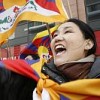
POLITICS: Tibet Bypasses Security Council Scrutiny
When the Security Council is called upon to deal with a crisis that threatens the political, military or economic interests of any of its five permanent members, the U.N.'s most powerful body acts predictably: it does nothing.IRAQ: Five Years, And Counting
Devastation on the ground and largely held Iraqi opinion contradicts claims by U.S. officials that the situation in Iraq has improved towards the fifth anniversary of the invasion Mar. 20.PAKISTAN: Cafe Bombing – Fallout of Musharraf’s Pro-US Policy
As Pakistan's new parliament meets for its inaugural session on Monday legislators must ponder over a wave of bomb attacks, the latest of which killed one weekend diner and injured 12 others at an Italian eatery in the capital, frequented by Westerners.
RIGHTS-CHINA: Tibet Protests Won't Slow Olympic Torch
A crackdown on Tibetans protesting against Chinese rule over their Himalayan homeland - in the ancient capital of Lhasa and other Tibetan cities - is beginning to parallel the brutal suppression of the 1989 Tiananmen pro-democracy demonstrations.MIDEAST: More Settlements, More Unsettled
The decision this week by Israeli Prime Minister Ehud Olmert to allow resumption of the construction of hundreds of housing units in a West Bank settlement is yet another blow to already faltering Israeli-Palestinian peace talks.MEDIA-MALAYSIA: Bloggers On Opposition Benches
The presence of five bloggers on opposition benches in Malaysia’s newly elected parliament must be galling for the ruling National Front (NF) coalition, which was returned to power in Saturday’s general elections minus its long-held two-thirds majority.LEBANON: Political Crisis Set to Worsen
Soon after the U.S. destroyer USS Cole was deployed off Lebanon's shore Feb. 28 to "preserve political stability", a group of young men gathered around in the embattled agricultural town Qana in south Lebanon, and voiced their fears.ECONOMY: Globalisation 'Localises' Inequality
Is the big North-South-divide finally diminishing? It seems to be, though slowly.ECONOMY: Market Heating Up the Globe
One way to look at the climate problem is through the lens of the market. If you do, only one conclusion is possible - the climate change problem is a massive market failure, a failure of market mechanisms to factor in future costs of a change in climate in real time prices.ECONOMY: Save the Market from Market Forces
Neo-liberalism is slowly fading away. That is, if we define neo-liberalism as an ideology that steadily wants to reduce and belittle the role of government, and promote ever freer markets.« Previous Page — Next Page »


The Week with IPS

NEXT STOP - SDGs
Tracking global progress towards a sustainable world
Tracking global progress towards a sustainable world
