Languages
Sunday, November 8, 2026



News and Views from the Global South
Opinion

India Promotes South-South Cooperation, but Key Questions Unaddressed
At his speech at the United Nations Convention to Combat Desertification (UNCCD) summit in Delhi, Prime Minister Narendra Modi emphasised South-South cooperation and technology solutions, but issues of land ownership dog the ongoing negotiations. As the second week of the UNCCD Conference of Parties (COP) kicked off in Delhi, Indian Prime Minister Narendra Modi highlighted South-South cooperation and issues of land degradation.
The Costs of Heightened Conflict in the Himalayas
As a series of conflicts in the Hindu Kush Himalayan region come into sharp focus, sidelining local populations, the long-term environmental costs may leave the region degraded, poor and desperate.
Civil Society Urges Inclusive, Resilient & Sustainable Urban Areas of the Future
The United Nations held its first major international conference in one of America’s mountain states, bringing scores of civil society organizations (CSOs) to discuss ways on making “cities and human settlements inclusive, safe, resilient and sustainable by 2030.”
Culture of Peace Takes Big Stride as UN Observes 20th Anniversary of Norm-Setting 1999 Decision
It has been a long, arduous journey – a journey ridden curiously with obstacles and indifference. Two decades have passed by since the UN General Assembly (UNGA) adopted, by consensus and without reservation, its landmark and norm-setting resolution 53/243 on the Declaration and Programme of Action on a Culture of Peace in 1999.
Kashmir: How Modi’s Aggressive ‘Hindutva’ Project has Brought India and Pakistan to the Brink – Again
August is immensely important in the history of the Asian subcontinent, marking the month that India and Pakistan gained independence from the British in 1947. Now, in 2019, it has once again proved momentous, when, ten days before India’s Independence day celebrations, prime minister Narendra Modi’s government revoked the autonomy of Indian-administered Kashmir – a status provided for under the Indian Constitution.
What Research Reveals about Drivers of Anti-immigrant Hate Crime in South Africa
Mobs have attacked foreign-owned businesses on the streets of at least three South African cities in recent days. This has caused outrage across Africa. There have even been retaliatory attacks. The South African government, under pressure to protect her large international migrant community, quickly defused the attacks.
Is America Defeated in Afghanistan?
Following the 11 September 2001 terrorist attacks on American soil, the United States and their allies went to Afghanistan to “smoke out” Osama bin Laden and his Taliban protectors. The most fundamental primary mistake was to let all terrorists flee to Pakistan instead of sealing the border and capturing their main figures.
Is There Discrimination Against Women in Healthcare in India?
In an inaugural lecture at the Radcliffe Institute at Harvard University, Amartya Sen began with a swipe at Queen Victoria who complained to Sir Theodore Martin in 1870 about & quote: this mad, wicked folly of 'Woman's Rights’ ", as in her rarefied world nobody could trample upon her rights. The world has of course changed dramatically and women’s rights are widely acknowledged but injustices persist. Our concern here is with health injustices that are widely prevalent in India. These take multiple forms: female foeticide, widespread morbidity and denial of access to good quality healthcare until a critical condition develops. Our focus here is on vulnerability of women to non-communicable diseases (NCDs) and their limited access to good quality healthcare in India.
Women in Politics: Adornments and Witches
Some world leaders try to prove their alpha male status by presenting attractive and submissive wives as tokens won in virile scrambles with other potent stags. A recent example of such puerile machismo was exposed in a twitter battle between the Brazilian president Jair Bolsonaro and his French equivalent Emmanuel Macron. Since taking office in January, Mr Bolsonaro has railed against what he considered to be foreign meddling in Brazilian environmental politics. Wild fires raging in the Amazonian rain forest have generally been blamed on a rampant deforestation said to be endorsed by Bolsonaro´s regime. Emmanuel Macron tweeted a photo of burning Amazonian forestland with the comment: ”Our house is burning. Literally.” Bolsonaro reacted immediately and accused Macron of supporting an international alliance intending to take control over Amazonia while treating Brazil like a ”colony”. Bolsonaro twittered:
Sri Lanka Faces Major Challenges on UN’s 2030 Development Agenda
On the road to sustainable development, Sri Lanka provides an interesting case study. Having overcome a three-decade domestic conflict, Sri Lanka has begun its transformation towards a sustainable and resilient society. The extreme poverty rate ($1.90 a day) dropped to 0.8 per cent in 2016. The unemployment rate is below 5 per cent since 2010.
They Call it Multistakeholderism. Where Does That Leave the UN?
Global governance is slipping away from the United Nations. Whether it is in managing the Internet, where the UN’s governing structure offers only an advisory role for governments; or climate change, where the most exciting actions are now corporate-led partnerships outside the UN Framework Convention on Climate Change; or the Gates Foundation-sponsored Gavi, The Vaccine Alliance, which is in a tug of war with the World Health Assembly on who sets health policy in developing countries, the institutional basis for global decision-making is changing.
Ensuring Fairer International Corporate Taxation
Large transnational corporations (TNCs) are widely believed to be paying little tax. The ease with which they avoid tax and the declining corporate tax rates over the decades have deprived developing countries of much needed revenues besides undermining public faith in the tax system.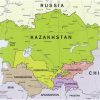
Central Asia Has Always Been Important for Europe
The EU has presented a new strategy for Central Asia. The first one has been adopted in 2007 and revised in 2015. Where do you see improvements?
Animal Welfare: Where Does India Stand?
We have the potential to lead the world in animal welfare, but the tendency to look at the issue in a vacuum has prevented this movement from being taken seriously.
Why Governments Must Prioritise Sustained Tobacco Control Investment in Low- & Middle-Income Nations
Trends in global consumption of cigarettes haven’t improved since the World Health Organization’s (WHO) Framework Convention on Tobacco Control (FCTC) came into force, according to a study published in the British Medical Journal (BMJ) earlier this summer.
Ugandan Students Turn Waste to Wealth
Namugongo is a lush, forested community in central Uganda where tall trees are home to colourful birds and noisy monkeys. The community has a tragic place in history: on 3 June 1886, 22 Ugandan Christian converts were publicly executed, on the orders of King Mwanga II of the Buganda Kingdom, in an attempt to ward off the influence of colonial powers with whom the Christians were associated.
Reimagining ‘Crazy Rich Asians’ as Social Commentary on Inequalities in Asia-Pacific
It’s 1962, and in a modest Hong Kong neighborhood, a poetic love story unfolds. Filmed almost twenty years ago, Wong Kar-wai’s seminal movie In the Mood for Love captured the world’s imagination about lifestyle in the region.
The Arctic: Earth´s Last Frontier
The last frontier for utilizing and maybe even exhausting Earth´s natural resources is opening up in the Arctic and some of the world´s wealthiest nations are trying to secure their piece of the cake. Some act openly, others are more secretive – recently one of the competitors entered the game in a remarkably unwieldy manner.
Triumph of the Right is Changing the World Order
The crisis of regional and multilateral institutions goes hand in hand with the international rise of right-wing populism. In the US, the UK, Russia, Italy, Poland, Hungary, Turkey, the Philippines and Brazil, we are experiencing the rise of right-wing populist politicians who throw headline-grabbing barbs at global compromises and the negotiating processes of supranational institutions such as the UN.
Our Food Systems Need Transformation
The right to food is a universal human right. Yet, over 820 million people are going hungry, according the latest edition of the State of Food Security and Nutrition in the World (SOFI 2019). In addition, 2 billion people in the world are food insecure with great risk of malnutrition and poor health” 1.
Let the World’s Future Not Turn into Ashes
With the record rate blaze in the Amazon that struck Indigenous communities, the world is confronted by a humanitarian crisis in the midst of an ever-worsening political-economic condition.« Previous Page — Next Page »





The views expressed in these articles are those of the authors and do not necessarily represent the views of, and should not be attributed to, IPS-Inter Press Service

The Week with IPS

NEXT STOP - SDGs
Tracking global progress towards a sustainable world
Tracking global progress towards a sustainable world
