Languages
Sunday, November 8, 2026



News and Views from the Global South
Opinion

‘Born A Refugee, I Dream of a Place Called Home’
I am a refugee, born to a refugee family. I was granted that status on the day I came into this world. I was not aware of what had happened before then. I did not fight any battle, I did not threaten anyone. I did not even choose my own race or ethnicity. I just came to this world to find myself a displaced person.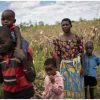
SDGs, Currently Off-Track, Need Bold Decisive Action
It has been four years since governments agreed on the most ambitious set of international commitments to fight poverty and inequality to date. The Sustainable Development Goals (SDGs), otherwise known as the Global Goals, are ‘a universal call to action to end poverty, protect the planet and ensure that all people enjoy peace and prosperity.’ The goals ambitiously aim to “Leave No One Behind.”
An Economic No-Brainer: Empower Women, Empower Economies
As the first woman to lead the International Monetary Fund (IMF), and a leader in advocating for increased investment and action toward gender equality, Christine Lagarde helps Deliver for Good explore the steps needed to build sustainable financing & economic opportunities for girls and women.
As Sudan Struggles, AU Should Press for Justice and Accountability
On June 6, the African Union (AU) suspended Sudan from the 55-member group with “immediate effect.” The move came in response to a deadly crackdown on peaceful protesters in Khartoum, in which government forces, led by the paramilitary Rapid Support Forces (RSF), tore through a sit-in in the capital killing at least 108 people, and wounding hundreds. The AU’s decisive action has been widely applauded, but suspending Sudan is not enough.
The Importance of the Upcoming FAO Election
With each passing day, the world gets just a little smaller as the internet and cell phones bring our communities together, reveal our shared challenges, and lay bare our failures. As global citizens, we are all concerned about the growing number of hungry people around the world and the threats to food security. The simple fact is that more than 800 million people go hungry every day, and if that number shocks you, know that experts predict the number to grow significantly over the next ten years.
Let’s Train Humans First … Before We Train Machines
We humans are at the absurd stage in our technological evolution when we seem to have abandoned our common sense. Billions are spent by governments, corporations and investors in training computer-based algorithms (i.e. computer programs) in today’s mindless rush to create so-called “artificial” intelligence, widely advertised as AI.
The Art of the Deal: What Trump May Teach Us
A friend of mine who became wealthy as an art dealer but eventually lost his fortune told me: "Money isn´t everything, but it helps." This made me think of Donald Trump, who likes to describe himself as an entrepreneur, i.e. ”owner of a business enterprise who, by risk and initiative, attempts to make profits."1 The keyword is profits. According to Trump, success is measured through wealth. Like chess and poker, entrepreneurship is about winning and losing. Trump characterizes people he dislikes as losers, while he considers himself to be a winner.
South Africa’s First Carbon Farm
Land restoration could attract large private investments in the fight against climate change over the coming decades, if Governments and the United Nations put the right incentives and conditions in place.
U. S. Backing for Heated Tobacco Products Triggers Misrepresentation
The U.S. Food and Drug Administration’s (FDA) decision authorizing the sale of Philip Morris International (PMI)’s heated tobacco system, IQOS, in the United States inadvertently puts a foot in the door to increase sales of new tobacco products in the developing world.
Dignity & Strength for Venezuelan Refugees & Migrants in Colombia
Not long ago, 15-year-old Nelsmar attended a middle-class school in central Venezuela. That was before her family was uprooted by the economic and humanitarian crisis in her country, which has pushed nearly 3.9 million persons to migrate or flee, according to recent estimates of the Coordination Platform for Refugees and Migrants from Venezuela.
The Storm is Over, But in Southern Africa, Cyclone Idai Continues to Rage for Women and Girls
In late March Cyclone Idai carved a path of devastation across Zimbabwe, Mozambique, and Malawi. It was the deadliest cyclone to hit the region in more than a century, others have even referred to it as “Africa’s Hurricane Katrina.” More than 1,000 people were killed. Many more saw their homes, food crops, and even entire villages washed away.
Developing Technologies for Zero-Carbon Economies
Never before has half a degree (0.5C) meant so much for humanity. We are behaving as if we have time to deal with climate change. We don’t. The main problem is that we believe we must sacrifice growth and prosperity for the sake of decarbonisation. We don’t.
Driving Financialization
The emergence and growth of financialization from the 1980s has been driven by several factors operating at various levels – national and international, ideological and political, and of course, technological. The 1971 collapse of the Bretton Woods (BW) international monetary system arguably paved the way for financial globalization.
Wealth and Power: Andrej Babiš and Donald J. Trump
When I recently visited the Czech Republic I noticed an increasing Czech opposition against their wealthy Prime Minister. Andrej Babiš has been endowed with the nickname Babisconi since he, like the former Italian Prime Minister Silvio Berlusconi, is accused of purchasing and using various means of communication for his own propaganda purposes. Apparently, this endeavour has so far been quite successful, since according to my Czech friends Babiš is still popular among a majority of their compatriots.
Championing Social Changes: A Tale of Two Women
This is the story of two women who are positively transforming social norms in their respective societies, as part of the global movement towards gender equality.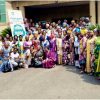
A Journey from a Small-Scale Farm to International Stage
As a wife and mother in Nigeria who wanted to support my family and my community, I began my own farm in 2006. When I began, I never could have dreamed that just cultivating the earth would someday lead to my meeting government leaders, and traveling to meet other women from around the world doing their part to make a difference in their own communities.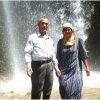
UN Says Kyrgyz Journalist Should be Freed
On a recent morning in Bazar-Korgon, southern Kyrgyzstan, Khadicha Askarova was giving hasty instructions to her daughter about what needed to be packed.
OGP-APRM Collaboration A Positive Step for Good Governance in Africa
When two high profile governance initiatives strategically collaborate, the expected intent is to effect significant outcomes. Thus, the universe of democratic governance – lately buffeted by adverse winds of nationalism, intolerance and other threats – should take a keen note of the memorandum of understanding between Open Governance Partnerships (OGP) and Africa’s flagship governance programme, the African Peer Review Mechanism (APRM), sealed on the sidelines of the just concluded 6th Convening of the Open Government Partnership (OGP), in Ottawa, Canada.
Restoring Our Degraded Planet
On the 1st of March 2019, we saw one of the rare moments in history when the entire world comes together and agrees on a joint way forward. The United Nations General Assembly recognized the urgent need to tackle the compounded crisis of climate change and biodiversity loss, and passed a resolution to proclaim 2021-2030 as the UN Decade on Ecosystem Restoration. With the aim to restore at least 350 million hectares of degraded landscapes by 2030 – an area the size of India – the UN Decade is a loud and clear call to action for all of us. And it is a great opportunity for the UN-REDD Programme and its partner countries to build on 10 years worth of relevant experience with safeguards, impactful policies and measures, and attracting private and public investments.
Mothers in the US Are Dying: What Are We Doing to Save Them?
The maternal mortality rate in the United States is the highest of any developed country – and the rate is rising. The US is currently the most dangerous place to give birth in the developed world.
What Standardised Testing Doesn’t Tell Us About Learning
When we look at learning outcomes for children, we only look at standardised tests, ignoring any indigenous knowledge, language, or problem solving strategies they might have.« Previous Page — Next Page »





The views expressed in these articles are those of the authors and do not necessarily represent the views of, and should not be attributed to, IPS-Inter Press Service

The Week with IPS

NEXT STOP - SDGs
Tracking global progress towards a sustainable world
Tracking global progress towards a sustainable world
