Languages
Thursday, July 23, 2026



News and Views from the Global South
Opinion
The Fallout from Losing a UN Job
Ten years ago, I lost more than a job. When my post was abolished, there was no warning, no closure, no golden parachute—just a quiet erasure. Overnight, I went from a UN professional with decades of service to an invisible statistic in a system that eats its own.
Israel’s Attack on Iran and Its Potential Fallout
Israel’s attack on Iran’s nuclear facilities may be justified if one takes Netanyahu’s explanation at face value. I doubt, however, if he and Trump have fully considered the ominous regional ramifications of the attack and whether negotiations to limit Iran’s nuclear program would have led to much more positive results.
Ocean Protection is a Multi-Billion Dollar Opportunity
The services the ocean provides are the backbone of our collective health, wealth and food security, yet today just 2.7% of the ocean has been assessed and deemed to be effectively protected. In failing to establish adequate safeguards, not only are we condemning communities and ecosystems across the world to decline and collapse, we are also overlooking a significant economic opportunity.
Weaponizing Food Worsens Starvation
Wars, economic shocks, planetary heating and aid cuts have worsened food crises in recent years, with almost 300 million people now threatened by starvation.
El Salvador: Bukele’s Authoritarianism Goes Global
At a White House meeting, presidents Nayib Bukele and Donald Trump exchanged praises and joked about mass incarceration while discussing an unprecedented agreement: the USA would pay El Salvador US$6 million a year to house deportees – of any nationality, potentially including US citizens – in its Centre for Terrorism Confinement (CECOT), a notorious mega-prison. This agreement marked the evolution of Bukele’s authoritarian model from a domestic experiment to an exportable commodity for strongmen worldwide.
Private Sector Key to Unlocking the Future of Development
Geopolitical tensions – from deepening rivalries between major powers to regional conflicts – have placed acute pressure on the international development agenda. Development assistance from major funders has been on the decline. The world is becoming more unpredictable.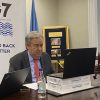
Biggest-Ever Aid Cut by G7 Members a Death Sentence for Millions of People
Aid cuts could cost millions of lives and leave girls, boys, women and men without access to enough food, water, education, health treatment. G7 countries are making deliberate and deadly choices by cutting life-saving aid, enabling atrocities, and reneging on their international commitments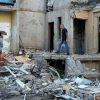
Military Conflicts at Historic High as US Signals Retreat from World Stage
The world is experiencing a surge in violence not seen since the post-World War II era. 2024 marked a grim new record: the highest number of state-based armed conflicts in over seven decades.
Beating Plastic Pollution in Our Food Systems
Each year, more than 12.5 million tonnes of plastic are used in agriculture alone, and another 37 million tonnes become food packaging. Very little gets recycled.
Why Are We Failing to Protect Gaza?
During President Trump’s tour of Gulf monarchies last month, he mentioned Gaza only two times. The first time was in Doha, when he expressed his desire to make Gaza a “freedom zone.” Gaza’s 2.1 million residents, nearly half of whom are children, would like that, too.
Pandemic Agreement: Important Step but Big Decisions Deferred
When the next pandemic strikes, the world should be better prepared. At least, that’s the promise states made at the World Health Organization’s (WHO) World Health Assembly on 19 May when they adopted the first global pandemic treaty. This milestone in international health cooperation emerged from three years of difficult negotiations, informed by the harsh lessons learned from COVID-19’s devastating global impacts.
Older Men and Women Living Longer
Older men and women are now living longer than ever before. Across the globe, individuals who reach old age can expect to have more years of life ahead of them than in previous generations. However, these additional years of life, coupled with the disparities among and within countries, including variations between older men and women, present substantial economic, social, and political challenges for societies.
What Can We See About Climate Change in Macroeconomic Data?
Year by year researchers improve and deepen our understanding of economic activity. The primary example, and probably the most commonly used, is the detailed data and analysis available on gross domestic product (GDP).
How to Spur Economic Growth in Africa’s Fragile and Conflict-Affected States
More than half of sub-Saharan Africa’s population lives in fragile and conflict-affected states (FCS)—economies that face profound challenges such as stagnant economic growth, weak institutions, inadequate public services, extreme poverty, war, and forced internal displacement.
Is There a Case for UN Optimism?
On April 16, Seton Hall University's School of Diplomacy and International Relations hosted UN General Assembly President Philemon Yang as part of its World Leader Forum.
Why we Must Put Ocean-Positive Solutions at the Heart of Global Development
The ocean is far more than a vast expanse of water; it is a cornerstone of life and a critical driver of sustainable development. The intricate relationship between human development and the ocean underscores why ocean governance and sustainability are pivotal to global progress. Its significance becomes particularly evident in Small Island Developing States (SIDS), where the ocean is not just a resource but an intrinsic part of identity and survival.
Why the UN Staff Union Does Not Agree with the High Commissioner’s Expensive & Poorly-Managed Project
Like you, we attended last week’s townhall where UN High Commissioner (for Human Rights) Volker Turk presented his latest plans for moving staff out of headquarters. We note that this project has been carried out without adequate consultation with the staff union. The key points we learned and which we are concerned about:
Portugal: No Longer an Exception to Europe’s Far-right Rise
For decades, Portugal stood as a beacon of democratic stability in an increasingly unsettled Europe. While neighbours grappled with political fragmentation and the rise of far-right movements, Portugal maintained its two-party system, a testament to the enduring legacy of the 1974 Carnation Revolution that peacefully transitioned the country from dictatorship to democracy. It was long believed that Portugal’s extensive pre-revolution experience of repressive right-wing rule had effectively inoculated it against far-right politics, but that assumption is now demonstrable outdated. An era of exceptionalism ended on 18 May, when the far-right Chega party secured 22.8 per cent of the vote and 60 parliamentary seats, becoming the country’s main opposition force.
Why the World Bank Should Lift Its Outdated Ban on Nuclear Energy
On June 10, the World Bank’s board will meet to consider lifting an outdated ban on nuclear energy – one that has remained in place for decades despite the growing global need for clean, reliable electricity.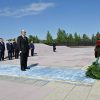
Kazakhstan’s Path From Tragedy to Tolerance: Interfaith Dialogue, Peace, and Disarmament
On the windswept steppe west of Astana, President Kassym-Jomart Tokayev led a solemn ceremony this week to mark Kazakhstan’s Day of Remembrance for the Victims of Political Repressions and Famine—an annual reflection on one of the nation’s darkest chapters.
Rethinking Digital Platform Design: A Systems Approach
A better internet that supports democracy rather than undermines it is possible. In 2025, we stand at a crossroads in the digital era. Our platforms have become the new public squares, but rather than fostering democracy and dignity, many are optimized for manipulation, division, and profit. The Council on Technology and Social Cohesion's "Blueprint on Prosocial Tech Design Governance" offers a systems-level response to this crisis.
« Previous Page — Next Page »


The views expressed in these articles are those of the authors and do not necessarily represent the views of, and should not be attributed to, IPS-Inter Press Service

The Week with IPS

NEXT STOP - SDGs
Tracking global progress towards a sustainable world
Tracking global progress towards a sustainable world
