Languages
Wednesday, July 22, 2026



News and Views from the Global South
Opinion

Trump Undresses Rival Trade Myths
President Trump’s tariffs have exposed neoliberal trade ideology and undermined corporate lobbying in the name of free trade. But his rhetoric has also exposed the fallacies of his own economic strategy.
When Life-Saving Treatment Disappears: The Coming Crisis in Child Malnutrition
On July 1st, USAID officially shuts down and transfers operations to the U.S. State Department. Amid growing uncertainty about the future of U.S. foreign assistance structures and funding, supply chains that deliver life-saving treatment to malnourished children worldwide have broken down, triggering a global nutrition crisis.
Mexico’s Judicial Elections: A Democratic Mirage
On 1 June, Mexico made history by becoming the only country in the world to elect all its judges by popular vote, from local magistrates to Supreme Court justices. This unprecedented process saw Mexican voters choose candidates for 881 federal judicial positions, including all nine Supreme Court justices, plus thousands at local levels across 19 states. Yet what the government heralded as a transformation that made Mexico the ‘the most democratic country in the world’ may turn out to be a dangerous deception.
The Demographic Struggle Over International Migration
Approximately 1.3 billion people, or 16% of the world’s population, wish to leave their country permanently, while over a billion people believe that fewer or no immigrants should be allowed into their countries. This demographic struggle between the two sides over international migration is causing significant social, economic, and political repercussions for nations and their citizens.
UN80: Beyond Disposable Staff Distracting Reforms Restoring UN Effectiveness
In an era defined by the gig economy and pervasive job insecurity, advocating for permanent contracts within the United Nations might seem anachronistic, even counterintuitive.
Fixing the House the World Built: A Realistic Plan for UN Reform
I’ve spent much of my life in the machinery of international development, navigating acronyms, crises, and committee rooms with stale coffee. Through it all—amid war zones, climate summits, and remote island consultations—one institution has remained constant: the United Nations.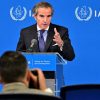
Iran— Deja Vu All Over Again
Chest thumping “Mission Accomplished” claims by President Trump that he ordered the world’s biggest conventional bombs to be dropped on a sleeping nation of 90 million people, were premature. To top it off he bragged that Iran’s nuclear capacity was devastated and that the whole nation fired “not a single shot” back.
Managing Underdevelopment: What Two Decades of ODA Debt Reveal
Imagine investing US$14 billion, or even slightly less, to achieve universal literacy in 17 African countries where more than half the adult population still cannot read or write . Pair that with another US$36 billion to connect Africa’s landlocked nations through 12,000 kilometres of new railway lines along priority transport corridors.
Poland’s Democratic Deadlock
Poland’s embattled Prime Minister Donald Tusk emerged bruised but still standing after his government survived a parliamentary vote of confidence on 11 June. He’d called the vote, which he won by 243 to 210, just days after the presidential candidate of his Civic Platform (PO) party suffered an unexpected defeat.
Why Peacebuilding Needs a New Global Agenda
 It has been 33 years since peacebuilding was formally recognized within the United Nations system, by the then UN Secretary-General Boutros-Ghali, who defined it as a long-term structural work aimed at preventing the recurrence of violence, setting the stage for the UN’s ongoing efforts to address the root cause of conflict and not just its consequences. “Post-conflict peacebuilding is the action to identify and support structures which will tend to strengthen and solidify peace in order to avoid a relapse into conflict,” Boutros-Ghali said.

Now is the Time to Remake International Financing
Leaders heading to the 4th International Conference on Financing for Development taking place in Sevilla, Spain, from 30th June to 3rd July, know full well that they are operating in a moment of crisis.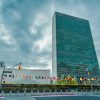
Less Investment, Less Aid: How FDI Shortfalls are Hurting Global Relief Efforts
The world is losing interest in investing in others, especially when it comes to humanitarian aid. Foreign Direct Investment (FDI) has slowed to critical levels, weakening emerging markets and further slowing growth across developing nations.
“Slash and Burn” Approach to UN Reforms Under Fire
“We are writing to you regarding the cuts being undertaken under the UN80 Initiative and, more broadly, across the UN system. While we are mindful of the current funding challenges, we believe that the rushed and chaotic manner in which these changes are being implemented is causing deeper harm to both the effectiveness and reputation of the United Nations.
Time to Redesign Global Development Finance
Can the Fourth International Conference on Financing for Development (FFD4) be a turning point? The stakes are high. The international financial system—so important to each and every one of us—feels out of reach and resistant to change, because it is deeply entrenched in unjust power imbalances that keep it in place. We deserve better.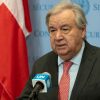
Bombing Iran Is Part of the USA’s Repetition Compulsion for War War War
Twenty years ago, one day in June 2005, I talked with an Iranian man who was selling underwear at the Tehran Grand Bazaar. People all over the world want peace, he said, but governments won’t let them have it.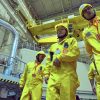
The Path to Peace Between Israel and Iran
A deal between the US and Iran is possible if Iran’s bottom line -- its right to nuclear enrichment -- and Israel’s bottom line, guarantees that Iran will never have a nuclear bomb are met. This “win-win” outcome would require Donald Trump’s personal engagement. With weapons turned to plowshares, Trump would be considered for the Nobel Peace Prize.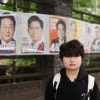
South Korea‘s Democracy Renewed
On a resounding 79.4 per cent turnout, South Korean voters have delivered a clear mandate for change. Lee Jae-myung of the centrist Democratic Party of Korea (DPK) decisively won the 3 June election, becoming the country’s new president after a turbulent time for South Korean democracy.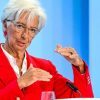
Euro-visions: A Larger Global Role for the Euro?
In a recent speech, Christine Lagarde, president of the European Central Bank (ECB), articulated a clear desire for the euro to play a more significant role as an international currency.
From Deterrence to Disarmament: Global Advocates Call for Justice and Peace
Marking 80 years since the dawn of the nuclear age, peace advocates, diplomats, educators, and atomic bomb survivors from around the world gathered for the “Choose Hope” symposium on March 12–13, 2025, in Santa Barbara, California. Co-organized by the Nuclear Age Peace Foundation (NAPF) and Soka Gakkai International (SGI), the event was held at the Music Academy of the West.
The Cost of Conservation—How Tanzania Is Erasing the Maasai Identity
On the vast plains of Tanzania’s Ngorongoro Conservation Area (NCA), the sight of young Maasai men in bright shawls, wielding sticks as they herd cattle, has long symbolized peaceful coexistence with nature. These herders, moving in harmony with zebras and wildebeests, are inseparable from the landscape. But today, that very identity—nurtured for generations—is under siege.
Time to Rethink Health Financing: It’s Not Just a Public Sector Concern
As G7 leaders of the world’s wealthiest nations wrapped up their summit in Kananaskis June 16, a critical issue was absent from the agenda: the future of global health financing.« Previous Page — Next Page »


The views expressed in these articles are those of the authors and do not necessarily represent the views of, and should not be attributed to, IPS-Inter Press Service

The Week with IPS

NEXT STOP - SDGs
Tracking global progress towards a sustainable world
Tracking global progress towards a sustainable world
