Languages
Wednesday, September 16, 2026



News and Views from the Global South
Opinion
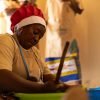
Cooking up Success: Solar Kitchen Initiative Aims to Expand Access to Clean Energy in Angola
Access to energy is essential for sustainable development, but for many rural communities, it’s still out of reach. In Angola, according to the 2019-2020 agricultural census, most rural villages lack access to electricity.
A Lasting Peace Between Israelis and Palestinians
Following the long-sought cease-fire agreement between Israel and Hamas, the major challenge for the Israelis and the stateless Palestinians is how to achieve a lasting peace that will end the disastrous cycle of death, destruction, displacement and despair.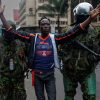
Kenya’s Shadow War on Activism
Kenya’s young protesters are paying a high price for speaking out. Last June, a protest movement led by first-time activists from Generation Z emerged in response to the government’s Finance Bill, which would have introduced sweeping tax increases. The government quickly withdrew its plans, but protests continued, articulating anger at economic strife, elite corruption and out-of-touch politicians. The government’s response has been violent. Police have used batons, teargas and water cannon against protesters. On the worst day of violence, 25 June, when some protesters attempted to storm parliament, police fired live ammunition. Over 60 people were reported killed during the protests. At least 1,200 were reportedly arrested.
The “Fierce Urgency of Now”– to Reverse Course in Haiti
As we commemorated Dr. Martin Luther King Jr.’s Day on January 20, 2025—a day that also marked America welcoming its newly elected president—we honor the legacy of this civil rights leader by reflecting on his powerful words: “We are confronted with the fierce urgency of now.”
How Artificial Intelligence Will Affect Asia’s Economies
Asia-Pacific’s economies are likely to experience labor market shifts because of artificial intelligence (AI), with advanced economies being affected more. About half of all jobs in the region’s advanced economies are exposed to AI, compared to only about a quarter in emerging market and developing economies.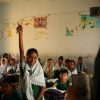
A New Chance to Expand Children’s Access to Education
The International Day of Education, January 24, reminds us of the power of education to transform children’s lives, and to build vibrant, sustainable societies.
Could Trump Really Blow up the Global Trade System?
Trump’s trade policy blends aggressive tariffs, legal manoeuvring and transactional diplomacy. But could he really blow up the global trade system?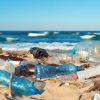
Let the Kite Fly High
The global plastics negotiation process, launched in 2022 under a resolution by the UN Environment Assembly, represents an unprecedented effort to combat the escalating plastic pollution crisis.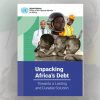
Rethinking Africa’s Debt: Debunking Myths and Identifying Sustainable Solutions
To achieve the Sustainable Development Goals (SDGs) and Agenda 2063 aspirations, Africa requires an additional $1.3 - 1.6 trillion in financing.
Food Systems Worsen Diets, Health
Corporate-dominated food systems are responsible for widespread but still spreading malnutrition and ill health. Poor diets worsen non-communicable diseases (NCDs), now costing over eight trillion dollars yearly!
Still Hopes for a Future Plastic Treaty– But it Won’t be Easy
The last few weeks of 2024 were a disappointment for those who strongly believed that planet Earth is in need of bold actions. First, there were the frustration stemming from what could be defined at minimum as unconvincing outcomes of both COP 16 on Biodiversity and COP 29 on Climate.
Africa & Europe Must Join Forces to Protect Our Ocean by Pressing Pause on Deep Sea Mining
Deep-sea mining may not be on the official agenda next week at the World Economic Forum in Davos (January 20-24), but restoring public trust in international cooperation is.
The Reckless and Dangerous Misogyny of Zuckerberg and Musk
In anticipation of Donald Trump’s inauguration his gold-studded Florida estate, Mar-a-Lago, is at the heart of political power games, where influential businessmen like Mark Zuckerberg and Elon Musk are positioning themselves as key players in his orbit. Apparently unfazed by legal controversies and scandals, Trump is preparing for his return in collusion with already powerful men, who in their pursuit of personal gain and political influence reflect a disturbing trend of billionaire oligarchy merging with politics. A worrying development that might have significant consequences for the future of free speech and women’s rights.
Farmer’s Bill: A Reprieve for U.S. Farmers Affected By PFAS
The use of fertilizers has been introduced in society to enrich soil and supply high-grade harvests for centuries. As time went on, humans have managed to develop new ways to reform this operation, and as such, have formed a lessened health risk fertilizer called “biosolids”.
Ghana a Contender for BRICS+ Alliance
With heightening geopolitical interest in building a new Global South architecture, Ghana's administration is considering joining the 'partner states category' of BRICS+, an association of five major emerging economies (Brazil, Russia, India, China and South Africa).
Israel’s Genocide in Gaza
Despite the denials by the Israeli government and some of its supporters, Israel’s genocide against the Palestinians in Gaza is evident.
The Davos Disconnect
"It was the best of times; it was the worst of times." Charles Dickens is more relevant today than ever. The wealthy and powerful are meeting again this year in glamorous Davos, at an invitation-only event. They arrive in chartered aircraft and private jets to speak about our warming climate, among other global concerns.
Remittances Vs Philanthropy – a Development Practitioner’s Perspective
Across Africa, economic transformation and development are being fuelled by two significant streams of funding: remittances and philanthropy. Both play vital roles, but as the situations evolve in many African countries, one truth becomes increasingly clear – remittances are emerging as a more sustainable, dignifying force compared to traditional philanthropy.
The Fall of Assad is a Cautionary Tale of Blowback
A regime built on terror, ruled by fear and sustained by foreign proxy forces crumbled in less than a fortnight. In the end, the foundations of the House of Assad (1970–2024) rested on the shifting sands of time. In the good ol’ days, despots could retire with their plundered loot into comfortable lifestyles in Europe’s pleasure haunts. No longer. The reverse damascene expulsion has seen the Assads scurry to safety to Moscow.
How US Media Hide Truths About the Gaza War
A few days before the end of 2024, the independent magazine +972 reported that “Israeli army forces stormed the Kamal Adwan Hospital compound in Beit Lahiya, culminating a nearly week-long siege of the last functioning hospital in northern Gaza.”
The Year 2024: Hopes & Despairs
Thank God, we have survived another year of genocide, war, destruction and climate crisis. The passing year of 2024 has been a mixture of hope and despair. It began with some hope as the International Court of Justice (ICJ) ruled in favour of South Africa’s case against Israel for committing genocide and ordered Israel to take all measures within its power to prevent the commission of all acts within the scope of Article II of the Genocide Convention, and to take immediate and effective measures to enable the provision of urgently needed basic services and humanitarian assistance to address the adverse conditions of life faced by Palestinians in the Gaza Strip.« Previous Page — Next Page »


The views expressed in these articles are those of the authors and do not necessarily represent the views of, and should not be attributed to, IPS-Inter Press Service

The Week with IPS

NEXT STOP - SDGs
Tracking global progress towards a sustainable world
Tracking global progress towards a sustainable world
