Languages
Wednesday, September 16, 2026



News and Views from the Global South
Opinion
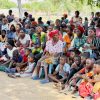
Namibia’s Drought Crisis: Building Resilience for Women and Girls
Communities in the Kavango West region of northern Namibia have firsthand experience of the severe impacts of climate change. The dry, cracked soil and emaciated livestock provide a constant reminder of the lack of access to water in this part of the country.
Imperialism (Still) Rules
Many in the West, of the political right and left, now deny imperialism. For Josef Schumpeter, empires were pre-capitalist atavisms that would not survive the spread of capitalism. But even the conservative Economist notes President Trump’s revival of this US legacy.
Decoding Africa’s Energy Journey: Three Key Numbers
At night, when the world lights up, large swathes of Africa remain cloaked in darkness—a stark reminder of the continent’s lack of reliable access to electricity.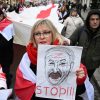
Belarus: A Sham Election That Fools No One
Alexander Lukashenko will soon begin his seventh term as president of Belarus. The official result of the 26 January election gave him 86.8 per cent of the vote, following an election held in a climate of fear. Only token opposition candidates were allowed, most of who came out in support of Lukashenko. Anyone who might have offered a credible challenge is in jail or in exile.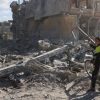
Forcing Palestinians Out of Gaza is A Recipe for Unimaginable Disaster
Even after Trump declared that he wanted to take back the Panama Canal, acquire Greenland by force, if necessary, and rename the Gulf of Mexico to the Gulf of America, I could not, like many others, imagine that his madness could reach a new unfathomable height.
The Challenge of the “Carbon Aristocracy”
For centuries, innumerable countries were ruled by an entrenched, typically inherited, political class: the “aristocracy.” The term comes from the Ancient Greek words “aristos”, meaning best, and “kratia,” meaning power. As a result of long and hard-fought democratic struggles, these aristocracies have largely dwindled worldwide (albeit, not everywhere).
Tax the Super-Rich. We have a World to Win
Why can’t there be education for every child? Why can’t there be healthcare for everyone who needs it? Why can’t everyone be freed from hunger and deprivation? Though these are promised to all as rights, people are repeatedly told that there is no money.
Why Trump’s Tariffs Can’t Solve America’s Fentanyl Crisis
Americans consume more illicit drugs per capita than anyone else in the world; about 6% of the U.S. population uses them regularly. One such drug, fentanyl – a synthetic opioid that’s 50 to 100 times more potent than morphine – is the leading reason U.S. overdose deaths have surged in recent years. While the rate of fentanyl overdose deaths has dipped a bit recently, it’s still vastly higher than it was just five years ago.
Trump’s Confrontational Domestic and Foreign Policy Defy his “America First” Agenda
In less than two weeks in office, Trump issued scores of reckless executive orders that ironically will gravely undermine rather than enhance his “America First” agenda and America’s global leadership.
Benin: An African Pioneer
Benin faced a number of negative spillovers in 2022: a deteriorating regional security situation at its northern border, the lingering scars of COVID-19, and higher living costs amid the war in Ukraine.
Venezuela: The Democratic Transition That Wasn’t
Venezuela stands at a critical juncture as Nicolás Maduro begins a controversial third term as president. His 10 January inauguration, following a post-election period marked by widespread protests against election fraud and heightened repression, represents a significant setback for democratic aspirations in a country devastated by years of economic collapse and political oppression. Maduro’s confirmation at the helm is the latest chapter in a decades-long process that has transformed Venezuela from a beacon of leftist democratic aspirations into a full-blown authoritarian regime, where the last shred of legitimacy – popular election – has now vanished.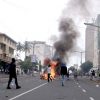
Mozambique: Two Presidents, One Divided Nation
No illusions: Mozambique remains in crisis, despite the inauguration of Daniel Chapo as president and the establishment of a new parliament. While the widespread allegations of massive electoral fraud during the elections on 9 October 2024 were the immediate trigger for the unrest, the protests revealed deeply entrenched socio-economic and political grievances.
America’s Scourge: An Ageing Elderly Population
Many Americans, especially the wealthy and successful, have discovered that the US is facing the scourge of an ageing elderly population that is seriously threatening the nation’s prosperity, economic growth and international standing.
Can We Still Solve Climate Change?
When it comes to climate change, the awful news has been coming thick and fast. We now know that in 2024, the Earth’s average temperature exceeded 1.5°C above pre-industrial levels for the first time.
The Road to and from Wuhan: Is Trump a Threat to Global Health?
On his first day in office, President Donald Trump signed an executive order withdrawing the U.S. from the World Health Organization (WHO) – a move experts say makes the U.S. and other countries less safe from infectious diseases and other public-health threats. It might thus be opportune to return to the global COVID 19 pandemic. Has the threat really gone away? Can something similar not erupt again?
Safeguarding Civil Society – a New Global Initiative Could Become a Game-Changer
Across the world, civil society faces increasing pressure—from restrictive laws on civil society operations to digital surveillance, funding restrictions, and direct attacks on human rights defenders. In response, a global civil society coalition is stepping up. The newly launched European Union System for an Enabling Environment for Civil Society (EU SEE) spans 86 countries, equipping civil society actors, governments and other stakeholders with the data, tools, and resources needed to anticipate and respond in real time to shifts in the enabling environment—ensuring that civil society can thrive, freely express itself, and actively shape its context.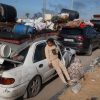
Genocide 2.0—Trump’s Plan for Cleansing Gaza
Either the new US President, Mr. Trump, is ignorant of international law or thinks he’s so brilliant that he doesn’t care about it. Either way, he seems to have stumbled into proposing an extension of Israeli Prime Minister Netanyahu’s clearly documented crime of genocide by suggesting that somebody “clear out” the people in Gaza, in effect advocating the ethnic cleansing of the territory.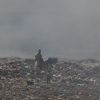
Can We Still Solve Climate Change?
When it comes to climate change, the awful news has been coming thick and fast. We now know that in 2024, the Earth’s average temperature exceeded 1.5°C above pre-industrial levels for the first time.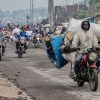
Greed and Cynicism Fuel Rwanda’s War in DRC
The fresh offensive by the M23 rebels and Rwanda forces in Eastern Democratic Republic of the Congo (DRC) coincides with the first anniversary of the Memorandum of Understanding (MOU) signed between the European Union (EU) and Rwanda to cooperate on the supply of “critical minerals.”
Longing for EU
Good news! For two years now every single UK poll has shown a majority now want to return to the EU. Of course they do, since every reliable source shows the continuing damage done by Brexit in almost every sphere. Those promised ‘Brexit benefits’ are nowhere to be seen.
An ‘Exorbitant Privilege’ for All?
Ending US dollar dominance alone will not end monetary imperialism. Only much better multilateral arrangements to clear international payments can meet the Global South’s aspirations for sustainable development.« Previous Page — Next Page »


The views expressed in these articles are those of the authors and do not necessarily represent the views of, and should not be attributed to, IPS-Inter Press Service

The Week with IPS

NEXT STOP - SDGs
Tracking global progress towards a sustainable world
Tracking global progress towards a sustainable world
