Languages
Thursday, October 1, 2026



News and Views from the Global South
Opinion

May the Race for Climate Justice Leader Begin
Super-charging efforts and setting a fresh direction for the next phase of climate policymaking is what’s urgently needed and on offer this month during the 78th UN General Assembly in New York, as mass heat waves, devastating wildfires, fatal floods, and withering droughts continue to wreak havoc across continents.
Hunger in East Africa Is a True Testament to Climate Injustice
From 2017, Shamso Isac has helplessly witnessed the demise of all her sources of income. Failed rain seasons and dried-up water sources meant a lack of pasture, which led to the death of her livestock. Widespread hunger exacerbated by rising food costs forced her to relocate to Burlhedi internally displaced persons camp in Baidoa in the Southwest state of Somalia. She recalls walking for weeks seeking a place she could get food for her family. When her child asks for something to eat or drink, she has nothing to offer; all she can do is cry, overwhelmed by the utter hopelessness she feels.
UN’s Protocol & Liaison Service Geared for High-Level Meetings of World Leaders
When heads of state, heads of government and top diplomats from around the globe flock to New York for high-level week beginning September 19, it marks the culmination of many months of intensive preparation for the United Nations Protocol and Liaison Service.
A New Center In The Time of The Brave
In the years when Mexico did not have a general law against human trafficking, there existed an evil man known as "El Osito" (“The Little Bear”). His alias could mislead those who heard of his criminal record: he was a ruthless pimp, devoid of any trace of kindness in his body, who claimed to collect kidnapped women to exploit their bodies.
Finally, a Real Chance for International Tax Cooperation
After decades of resistance by rich nations, African governments successfully pushed for the United Nations to lead on international tax cooperation. All developing countries and fair-minded governments must rally behind this initiative.
NDB Spotlight: The Lesotho Highlands Water Project – Who Benefits?
The Role of the New Development Bank in Monitoring Project Impacts on Communities The 15th BRICS Summit held in Johannesburg, South Africa this month has once again put the spotlight on the Lesotho Highlands Water Project (LHWP) as a shining example of multilateralism and the New Development Bank’s (NDB)commitment to financing sustainable development projects within BRICS countries and other developing countries. During the 2023 BRICS Summit, the New Development Bank and the Trans-Caledon Tunnel Authority (TCTA) signed a 3.2 billion Rands loan agreement for the implementation of Phase Two of the Lesotho Highlands Water Project (LHWP) in Lesotho. This funding complements contributions by other financiers, notably the African Development Bank (AfDB) and the Development Bank of Southern Africa (DBSA).
Africa’s Potential: Leading Food System Transformation and Climate Resilience
When a continent with 65% of the world’s arable land struggles to feed its 1.4 billion people, we know something is wrong. The African and global food systems need a rethink. The urgent and pressing need to address a more productive, transparent, equitable food system, poverty and the far-reaching effects of climate change requires us to forge alliances among diverse stakeholders and sectors.
Civil Society Organizations Unite to Urge Public Development Banks to Change the Way Development Is Done
In the midst of a complex web of crises, spanning climate change, biodiversity depletion, constraints on civic space and mounting debt burdens, civil society organizations and human rights defenders from over 50 countries have united their voices to call for immediate and impactful action from Public Development Banks (PDBs).
‘I am because you are’ – Climate Justice Through the Spirit of Ubuntu
The Africa Climate Summit 2023 is expected to start with renewed hope. In its 60+ years of post-independence history, Africa has contributed around 3% of Green House Emissions, accounts for approximately 2.6% of global trade, and less than 3% of the world’s GDP in 2021.
New Challenges in Agriculture in the Face of the El Niño Phenomenon
The climatic phenomenon known as "El Niño" is intensifying its presence worldwide. Projections are not favorable for the countries of the Latin America region. Below-normal rainfall is expected in Honduras, Guatemala, El Salvador, Nicaragua, northern Venezuela, Colombia, Bolivia, inland Peru, Guyana, and Suriname.
The Case for Climate Justice
If you’ve never seen a landslide before, it’s a terrifying force of nature. Those who have found themselves in the thick of this phenomenon say the earth beneath your feet suddenly begins to give way, the ground cracks open, and large masses of soil, rocks, and debris come crashing down. It is as if the very ground you stand on is rebelling against the changing climate and its impact on the delicate balance of the environment.
Africa Climate Summit: A Critical Opportunity for Collective Action on Climate Change
As an African, I have seen first-hand the devastating effects of climate change. I have met communities displaced by floods in Malawi, Mozambique and Zimbabwe. I have spoken to farmers from Northern Kenya who have lost their crops to drought. These experiences have made me acutely aware of how urgent it is to address the climate crisis.
What Niger’s Coup Says About US Security Assistance in the Sahel
In what has become an all too familiar phenomenon, U.S.-trained security personnel have been implicated in the July 26th coup that deposed Niger’s democratically elected president, Mohamed Bazoum.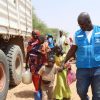
Want to Prevent Atrocities? Think Locally. Act Locally
When I first travelled to the Middle Belt of Nigeria, I listened to harrowing tales of murdered family members, physical injury, sexual violence, displacement, and hopelessness. In the years that have passed, these stories have only continued to stack up.
From Challenges to Solutions: Unleashing Africa’s Potential for Achieving SDGs
September 2023 marks the halfway point to the deadline for achieving the 2030 Agenda and the Sustainable Development Goals (SDGs). Yet, globally we are still far off-track, and Africa is only halfway towards achieving the SDGs, with nearly 600 million Africans still lacking access to electricity and 431 million people living in extreme poverty.
UN Financing Appeal Last Hope for SDGs and Climate?
The United Nations Secretary-General’s Dialogue on Financing for Development on 20 September may well be the world’s last chance to save the Sustainable Development Goals (SDGs) and curb global warming in time.
Guatemala: Change Within Reach
On 20 August, Guatemala witnessed a rare event: despite numerous attempts to stop it, the will of the majority prevailed. Democracy was at a dramatic crossroads, but voters got their say, and said it clearly: the country needs dramatic change and needs it now.
Digging Africa Deeper into Hunger
Annual Green Revolution Forum ignores widespread failure of its push for industrialized agriculture
As the adage goes, when you find yourself stuck in a hole, stop digging. As African leaders and their philanthropic and bilateral sponsors prepare for another glitzy African Green Revolution Forum, convening September 5-8 in Dar es Salaam, Tanzania, they are instead handing out new shovels to dig the continent deeper into a hunger crisis caused in part by their failing obsession with corporate-led industrialized agriculture.

Africa Climate Summit: Time for Tangible, Impactful, & Accountable Climate Action
African leaders, public officials, and private-sector executives will converge in Nairobi, September 4-6, at the Africa Climate Summit (ACS) – coinciding with the UN Africa Climate Week (ACW). In recent years, Africa has been the poster child for climate solutions, with carbon credit and offset projects gaining popularity among the public and private sectors alike.
Two Years after the Taliban Took over, More Should Be Done to Rescue Afghanistan
His name is Matiullah Wesa, a girls education campaigner who now symbolises the “war” waged by the Taliban against the education and empowerment of women and girls. Exactly two years since the Taliban took over, Afghanistan is on a downward trajectory and unfortunately, global attention that was drawn by families chasing planes to flee a few days after the Taliban assumed control of the government has waned over the last two years.
Empowering Asia’s Farming Communities through Inclusive Business
When Lisa Huyen first set up her company, Vinasamex, which specializes in certified organic cinnamon and star anise grown in the mountainous and poorer provinces of Viet Nam, she faced daunting challenges including market access and securing financial support from banks.« Previous Page — Next Page »


The views expressed in these articles are those of the authors and do not necessarily represent the views of, and should not be attributed to, IPS-Inter Press Service

The Week with IPS

NEXT STOP - SDGs
Tracking global progress towards a sustainable world
Tracking global progress towards a sustainable world
