Languages
Wednesday, October 7, 2026



News and Views from the Global South
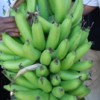
AFRICA: Modified Banana Could Cure Deadly Disease
An innovation by researchers in Nigeria could be a cure for the devastating Banana Xanthomonas Wilt (BXW) - responsible for annual losses in excess of 500 million dollars of crop across East and Central Africa. But it has also fuelled debate on the genetic engineering of crops in Africa.Doubts Over Zimbabwe Diamonds
Three days of tense deliberations by members of the Kimberley Process have failed to reach consensus on whether diamonds from Zimbabwe's Marange fields should be certified as conflict-free. Zimbabwe has already announced that it intends to resume exports of the precious stones immediately.Artists Refuse Silence on Zimbabwe Atrocities
In a bold attempt to stoke public debate on national healing, an art exhibition is challenging the government to publicly acknowledge one of the most hideous episodes in Zimbabwe's history.Broken Promises on Zimbabwe Press Freedom
Fourteen months after Zimbabwe's government of national unity was formed, harassment, arbitrary arrest and general intimidation of journalists remains common.Savings Spurned in Zimbabwe Water Purification
Zimbabwe spends an estimated 100 million dollars a year importing aluminium sulphate for water treatment plants. But a local entrepreneur has developed a technique to extract the needed compound from kaolin and flint clays abundantly available within the country.
ZIMBABWE: Water Scarcity No Obstacle To Bulawayo Farmers
A project in Zimbabwe's second city, Bulawayo, is creatively using "marginal water" to ease water scarcity while helping residents provide food and earn a living.POVERTY-ZIMBABWE: Multiple Appeals to Support Zimbabweans
While food is readily available in shops and some political and economic stability is returning in Zimbabwe, vulnerable groups such as children and people living with HIV and AIDS still face a shortage of food.
AFRICA: Could Regulation Ease Fears Over Land Grabs?
The 'land rush' across Africa by international investors should be regulated to protect smallholder farmers from deals that could leave them landless and hungry.
DEVELOPMENT: ‘Global Poverty Is Not Acceptable’
The economic crisis is a fresh reason to meet Millennium Development Goal targets, not an excuse to miss them, said European Commission president Jose-Manuel Barroso, opening the dialogue at the fourth edition of the European Development Days (EDD).
ZIMBABWE: Water Rationing Looms in Bulawayo
Bulawayo city council is to tighten a water rationing programme relaxed last year because residents are rapidly pushing up the city's daily consumption by using municipal water supplies for non-domestic activities.RIGHTS-ZIMBABWE: An Old Question Returns: What Peace Without Justice?
Today is the first of three days dedicated to national healing in Zimbabwe. For the man charged with steering reconciliation in Zimbabwe after the recent bloody struggle for power, it is walk down a familiar path.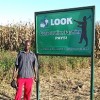
ZAMBIA: Conservation Agriculture Gaining Ground
Not even the least alert of drivers can miss the sign along the busy road 30 kilometres south of Lusaka: "Look, Conservation Farming Pays!"
Q&A: Why Sanitation Is the Forgotten Sister
As part of the International Year of Sanitation in 2008, Zimbabwe developed a national strategy for sanitation, launched in February 2008. Just five months later, a cholera outbreak that was to claim over 4,000 lives began.MEDIA-ZIMBABWE: Promises But Little Action on Press Freedom
While journalists welcomed a pledge by the government to reform the country’s closed media space, fears run deep over a horde of laws that continue to make Zimbabwe a media minefield where a ‘wrong’ story can land a journalist behind bars.
ZIMBABWE: Recognise Rights of Gays and Lesbians
Zimbabwe is trying to rebuild itself as a nation where rights to freedom of expression and association are protected. Amongst the chorus of voices raised in support of a new constitutional order are the country's gays and lesbians.RIGHTS-ZIMBABWE: Journalists Spurn Govt Summit on Press Freedom
Media organisations this week dug in their heels over boycotting a national media conference in the resort town of Kariba. State-owned media reported that the much-postponed conference finally opened on May 8, with information minister Webster Shamu lamenting the deep divisions within the media fraternity in Zimbabwe.DEVELOPMENT-SOUTHERN AFRICA: Helping the Most Vulnerable Households
A new tool to accurately measure the vulnerability of rural households to the impact of shocks such as the illness or death of a household member from AIDS has been developed by a Southern Africa regional policy network, the Food Agriculture and Natural Resources Policy Analysis Network (FANRPAN).
ZIMBABWE: Researchers Developing New Ways to Purify Water
Scientists at Bulawayo's National University of Science and Technology (NUST) have embarked on research to develop simple and affordable water purification methods, as more than a billion people live without safe drinking water in developing countries.CLIMATE CHANGE-AFRICA: Trade Carbon for Food Security
Forget the view of climate change as impending catastrophe for a moment: if negotiators can recognise sustainable agriculture by African smallholders and forests as mitigating factors in climate change, carbon trading could become an important support for Africa's food security.
Q&A: "I Smell A Fantastic Aroma"
As Africa and the rest of the world seek to end the current food crisis - which could get worse with the flu sweeping across global financial markets - it is time Africa made gains from the food crisis.
AGRICULTURE: A Better Banana For Africa
With the eyes of a predator and attention to detail of a master craftsman, Benjamin Maina combs the 100-acre Khosla plantation for fallen banana trees. The good health of this crop is everything to the many people whose lives depend on trading banana -– the best selling fruit in the world.« Previous Page — Next Page »





The Week with IPS

NEXT STOP - SDGs
Tracking global progress towards a sustainable world
Tracking global progress towards a sustainable world
