Languages
Wednesday, October 14, 2026



News and Views from the Global South

Urban Settlers Battle Evictions
Informal settlers on prime land in Papua New Guinea’s capital, Port Moresby, are now living under tarpaulin shelters amid the debris of their homes after two attempted evictions to make way for a luxury waterfront development. Undefeated, residents are now preparing a court case to challenge the legality of a lease issued to a commercial developer on land designated as a National Park.
Mangroves Lead Battle Against Rising Seas
Sea level rise near Papua New Guinea, a Small Island Developing State (SIDS) in the southwest Pacific, is estimated at seven millimetres per year, double the global annual average of 2.8-3.6 mm.
Women and Children Look to Community Justice
A new community justice programme being rolled out in Papua New Guinea’s vast village court system is bringing international human rights-based laws to rural communities and boosting the protection and empowerment of women and children.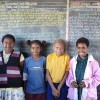
Sexual Abuse Keeps Girls Out of School
Sexual harassment of school-going girls is one factor that may prevent this Pacific island nation from achieving the Millennium Development Goal (MDG) of eliminating gender disparity in education by 2015.
Papua New Guinea’s ‘Missing Mothers’ Prompt Rural Healthcare Overhaul
While the number of women dying in childbirth globally declined by 34 percent between 1990 and 2008, that number doubled in Papua New Guinea over the same time period.Gas Extraction Fuels Abuse in Papua New Guinea
Papua New Guinea’s infamous track record on gender-based violence – with an estimated 75 percent of women and children experiencing some form of violence, primarily domestic abuse – is poised to worsen.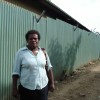
Sorcery-Related Violence on the Rise in Papua New Guinea
An increase in sorcery-related violence and fatalities over the last decade in Papua New Guinea is generating awareness about the lack of development, economic opportunities, inequality and under-resourced health services in rural areas.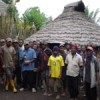
Where Bees Reform Gangsters
In the Kamanabe area of the rural Eastern Highlands in Papua New Guinea (PNG), a village gang has relinquished crime and is striving to contribute to the sustainable future of the local community with a honeybee income generating initiative.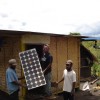
Solar Panels Reflect Bright Future for Rural Papua New Guinea
In Papua New Guinea (PNG), which has no national power grid but large river systems and abundant sunshine, renewable energy has tremendous potential to transform remote rural lives with clean and sustainable electricity.
Papua New Guinean Landslide Survivors Wait in Vain for Justice
Early morning on Jan. 24, in the remote Southern Highlands of Papua New Guinea, a massive landslide destroyed communities living below a quarry used by the country’s largest liquefied natural gas (LNG) project, operated by Esso Highlands, a subsidiary of Exxon Mobil.
Papua New Guinea’s New Dawn With Community Radio
It was the decade-long civil war in the autonomous Bougainville region that inspired the founding of New Dawn FM, a community radio station recognised for contributing to the rebirth of civil society and development.PAPUA NEW GUINEA: Informal Economy Ensures Equitable Development
Although Papua New Guinea is known as a resource-rich country, 85 percent of the population depends on the informal economy for a living.West Papuan Conflict Begs Political Solution
The Indonesian government’s offer of development for West Papua, following the crackdown by security forces on a pro-independence meeting in Jayapura in October, is unlikely to succeed in the absence of political dialogue and calls for self-determination are expected to continue.« Previous Page





The Week with IPS

NEXT STOP - SDGs
Tracking global progress towards a sustainable world
Tracking global progress towards a sustainable world
