Languages
Wednesday, September 23, 2026



News and Views from the Global South

Long Wait to Defect From Assad’s Forces
"Of course I want to defect but I cannot give up my salary. How could I possibly feed my 11 children?" The war is putting every Syrian on the brink, including this policeman on the side of President Bashar Al Assad.
Syrian Crisis Brings a Blessing for Kurds
The smuggler wants 200 dollars but Jewan negotiates him down to 100. That’s still a lot for this 26-year-old Syrian Kurd, but he can hardly wait to cross the border to Syria from Iraq. It’s been three years since he last saw his family.
Colonised by the Arabs, Abandoned by the World
Untamed stone villages line up over imposing green valleys. In winter they are white with snow. The luckiest have a view to the deep blue sea. "It’s gorgeous, isn’t it," says Amzi from his yellow cab. "Nobody would say we’re living in an open-air prison."
Conflict Heats Up in the Sahara
"We’ve been building a lot of new walls lately," says Polisario Front commander Ahmed Salem as he drives his 4 X 4 across Tindouf in Western Algeria. But the newly introduced security measures may not be enough to ensure the survival of the Western Sahrawis.
This Football Is a Game of Dispossession
The football teams are back in their refugee camps in Algeria, and no, FIFA has taken no note of this tournament. And the television cameras are all at the Euro cup.
In Limbo in the Saharan ‘Free Zone’
The road vanishes under the sand just after the border crossing at Tindouf, western Algeria. Another 20 kilometres into the desert, a billboard welcomes us into the Sahrawi Arab Democratic Republic.
Those Laboratory Mice Were Children
At Fallujah hospital they cannot offer any statistics on children born with birth defects – there are just too many. Parents don’t want to talk. "Families bury their newborn babies after they die without telling anyone," says hospital spokesman Nadim al-Hadidi. "It’s all too shameful for them."
Exit Americans, Enter Sectarian Strife
Barely three months after the pullout by U.S. troops, sectarian clashes between Sunni and Shia Muslims have begun to take a heavy toll across Iraq.
Those Bodies in Baghdad Are of Gay Men
Dozens of bodies bludgeoned to death pop up in Baghdad’s dusty streets like the remains of a wreckage on a beach. They are the corpses of homosexuals and followers of the ‘emo’ fashion who dare to break with the strict canons of the Shia orthodoxy in power.
‘Sons of Iraq’ Orphaned
"We have not been paid since the Americans left Iraq last December. If nothing changes, I will abandon this checkpoint," Saif Ahmed tells IPS. He is one of the militiamen who claim to have defeated Al Qaeda in Iraq.The Ancient Wither in New Iraq
"I’d say there are around 5,000 of us in the country, but if you ask me next week we may well be under 3,000. After twenty centuries of history in Mesopotamia, we Mandaeans, are about to vanish." Anxiety about the future of his people is more than evident in the figures given by Saad Atiah Majid, chairman of Basra’s Mandaean Council.
LIBYA: Old Ways Under a New Flag
"They would call you a Gaddafist if you drove one of those 4 X 4 cars," says Bashar, emerging from one of those traffic jams in Tripoli. "Today almost every rebel commander has one."
LIBYA: The Making of a Ghost Town
Embarka Omar crumbles when she sees the pictures of the Libyan city where she was born and lived until two months ago. "We will be back in Tawargha one day," the 25-year-old repeats to herself. The images say otherwise.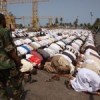
LIBYA: Headed for Some Sort of Sharia
The announced introduction of Islamic law in post-Gaddafi Libya has drawn strong opposition from women, the non-religious and the Amazigh minority.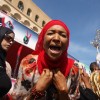
Cornered in Free Libya
"We’ve walked all the way here to tell everybody that we are being treated like dogs," said 23-year old Hamuda Bubakar, among a couple of hundred black refugees protesting at Martyrs Square in Tripoli. "I’d rather be killed here. I wouldn’t be the first, or the last."
LIBYA: Visitors Could be Saviours
"A crossroads of history, continents and ancient empires; a place where history comes alive through the extraordinary monuments on its shores", reads a well- known tourist guidebook about Libya. It’s all still there, but the tourists aren’t there to see it.
Libya’s “Other” Victims
Suleyman and Rasool have come to the University of Bani Walid, in western Libya. If they are lucky they might find some chemistry notes and, perhaps, a computer that works. Unfortunately it is not likely, since NATO reduced the campus to rubble.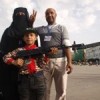
LIBYA: After Gaddafi, Unease Rules
"The war is over and Gaddafi already buried. What else could we possibly ask for?" says Adnan Abdulrafiq at his busy street restaurant in Omar Mukhtar street in downtown Tripoli. But troubles may not have ended with the war.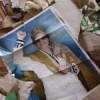
OP-ED: A Long and Winding Road to the End for Gaddafi
I came across an anti-Gaddafi demonstration for the first time in February 2011 in Baghdad's Tahrir square.
To Be Black in Iraq
"Before being deployed to Iraq I never thought I’d come across people who physically resemble my friends and family back in Buffalo," says U.S. marines sergeant William Collins on a rare patrol around Basra’s Zubeir district.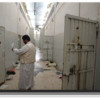
Some Were Merely Tortured
 Karlos Zurutuza reports for IPS from Abu Salim prison in Tripoli.
« Previous Page — Next Page »


The Week with IPS

NEXT STOP - SDGs
Tracking global progress towards a sustainable world
Tracking global progress towards a sustainable world
