Languages
Monday, October 26, 2026



News and Views from the Global South
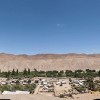
Ruling Against Thermoelectric Plant Sparks Debate
A Chilean Supreme Court decision ordering a halt to the construction of the Castilla thermoelectric power plant has sparked a debate over the country’s energy security.
Q&A: “Another Chile Is Possible, with Greater Democracy and Social Rights”
It is essential for young people in Chile to assume a more active role in politics, especially in two key electoral processes: the municipal elections in October and the legislative and presidential vote in 2013, says student leader Camila Vallejo, who has not ruled out running for a seat in parliament herself.
School Bullying, a Reflection of Society in Latin America
Because “schools reflect what is going on in society,” an analysis of what is behind the high rates of bullying in Latin America is urgently needed, says Marcela Román, an expert on education in the region.
Q&A: Hospitals Working to Reduce Their Ecological Footprint
Medical care is associated with images of cleanliness and good health. Today’s hospitals, however, are major sources of pollution and consume large amounts of valuable resources, like energy.Women Now Have a Voice in Chile’s Press
"We always dreamed of a ‘heroine’ who would not only denounce violence against women, but would also represent us in other spheres,” Kena Lorenzini, the director of Chile’s first feminist publication, told IPS.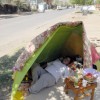
“Latin America’s Miracle” – the Land of Invisible Inequality
It’s Friday morning, and Carlos, an executive at a real estate firm in the Chilean capital, gets up knowing that he will knock off early that day, as he does at the end of every week, to enjoy the weekend in the family’s vacation apartment on the coast with his wife and three daughters.Many Chilean Women Keep Mum About Unequal Wages
"I know that my male colleagues earn more than I do and work the same amount or even less. And my employers keep me in a non-managerial post, even though I do tasks at that level,” said Pamela, a Chilean professional who holds a doctorate in economics.
Children Injured in Police Crackdown on Chile’s Mapuche Indians
“We have been trampled by this racist Chilean state, which oppresses us. The police force represses all Mapuche people…they shoot at us in cold blood.”Chile Debates Control over Lithium Production
The Chilean government's decision to invite companies to tender offers for mine lithium resources has been widely rejected by mining trade unions and legislators of the opposition.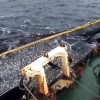
Depleted Chilean Fish Need “A Real Chance of Recovery”
The model of exploiting fisheries that has prevailed in the last decade has driven fish stocks to critically low levels in Chile, which has a 6,435 km Pacific coastline and a wide diversity of marine resources.
Mine Tailings Pollute a Chilean Town’s Water
People in the small town of Caimanes in northern Chile will suffer severe health problems if water pollution produced by a tailings dam built by the Los Pelambres mining company is not cleaned up, experts warn.Chile’s Smog Still Deadly
"We are facing a very alarming situation, and solutions are urgently needed," said Cecilia Sepúlveda, the dean of the University of Chile medical school, after it was announced that 4,200 people a year in this country die from causes directly attributable to smog and other kinds of pollution.
Dam Company in Chile Presses Gov’t for Supportive Policies
Colbún, the electricity generating company that co-owns HidroAysén and its multi-dam project in southern Chile, has recommended suspending the environmental impact assessment for power transmission lines that would connect the hydropower complex to the country's central grid, until the right conditions are in place.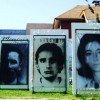
Victims of Forced Disappearance Eligible to Vote in Chile
The families of victims of Chile’s 1973-1990 dictatorship were shocked to find out that the names of more than 1,000 victims of forced disappearance have appeared on the on-line voter rolls generated by a new automatic registration system.
Outsourced Chilean Copper Workers “21st Century Slave Labour”
"Temporary and subcontracted workers in the copper industry are the slave labour of the 21st century. Lacking rights and social protection, they are vulnerable and defenceless," complained Cristián Cuevas, the leader of a union for outsourced Chilean copper workers.
Big Hydropower Dams Trump Alternative Energy in Chile
Chile has enormous potential for producing non-conventional renewable energies (NCRE) like solar and geothermal, yet they only contribute three percent of the country's energy mix.Chile’s Native Communities Find Ally in Supreme Court
Indigenous groups in Chile celebrated a recent court ruling that represented the latest victory in the struggle for respect for their right to be previously consulted about major projects which directly affect their communities.
Shedding Light on Inequality in World’s Most Unequal Region
A new report takes a close look at the territorial distribution of poverty and inequality in Latin America, which has long had a reputation of being the most unequal region in the world.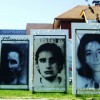
Families of the ‘Disappeared’ Go after DINA Secret Police in Chile
A criminal lawsuit against 1,500 former members of DINA, the secret police of Chile’s 1973-1990 dictatorship, is seeking to shed light on the most active player in the repression, which stretched outside the country’s borders.Immigrants in Chile File Complaint against Mass Expulsions
The Committee of Peruvian Refugees in Chile has filed a complaint with the Inter-American Commission on Human Rights, alleging that this country carries out mass expulsions of immigrants.Energy: Chilean Community Wins First Round Against Brazilian Billionaire
Plans to build a massive thermoelectric power plant complex near an area of rich marine biodiversity has sparked fierce opposition from the small northern Chilean farming town of Totoral, which has now scored its first victory in court.« Previous Page — Next Page »





The Week with IPS

NEXT STOP - SDGs
Tracking global progress towards a sustainable world
Tracking global progress towards a sustainable world
