Languages
Sunday, November 8, 2026



News and Views from the Global South
Ecobreves – HONDURAS: An Indigenous Future in Eco-Tourism
Five communities in the Honduran jungle region of Mosquitia over the past four years have development micro-projects for ecological conservation that have drawn tourists but also generated jobs.RAPE AND THE RULE OF LAW
The lengthy prison terms for war crimes and crimes against humanity handed down by the Special Court for Sierra Leone on 19 July have been greeted with widespread praise; two senior members of the Armed Forces Revolutionary Council were sentenced to 50 years in prison and another to 45 years for atrocities committed during the country\'s civil war, including rape, writes Noeleen Heyzer, Executive Director, United Nations Development Fund for Women (UNIFEM). In this article, the author writes that calling senior military leaders to account for sexual crimes against women is a historic achievement that reaffirms the recognition that rape is among the gravest violations of international law, on par with acts of mass murder and terrorism. It is hoped these sentences will help bolster the capacity of local courts to convict the thousands of lower-ranking rapists who walk free. This is indeed the best hope for resurrecting the rule of law in a war-ravaged nation. Regrettably, international support for the rehabilitation of justice systems and the rule of law has not prioritised women\'s access to justice, which has generally been sidelined in favor of market-oriented reform, such as revising corporate laws to improve the investment climate. We must act urgently ensure that laws on paper are matched by action.UNQUENCHABLE THIRST: THE WORLD WATER BUSINESS
It is well known that even in countries where mineral water is public property, it is private companies that are making major and easy profits from selling it, writes Riccardo Petrella, founder member and General Secretary President of the International Committee for the World Water Contract, and professor at the Catholic University of Louvain. In this article, the author writes that the \'\'business\' of bottled mineral water has become one of the most lucrative and fast-growing sectors around the world. The Swiss private bank Pictet forecasts that by 2015 private companies will supply water to almost 1.75 billion \'\'consumers\'\'. In this context, it is not surprising to learn that water management companies are among the most hotly bought and sold businesses, much the way shoes or refrigerators are. The last major instance of this was the sale of of Thames Water, which in fifteen years passed from being a public entity to a private British company to a holding of a German energy giant and now of an Australian bank. It should not be excluded that in ten more years Thames Water could pass into the hands of a Chinese company specialising in urban waste removal.Ecobreves – BRAZIL: Agro-Toxins Kill Bees
A cocktail of agro-chemicals increasingly used in direct planting of soy is decimating bee colonies in Brazil's far south.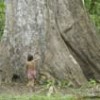
Satellites Show Logging Decline in Peruvian Amazon
Deforestation in the Peruvian Amazon, intense in zones near roads and mining operations, has had little impact in protected forests, say researchers.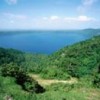
A Green Crusade in Nicaragua
Nicaragua is attempting to reverse the loss of water resources with a massive planting of trees, which are essential to capture rainfall in areas that recharge rivers and lakes.Ecobreves – HONDURAS: Peasants Tested for Toxins from Mining
Thirty health experts finished tests of 62 inhabitants from El Pedernal, a village in the central Honduran valley of Siria, to determine if they have high levels of cyanide, lead, arsenic and mercury from mining operations nearby.Ecobreves – CHILE: Kids Protect Ozone Layer
Through the end of August, children in the fifth and sixth grades at schools in Chile's Tarapacá (north), Metropolitan (central) and Magallanes (south) regions can participate in a painting contest titled "I protect the ozone layer."Ecobreves – VENEZUELA: Producing Natural Fertilizers and Pesticides
In the Venezuelan southwest, near the Colombian border, the government has inaugurated the first of 21 laboratories to produce bio-pesticides and bio-fertilizers.Ecobreves – URUGUAY: Climate Change Threatens Coastline
Uruguayan politicians and citizens must be aware of the threats of climate change, especially for the coastal areas, says Pablo Mandeville, the United Nations permanent representative in this small South American country.TAILOR THE DEVELOPMENT APPROACH TO LOCAL CONDITIONS
The one-size-fits-all formula for development is clearly a mistake. To begin with, today\'s developed countries used a broad range of economic approaches in their own development strategies, writes Benjamin Mkapa, former President of Tanzania (1995-2005) and President of the South Center, an Inter-Governmental Organization based in Geneva, Switzerland. In this article, Mkapa writes a government should design and implement a national development policy that takes into account its country\'s unique conditions and characteristics. The developing countries that disregarded orthodox economic policy advice to combat financial crises were the ones that managed to get over the crises early and in good shape. Globalisation should not require the replication in the developing world of the political and institutional structures of governance of the US and Western Europe. Nor should cultural and social values across the developing world be recreated in the image of western life styles and role models. A fair globalisation requires that the process respect diversity of culture, religion, and political and social opinion while fully respecting universal principles.PERVERSE SUBSIDIES
Since its inception in November 2001, the Doha Round of the WTO has been unable to take even one step towards the apparently shared goal of liberalising trade because of industrialised countries\' subsidies of their own agricultural production, writes Norman Myers, who is completing, with Jennifer Kent, a book on institutional roadblocks. In this article, Myers writes that certain subsidies are bad not only for the environment but for the economy too and should be designated \'perverse\' subsidies. These are especially prominent in agriculture, fossil fuels, road transportation, water, forests, and fisheries, and total a whopping USD 2 trillion a year. Eliminating perverse subsidies would do more than virtually any other measure to stimulate and streamline our economies and safeguard the environment. Moreover, governments would find that with the freed-up funds they could cancel their budgetary deficits, slash taxes, and boost their health and education budgets by unprecedented amounts.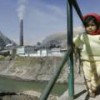
A Breath of Fresh Air for La Oroya?
The Peruvian city of La Oroya will adopt a warning system to protect its residents from the worst moments of air pollution.
Global Fight to Protect the Ozone Layer Celebrates 20 Years
The Montreal Protocol on ozone-depleting substances eliminated emissions of around 11 million tons of greenhouse gases, benefiting the climate system, the Protocol's executive secretary Marco González told Tierramérica.Ecobreves – MEXICO: Green Rooftops to Clean the Air
The Azoteas Verdes (Green Rooftops) project, of the municipal government of the Historic Center of Mexico City, aims to improve household ecology by planting bushes and gardens on buildings' rooftops. The first will be completed in four months.Ecobreves – BRAZIL: Excess Glyphosate Found in GM Soy
Some of the genetically modified soybean harvested in the southern Brazilian state of Paraná in 2005-2006 surpassed the limit of glyphosate herbicide permitted by the national health regulatory agency, Anvisa.Ecobreves – ARGENTINA: Mountain Film Fest in Ushuaia
The southern Argentine city of Ushuaia will host the First International Mountain Film Festival, Aug. 19-24. The events include sports activities, photo exhibits and presentations on conservation issues.Ecobreves – HONDURAS: River Recovery Campaign
The "Adopt-a-River" project, presented by the Honduran government, is an effort to prevent contamination and the use of water sources as dumps.NOSTALGIA FOR THE OLD PLEASURES
With all the warnings about everything from sunlight to smoking to meat, it seems more and more astonishing that our species has made it to the present day, after millions of years of exposure to the sun and unrestrained eating and drinking, smoking, and indulging in sex (and not only for reproduction) and travelling, writes Leonardo Padura Fuentes, a Cuban writer and journalist whose novels have been translated into a ten languages. In this article, the author writes that there was even a time not so long ago that we even considered these suicidal indeed genocidal acts to be pleasures, like smoking a cigarette in a bar with a glass of wine or a coffee. The oblivion that shrouded life back then (of course AIDS, global warming, and the hole in the ozone layer didn\'t yet exist) made life more pleasing, if sometimes shorter. Today, however, when the entire human race risks vanishing from the earth because of its own stupidity and mistreatment of our planet, many people are worried about living to one hundred in perfect health, limiting if not eliminating pleasures while they burn rivers of fuel and raze forests and, most important, forget that for millions of other people in this world, a piece of bread, a glass of clean water, or even an avocado are not enemies but luxuries that it becomes harder and harder to come by each day.AFRICA MUST BE HEARD ON CLIMATE CHANGE
While in wealthy countries, the looming climate crisis is a matter of concern, in Africa, which has hardly contributed to climate change, it is a matter of life and death, writes Wangari Maathai, the 2004 Nobel Peace Laureate and a member of Kenya's Parliament and the founder of the Green Belt Movement. In this analysis, the author writes that therefore, Africa must not remain silent in the face of the realities of climate change, and its causes. African leaders and civil society must be involved in global decision-making about how to address the climate crisis in ways that are both effective and equitable. Unfortunately, the generation that destroys the environment may not be the one that pays the price. Politically, it is more expedient to sacrifice the long-term common good and intergenerational responsibility for the convenience and opportunities of today. But, morally, we are required to act for the common good of all. The global challenge of climate change requires that we ask no less of our leaders, or ourselves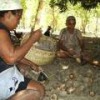
Amazon Fruit Gatherers Face Biofuel Dilemma
Babaçú fruit gatherers in the Brazilian Amazon must decide if they will join or reject the biodiesel production boom, which will alter the economy of this traditional activity.« Previous Page — Next Page »





The Week with IPS

NEXT STOP - SDGs
Tracking global progress towards a sustainable world
Tracking global progress towards a sustainable world
