Languages
Sunday, November 8, 2026



News and Views from the Global South
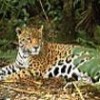
Jaguars on the Run
The majestic jaguar that once reigned in Argentina has seen its numbers reduced to just 300 animals, which are living in increasing isolation.Ecobreves – BRAZIL: Promoting a World Social Forum in Amazonia
The World Social Forum could be held in South America's Amazon region if the candidacy of the northern Brazilian city of Belém to host the massive civil society event is successful.Ecobreves – HONDURAS: Food Aid for Drought Zones
The World Food Program will deliver 1,400 tons of food to the people of three Honduran departments that lost their entire crops to drought blamed on the climate phenomenon known as El Niño, say officials.THE DAILY DRAMA OF HAVANA
Havana today, humanly and physically, is a city trapped between its past and an uncertain future, writes Leonardo Padura Fuentes, a Cuban writer and journalist whose novels have been translated into a ten languages. In this article, the author writes that for Cuban urbanists and architects, unless drastic action is taken immediately Havana\'s future will be mined with an array of devastating threats. The city increasingly shows the effects of the lack of attention and repair. The lamentable state of the buildings and roads requires major investments that the country does not seem capable of making. Meanwhile thousands of families suffer a promiscuous co-existence while the specialists feel a justified fear that desperate solutions to the city\'s problems could destroy its physiognomy.GLOBALISATION: NOT A ZERO SUM GAME BUT AN OPPORTUNITY FOR ALL
Globalisation is not a random and uncontrollable phenomenon but rather a process that we can regulate and guide, writes Emma Bonino, minister for International Trade and European Affairs of Italy. In this article, Bonino writes that today through the progressive strengthening of multilateral regulatory bodies --the European Commission, WTO, IMF, OECD-- we can make sure that the benefits are ever greater and reach more of the world\'s population. Aid remains essential in situations of extreme poverty. But to implement a policy for development, aid is not enough, and I think that we should move more and more towards \'\'aid for trade\'\', a form of assistance that makes it possible for a developing country to bolster its trade capacity and thus its ability to share in the \'\'dividends\'\' of globalisation. Globalisation is not the cause of the ills of the underdeveloped areas of the earth; rather, it is a lack of participation in globalisation that prevents a country from achieving development and freedom. Globalisation is not a zero sum game but a great opportunity for all. Those who decide to play will not lose; rather, those who sit out, who just look on, will be the real losers.SLAUGHTER ON THE ROAD: THE UNTOLD STORY OF TRAFFIC SAFETY
Each year, road traffic accidents kill more than one million people; another 50 million people are injured. Three-quarters of the casualties live in poor countries, thus affecting the most vulnerable groups such as pedestrians and cyclists. Globally, health losses from road traffic crashes over the next 20 years could jump well ahead of those from malaria or tuberculosis, writes Jamal Saghir, World Bank Director for Energy, Transport, and Water Strong leadership is needed to change the present situation. Road networks are complex systems which are inherently hazardous and must be managed and designed to compensate for human fallibility. Improving road safety in the developing world is a shared responsibility between government, industry, non-governmental organizations and international agencies. This effort faces the challenge of an implied fatalism suggesting that countries seeking economic growth must accept the inevitability of increased deaths and injuries on their roads. But this suggestion has worn thin as the bodies pile up on the roads and crash survivors begin their new lives disadvantaged by injury.
Limiting the Junk Food Banquet
Latin America is waging its first wars against uncontrolled advertising and consumption of junk food.
Rural Residents Find Riches in Saltwater
Fish farming and growing forage crops resolve the problem of dealing with the waste left by water desalination in a thirsty community of the Brazilian Northeast.Ecobreves – HONDURAS: A Law to Save a Lake
The Honduran Congress is debating a bill to halt the deterioration suffered by the northern Lake Yojoa, an area which holds great biodiversity.Ecobreves – CHILE: Doctors Denounce Buried Arsenic
Buried at the Altonorte foundry, near the northern Chilean city of Antofagasta, are 150,000 tons of waste minerals, with 30 percent arsenic, charges the region's medical association.Ecobreves – CUBA: More Forested Areas by 2015
Cuba hopes to plant trees on 67,000 hectares per year until 2015, with the goal of increasing its forest cover from its current 24.5 percent to 29 percent, said experts at a Havana conference last week.Ecobreves – SOUTH AMERICA: Water Activists Issue Invitation to Governments
The non-governmental South American Water Association, which met here last week, has called on the region's government's to take part in a forum this September in Peru.A NEW ERA FOR GLOBAL NEWS AND COMMUNICATIONS
Al Jazeera\'s plan to win a section of the western market by launching an English-language channel last November set off a global battle for giant audiences by other international TV networks, writes Mario Lubetkin, director-general of the IPS news agency. In this analysis, Lubetkin writes that although the spokespeople of BBC of London and France 24 do not attribute their entrance into the universe of television to competition with Al Jazeera\'s English channel, what is certain is that both have announced or begun this month a pilot phase of satellite channels in Arabic. But without credibility, the new companies have no future, which was the case with the Arabic-language channel Al Hurra, promoted by the US government. And respect for the local and regional culture is more important than the last technological advance or the deep pockets of investors.
Fragile Truce on Deforestation of Olancho
Logging hasn't stopped in the Honduran department of Olancho, despite a partial ban decreed by the government in this environmental "red zone" of Mesoamerica.
Malawi's Farmers Don't Waste Human Waste
Farmers in six of Malawi's 27 districts are using compost obtained from human excrement to avoid having to buy expensive chemical fertilizers for their fields.Ecobreves – MEXICO: Manufacturers Push Junk Food Ads
Mexican manufacturers of "junk food" are exerting heavy pressure through the governing National Action Party so that parliament will throw out any bills intended to regulate advertising of foods with little or no nutritional value, say activists.Ecobreves – BRAZIL: Hepatitis and Malaria Decimate Amazon Indians
Hepatitis and malaria are killing the indigenous peoples of the Javari River basin, bordering Peru, and the Brazilian government faces charges of failing to provide health care for five tribes whose populations total some 3,000 people.Ecobreves – ARGENTINA: Manual for NGO Conduct
A self-evaluation tool for the behavior of non-governmental organizations was presented Apr. 11 in Buenos Aires by the Help Argentina association.INTERVIEW WITH NESTOR OSORIO: COFFEE MISSES OUT ON COMMODITY BONANZA
Though speculation by investment funds has introduced a persistent volatility into the coffee market, executive director of the International Coffee Organisation (ICO) Nestor Osorio holds that it will maintain its current equilibrium and remunerative prices for the present year. The Colombian diplomat, who recently attended a seminar in Geneva on Commodities and Development organised by the UN Conference on Trade and Development (UNCTAD), responds below to questions from IPS.FREEDOM FROM RACISM – A FUNDAMENTAL HUMAN RIGHT
We must continue to debate honestly and fearlessly the scourge of racism that permeates so much of the fabric of our society, writes Thabo Mbeki, president of South Africa. In this analysis, Mbeki refutes the argument of some that discussion is inimical to the task of achieving national reconciliation. The truth is the opposite: the racism that remains a daily feature of our lives is a demon that must be exorcised precisely to achieve national reconciliation. Those who are determined to avoid confronting these difficult issues seek to divert attention away from discussing the relationship between racism and the perception of crime by falsely and dishonestly claiming that I am trying to deny or minimise the seriousness of the incidence of crime in South Africa. It remains to be seen whether we have the will to know one another and to debate with one another, to educate ourselves not to be too quick to judge as illegitimate the concerns and expressions of any group; and whether we have the courage to engage in a truth and reconciliation process even with regard to the challenge of openly confronting the cancer of deeply dehumanising racist stereotypes that developed over many centuries.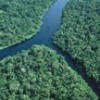
The Amazon Jungle as Vast Savanna
Global warming will broaden the effects of deforestation, which could turn 60 percent of the Amazon forest into grassland in this century, say scientists from the Intergovernmental Panel on Climate Change.« Previous Page — Next Page »





The Week with IPS

NEXT STOP - SDGs
Tracking global progress towards a sustainable world
Tracking global progress towards a sustainable world
