Languages
Sunday, November 8, 2026



News and Views from the Global South

A Balancing Act for Whales
The Dominican Republic has protected since 1986 the areas where humpback whales give birth. The sites have also attracted tens of thousands of tourists in recent years.Ecobreves – BRAZIL: Advertising a Boon for Obesity
Television advertising is one of the main factors behind the rise of obesity in Brazil, says a University of Sao Paulo doctoral thesis.Ecobreves – CHILE: Ecologists vs. Monsanto Soy
The Transgenic-Free Chile Network opposes a project of the agribusiness transnational Monsanto to plant 5,000 hectares of genetically modified soybeans beginning in October 2007, and increasing to 20,000 hectares in 2010.Ecobreves – VENEZUELA: Endangered Orchids in Religious Procession
The Nazarene of St. Paul procession that takes place each year on Wednesday of Catholic Holy Week in the city center of Caracas, was this year adorned with 5,000 orchids that are endangered in Venezuela.Ecobreves – CUBA: Solar Energy Arrives in Rural Community
Some 60 homes in the Guantánamo community of Los Cerezos, some 1,000 km from Havana, will be supplied with electricity from photovoltaic cells by May.THE EUROPEAN UNION MUST PRESS FORWARD
On July 1, Portugal will for the third time assume the presidency of the European Union at a time of considerable confusion and uncertainty for the European project as well as a time of major world crisis, writes Mario Soares, ex-president and ex-prime minister of Portugal. In this article Soares argues that those member states that do not want to go further can stay as they are, but they should not keep others who want to move forward from doing so. This was the solution applied regarding the adoption of the euro and the Schengen Treaty. We could also create forms of reinforced co-operation or return to the theory of concentric circles that Mitterand spoke of and that now excites the Belgian prime minister Guy Verhofstadt. What we cannot allow to happen is a prolongation of the institutional paralysis that has persisted for two years now and that threatens to break apart the union and rob it of its power of attraction. Europe together with US democrats should intervene to extract the West from the major impasse it was led into by the blindness of the neo-conservatives --Jewish and Evangelical-- that are behind Bush. This must be done by the end of 2007, since 2008 is the year of the next US presidential election. This is the right moment for a small country like Portugal, during its EU presidency, with common sense, political courage, and the help of its allies, to play a historic role.SMALL ARMS ARE THE REAL WEAPONS OF MASS DESTRUCTION
While a nervous world focuses on putative terrorist threats and nuclear strikes from Iran and North Korea, small arms are killing far more people than all the bombs and missiles in national arsenals, writes Mark Sommer, host of the internationally-syndicated radio programme, A World of Possibilities . In this article, Sommer writes that small arms are the real weapons of mass destruction and are undermining the stability and security of whole societies in the process. A prime contributor to the phenomenon of failed states, small arms are a pre-eminent threat to global security and public health. Yet uprooting the virus of small arms trafficking will be dauntingly difficult precisely because they are cheap, easy to fire and conceal, and everywhere available. Unlike landmines, they move readily from hand to hand and can be aimed at any target for any purpose. Efforts to track and curtail the trade have long been thwarted by well-organised private gun lobbies and powerful nations that make use of small arms to fuel counterinsurgencies or proxy wars. After years of ignoring the problem, the UN General Assembly recently launched an effort to enact a treaty that would regulate trade in small arms. Yet many governments, including that of the United States, are reluctant to allow the enactment of a regime that would constrain their ability to freely distribute them. Not until the global public demands the imposition of constraints on the small arms trade will governments rein it in, albeit reluctantly. And not until that public fully realises that small arms in the wrong hands are the ultimate terror weapon will we give this public health pandemic the priority it deserves.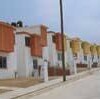
Uphill Effort for Eco-Friendly Housing
Buildings in North America produce vast amounts of greenhouse gases, sewage and other waste. In Mexico, ecological construction is just getting started, with 5,000 housing units near completion.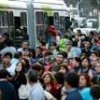
Transantiago Shakes Up Chilean Transport and Politics
Multiple deficiencies in design and execution led to a chaotic premiere for the Chilean capital's new public transportation system.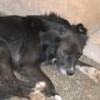
Stray Dogs Swarm Cuban Streets
Most of the dogs running loose on Cuba's streets have owners who aren't looking after their canine friends. Organized dog fights or even strychnine injections are just some of the threats the dogs face.Ecobreves – HONDURAS: Regulations for Ethanol Production
The government and sugar industry leaders in Honduras are pushing for passage of a biofuels law in the next six months to regulate ethanol productionEcobreves – BRAZIL: Water Recycling as Business
The utilization of wastewater is big business for Brazil's big cities, which could solve their water shortage problems, Marcelo Zanini, director of the water treatment firm Biosistemas, told Tierramérica.Ecobreves – MEXICO: A Revolutionary Equation
A mathematical equation created in Mexico for predicting how an object grows or shrinks, using digital images, is proving useful for many sciences, particularly medicine.Ecobreves – ARGENTINA: World Youth for Water
More than 400 young people from 50 countries will participate Apr. 12-14 in an international Water and Youth Festival in the Argentine capital to determine ways to ensure access to water and to have a voice in public policies.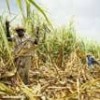
Brazil Aims to Dominate Ethanol Market
Brazilian ethanol is more efficient and environmentally friendly than U.S. ethanol, and turning it into a global substitute for gasoline is within reach. But it's not all roses.
Organic Gardens vs. Chem-Fed Lawns
Grass lawns in the United States cover nearly three times more area than any irrigated crop, and consume billions of liters of water per week, say environmentalists.Ecobreves – HONDURAS: Chiquita Turns to Organic Bananas
The U.S. transnational company Chiquita Brands has proposed a plan to the Honduran government to grow organic bananas, free of agrochemicals, in the southern part of the country.Ecobreves – CUBA: Precautions Against Dengue
The imminent rainy season in Cuba is expected to be very warm, and has put authorities on the alert because of the potential for wide proliferation of the Aedes aegypti mosquito, which carries the dengue virus.Ecobreves – CHILE: Anti-Dam Campaign Goes International
From Mar. 23 to 30, a delegation of the U.S.-based non-governmental Natural Resources Defense Council will visit the Chilean Patagonia region to see the areas affected by the construction of four hydroelectric dams.Ecobreves – BRAZIL: Scientists Promote Hybrid Cars
Hybrid vehicles -- which run on a combination of electricity and gasoline -- emit 50 to 80 percent less pollution, according to a study by the Polytechnic Institute of the University of Sao Paulo.THE EUROPEAN UNION AT 50
The 50th anniversary of the Treaty of Rome, signed March 25, 1957, is a perfect excuse to review the accomplishments and shortcomings of today\'s European Union (EU), writes Joaquin Roy, \'\'Jean Monnet\'\' professor and Director of the European Union Centre of the University of Miami. In this article, Roy writes that the success of the EU is demonstrated by the attraction it exerts on not only the countries that are European (former Yugoslavia, for example), which have the right to join, but also on neighbours that yearn for the elusive membership (Turkey, whose candidacy has been championed by United States). Only one country (Norway) has rejected joining in referendum. Although some doubt the assertion that \'\'democracies don\'t to go war among themselves\'\', what is certain is that war itself in Europe has not only become \'\'unthinkable\'\', but also \'\'materially impossible\'\' (Schuman Declaration) among the members of the EU. The status of sovereignty in the Union, which is not \'\'ceded\'\' or \'\'lost\'\', as some claim, but rather shared (or pooled), is the aspect that is least understood outside of the EU. It is also what the stalled Constitution is trying to reinforce.« Previous Page — Next Page »





The Week with IPS

NEXT STOP - SDGs
Tracking global progress towards a sustainable world
Tracking global progress towards a sustainable world
