Languages
Sunday, October 4, 2026



News and Views from the Global South

More Protection, but Not Enough, for Patagonian Sea
Argentina has widely expanded the protected area of the Patagonian Sea, but it is less than two percent of the nation's maritime waters.Ecobreves – BRAZIL: Unbeatable in Can Recycling
Brazil recycled 98.2 percent of the aluminum cans used last year, according to a study by the Brazilian Aluminum Association (ABAL).Ecobreves – HONDURAS: Eco-Stoves Arrive in the Capital
"Eco-stoves," an improved version that reduces the consumption of firewood, are finding their way to Tegucigalpa's largest low-income neighborhoods -- in a bid to halt deforestation.IMPERIAL DECLINE AND THE PROSPECTS FOR A JUST PEACE IN PALESTINE
For more than half a century, the gushing wound of Palestine has assaulted the global conscience, continuously reminding people everywhere of the imperial atrocities of Israel and the US in the Middle East and other areas.Ecobreves – MEXICO: Irrigation Plan to Fight Climate Change's Effects
Renewing water pumping equipment, rehabilitating wells and using technology in irrigation are the steps necessary to mitigate the impacts of climate change and adapt Mexico's agriculture to the new reality, propose two environmental organizations.Ecobreves – HONDURAS: Saving Lake Yojoa
Environmental, community and government organizations are putting the final touches on a plan to save Lake Yojoa, the largest lake in Honduras -- and on the verge of turning into a swamp.Ecobreves – BRAZIL: Trees Are the Key to Sustainable Farming
Farmers and members of a cooperative in Valle del Ribeira, in the Brazilian state of São Paulo, are developing a farming technique that uses less water and no agro-chemicals, and is based on planting trees.LOST UTOPIAS, DREAMT UTOPIAS
Six years ago, when I leapt definitively down the rabbit hole of writing a book about the exile and assassination of Leon Trotsky, and the bizarre and spurious selection, training, and fate of the man who would ultimately be his assassin (the Catalan Ramon Mercader), I frequently asked myself the same question that journalists and readers have asked me since the publication of the novel in Spain in September 2009, and recently published in Italy in the first of a number of translations underway: what can you tell us that is new about the history of the assassination of the ousted communist leader exactly 70 years ago, with WWII raging and in a remote world in which, at the end of that conflict political systems would divide into two camps, the communist and the capitalist. A distant time in which a large part of humanity still believed (despite Stalin) in the possibility of a proletarian socialist utopia founded by the October Revolution, the better world always dreamt of by man.
Geoengineering for a Desperate Planet
Climate change made its way into the biodiversity summit in Nagoya, Japan, as debate topics included the effects of geoengineering on the Earth's ecosystems.Ecobreves – BRAZIL: Construction Makes Use of Sugarcane Ash
Waste from sugarcane is being put to good use -- its ashes incorporated into building materials, based on a formula developed by researchers at Brazil's University of São Carlos.Ecobreves – HONDURAS: FAO Delivers Food Aid
The United Nations Food and Agriculture Organization (FAO) will create a fund of one billion dollars for Honduras for the next four years, announced Carmelo Rizzo, the Honduran representative to that agency.Ecobreves – CUBA: Prehistoric Fossils Discovered
Cuban scientists have confirmed the discovery of fossil remains from the prehistoric era in Sima del Cotunto, located on the western border of Viñales National Park, 162 kilometers from the national capital.Ecobreves – VENEZUELA: Valencia Lake Overflows and Contaminates
Valencia Lake, with an area of 375 square kilometers and situated west of Caracas, has overflowed as a result of recent heavy rains and threatens about 1,000 homes towards the east in the city of Maracay.
Zambia’s opposition says efforts to alleviate poverty have been hampered by the global economic crisis and a lack of political will in the Southern African country.
 Chris Stein reports for IPS from the Eastern and Southern Africa Parliamentary Regional Workshop in Windhoek, Namibia.
A SUMMIT FOR LIVING IN HARMONY WITH NATURE INTO THE FUTURE
At the Earth Summit in Rio de Janeiro held in June 1992, which witnessed the birth of the Convention on Biological Diversity, former Japanese Prime Minister Kiichi Miyazawa stated “Our joint endeavor to protect the global environment has just been launched. The real challenge is how we can translate our political will here in Rio into future actions to save the Earth. However steep the climb may be, we must move forward.” Eighteen years later, the need to translate political commitments into concrete action is just as pressing. As Japanese Foreign Minister Seiji Maehara stated at the High-Level Event on Biodiversity of the recent UN General Assembly, "for the future generations to inherit the benefits of nature, it is imperative that we specifically indicate collective actions over the next 10 years.”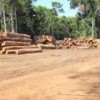
Making a Living from Lumber Without Destroying the Amazon
Forest management helped multiply 20-fold the value of native forests in the Brazilian Amazon state of Acre. But how do those who dedicate themselves to sustainable extraction of Amazon lumber get by?
A Highway Built to Be Flooded
A stretch of the brand-new Inter-Ocean Road Corridor in the Peruvian Amazon is to be flooded by a hydroelectric dam.Ecobreves – ARGENTINA: Opposition to Chinese Plan for Patagonia Soy
Environmental and citizen groups in the southern Argentine province of Río Negro are sounding the alarm against China's multi-million-dollar plan to expand soybean production in the area.Ecobreves – HONDURAS: Taking Steps to Protect Emerald Hummingbird
Honduran officials have set limits for a stretch of highway in the northern department of Yoro, home to the endangered emerald hummingbird (Amazilia luciae).Ecobreves – BRAZIL: Cerrado Savannah Fires Increase 350 Percent
Fires in the Cerrado, the Brazilian savannah, jumped 350 percent this year compared to the 2009 total, according to a study by INPE, the national space research institute, released Oct. 8. So far this year there have been 57,700 fires.THE CHANGING PATTERNS OF WORLD TRADE
The global trade landscape has changed profoundly in the past decade Âmore profoundly, I suspect, than we fully understand. These changes are being driven partly by market opening, but mainly by transport, communications and information technologies. It now costs less to ship a container from Marseille to Shanghai Âhalf way around the world than to move it from Marseille to Avignon Â100 kilometres away. Multinationals routinely organize their activity around three “shifts” corresponding to the three main times zones ÂEurope, North America and Asia and deliver on-line services, data inputting, software writing, help-lines Âfrom practically anywhere in the world.« Previous Page — Next Page »


The Week with IPS

NEXT STOP - SDGs
Tracking global progress towards a sustainable world
Tracking global progress towards a sustainable world
