Languages
Thursday, September 24, 2026



News and Views from the Global South

Cubans Want Faster Economic Reforms
A year after the Raúl Castro government approved a programme of changes and measures aimed at making the Cuban economic model sustainable, the slow pace of implementation is a focus of debate and criticism even among its supporters, who believe it should move forward more rapidly.
Spreading Climate Literacy in Cuba
Local communities can play a key role in adaptation to climate change if they are helped to properly understand the problem and take it on board. "Climate literacy is needed," says Ángela Corvea, a long-time Cuban environmental activist.
CLIMATE CHANGE-CARIBBEAN: Low-Cost Adaptation Measures Needed
As a result of climate change-related extreme weather events like a rise in the sea level and increasingly intense storms alternating with drought, Caribbean island nations are facing the challenge of adopting adaptation measures that could be too costly for their budgets.
Sea Change in Climate Adaptation Planning in Cuba
One of the major challenges facing Cuba as it designs climate change adaptation policies is the preservation of its coastal ecosystems against the predicted rise in sea level and increasingly catastrophic extreme weather events.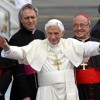
Pope Strikes Moderate Tone in Cuba
On his three-day visit to Cuba, Pope Benedict XVI has so far struck a moderate tone, although he called on Catholics in this country to fight with the "weapons" of peace and understanding for an "open, renewed society."
Climate Change Aggravates Water Shortage in Cuba
In this eastern Cuban city, Danny Dip Leyva has begun to use her shower again after decades of hauling water into her house by hand. But in Aurora, a small neighbourhood on the outskirts of Havana, Manuel Roque still longs for a regular supply of piped water.Development Aid in Cuba Threatened by Red Tape
Excessive delays by the Cuban government in evaluating foreign aid projects for their compatibility with the country’s economic planning policies have created uncertainty for aid organisations, which have sometimes even been forced to return funds to donors due to missed deadlines.
Dissidents Occupy Church Ahead of Pope’s Visit to Cuba
A small group of dissidents who identify themselves as members of the Republican Party of Cuba (PRC) continued to occupy a Havana church Thursday, demanding a response to their grievances, despite the fact that the Catholic Church rejected the use of its churches for political ends.Cuba Never Asked to Attend Summit of the Americas
Cuba never asked to be invited to a Summit of the Americas, Foreign Minister Bruno Rodríguez said in response to protests from some governments in the region at Havana’s exclusion from the meetings of Western Hemisphere leaders.
Faithful and Non-Catholics Alike Prepare to Welcome Pope to Cuba
The Catholic Church in Cuba expects people to welcome Pope Benedict XVI with warmth and enthusiasm, even though Catholics are not a majority here like they are in Mexico, the first stop on the pope’s Latin America tour that begins Mar. 23.
Q&A: Needed: Common Caribbean Strategies Against Climate Change
Subject to the double impact of the global economic crisis and climate change, the Caribbean island nations are in need of adaptation strategies in which international cooperation and citizen participation play key roles, says Cuban expert Ramón Pichs.
Q&A: Needed: Common Caribbean Strategies Against Climate Change
Subject to the double impact of the global economic crisis and climate change, the Caribbean island nations are in need of adaptation strategies in which international cooperation and citizen participation play key roles, says Cuban expert Ramón Pichs.CUBA: Oil Drilling Opens Up New Possibilities
The search for oil in Cuba’s Gulf of Mexico waters, launched by the Spanish firm Repsol, has triggered speculation about future prospects for Cuba and the possibility of this country one day making the transition from importer to exporter of crude.Economic and Climate Vulnerabilities Converge in the Caribbean
Caribbean islands are doubly exposed by the convergence of weak economies heavily dependent on foreign imports and greater vulnerability to climate change, according to ECLAC Executive Director Alicia Bárcena.Cuba on the Road to Clean Energy Development
More than a decade ago, solar electricity changed the lives of several mountain communities in Cuba. Now this and other renewable power sources are emerging as the best options available to develop sustainable energy across the island.Brazil Deepens Strategic Cooperation with Cuba
Brazilian President Dilma Rousseff's visit to Cuba served to further strengthen bilateral relations between the two countries, leverage the South American giant's investments in the Caribbean island, and deepen political ties.CUBA: Party Aims for Efficient, Inclusive Socialism
Cuba's communist leaders have mapped out a strategy to modernise their country's one-party socialist model and make it more efficient, which implies making it more inclusive and representative of a society that is increasingly diverse.CUBA: Adapting to Climate Change Proves a Complex Challenge
No one who lives in this fishing village on the south coast, 70 km from the Cuban capital, can forget the devastation wrought by hurricanes in 2008.Cuba Rebuts International Criticism Over Prisoner’s Death
The Cuban government energetically rebutted what it regards as another campaign to discredit it, following the death in prison of a man who, according to the authorities, was not a dissident nor on hunger strike, as the opposition alleges.CUBA: Countdown to First Communist Party Conference
In the run-up to the first National Conference of the Cuban Communist Party (PCC), the insistence of government sources that the meeting will concentrate on internal party matters seems to imply that social issues are to be excluded from the agenda.CUBA: Pope to Visit a Country in Flux
On his upcoming visit to Cuba, Pope Benedict XVI will find a country immersed in dramatic changes, as it "modernises" its socialist system and continues to open up to religion, marking a difference from the society found by John Paul II when he visited almost 14 years ago.« Previous Page — Next Page »


The Week with IPS

NEXT STOP - SDGs
Tracking global progress towards a sustainable world
Tracking global progress towards a sustainable world
