Languages
Sunday, September 20, 2026



News and Views from the Global South

Mental Health, Another Victim of Climate Change
"The city looked as if it had been bombed. On the way to my office, I passed people who had the same shocked look on their faces as I did. We would look at each other, and even though we were strangers, we’d ask ‘How did things go for you? Did anything happen to your house?’ It was a kind of warm solidarity that did me a lot of good.”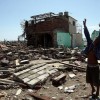
Tomorrow Is Too Late for Adaptation to Climate Change
You can still see broken plates, toys, books and some photographs among the rubble that was once the homes of Rey Antonio Acosta’s family and other families in Mar Verde, the beach community where Hurricane Sandy made landfall in this eastern Cuban city.
Caribbean Faces Increasing Fury of Storms
As the Caribbean reaches the end of October – the second-to-last month of the Atlantic hurricane season – Sandy has caused significant material losses and claimed the lives of 44 people in Haiti, 11 in Cuba, two in the Dominican Republic, one in Jamaica and one in the Bahamas.
Reforms Spread to Cuba’s Travel Policy
The easing of travel restrictions announced by the Cuban government Tuesday was one of the most eagerly awaited reforms. However, limitations remain in place for professionals and others deemed essential to the country’s development or national security.
Q&A: “A Stable, Lasting Peace Treaty for Colombia Will Take Time”
As peace talks between the Colombian government and the FARC guerrillas are about to start in Oslo, the possible participation of rebel leader Simón Trinidad, in prison in the United States, has not yet been decided.
Q&A: “Cuba Needs to Be Bold and Creative”
Cuba has been steeped in a profound economic crisis over the last 20 years, and no short-term solution to the accumulated problems can be expected, says Cuban professor and researcher Ricardo Torres.
Building With the Next Hurricane in Mind in Cuba
The main challenge that climate change poses for architecture in Cuba is that local residents themselves should be able to adapt and prepare their homes for the difficulties faced in this hurricane-prone island nation, said Dania González, a professor of architecture.
Q&A: Colombia’s FARC Guerrillas “Took Up Arms to Make Ourselves Heard”
It's hard to imagine her in guerrilla fatigues, carrying a 25-kg backpack and firing shots to repel an enemy attack, or diving for cover from aerial bombardment. She is known as Sandra Ramírez, and she has left the field of battle in Colombia to come to the Cuban capital to talk peace.
Young People Caretaking in an Aging Cuba
Mabel Suárez, a 22-year-old Cuban woman, can’t concentrate on enjoying her youth. She helped take care of her great-grandmother for two years, and she knows that, whether she likes it or not, it will fall to her to take care of her grandparents and parents in their old age.
Cuba Faces Challenge of Aging Population
“We age much more quickly than we learn how to,” says Juan Carlos Alfonso, director of the Population and Housing Census that begins to be carried out on Saturday, Sept. 15 in Cuba. The question of aging is on many minds in this country, where important social progress has been made but acute economic problems persist.
Colombia’s Rebels Insist Peace Is Only Possible with Reforms
The Revolutionary Armed Forces of Colombia (FARC) are taking a pragmatic, reformist stance in the new attempt to negotiate a peace agreement with the Colombian government, to put an end to nearly half a century of civil war.
Hurricane Isaac Highlights Vulnerabilities in the Caribbean
The impact of Hurricane Isaac as it made its way through the Caribbean region highlighted both the fragility of some countries in the face of extreme meteorological events, which are expected to become more and more intense, and the different strategies adopted to mitigate the risk of disasters.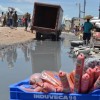
Marketing in the Mud Along the Dominican Border
Getting around on market day along the muddy border between the Dominican Republic and Haiti is almost impossible for those unfamiliar with the art of dodging the trucks, motorcycles and bicycles swerving amidst the messy piles of products scattered all over, and weaving among the hundreds of people coming and going between the two countries.
Awareness of Climate Change Risks Low in Dominican Republic
One of the major difficulties to overcome in climate change adaptation policies in the Dominican Republic is society’s low awareness of the risks, even though this Caribbean island nation is seriously exposed to the impacts of the phenomenon.
Climate Change and Poverty, a Deadly Cocktail for Dominicans
"Nobody mourns the poor, you know." That is the grim conclusion of a resident of La Ciénaga, one of the many poverty-stricken settlements clustered along the banks of the Ozama River in the Dominican capital, and which are at the mercy of the weather.
Biodiversity Without Borders
The protection and conservation of biodiversity figure among the most daunting challenges posed by climate change in the Caribbean islands, home to a wealth of endemic species of flora and fauna.
CLIMATE CHANGE: Caribbean Women Caught in the Storm
Incorporating a gender focus in public policies for confronting and adapting to the impacts of climate change is still a pending task in the Caribbean, despite women’s proven skills in risk and disaster management.
Q&A: Involvement of Local Communities Key to Climate Change Adaptation
To preserve the environment and adapt to climate change, alliances must be made with communities of local people with a view to educating, rather than dictating to them. This is the maxim upheld by Ángel Quirós, a marine biologist and head of Los Caimanes National Park, a protected area that is economically and environmentally important for Cuba and the Caribbean.
Living in the Heart of Hurricane Alley in Cuba
In Los Palacios, a farming community in the western Cuban province of Pinar del Río, local residents are still working hard to rebuild after the damage caused by two of the three hurricanes that hit this country in 2008. "It was just horrible," people here say when asked about what happened.
Community Drills Part of Cuba’s Top-Notch Disaster Response System
A well-oiled prevention system that involves the entire country, from the highest spheres of government to the most isolated rural community, makes Cuba one of the best-prepared countries in the world when it comes to preventing deaths and mitigating risks in case of disasters.
Q&A: No Single Country Can Forecast Climate Change Alone
Cuban climate change scientists have been sharing their research findings and experience over the past few years with the rest of the Caribbean islands, using PRECIS, a regional climate modelling system, to help design adaptation policies.« Previous Page — Next Page »


The Week with IPS

NEXT STOP - SDGs
Tracking global progress towards a sustainable world
Tracking global progress towards a sustainable world
