Languages
Friday, October 23, 2026



News and Views from the Global South
Civil Society

From Access to Action — Carbon Markets Can Turn Developing Countries’ Ambitions into Realities
The UN climate talks at COP30 once again brought the critical issue of climate finance to the forefront of global discussions. However, while much of the debate revolved around traditional forms of aid directed at developing countries most vulnerable to the impacts of climate change, a faster, more transformative approach lies in expanding access to carbon markets.
COP30: Broken Promises, New Hope — A Call to Turn Words into Action
When the world gathered in Glasgow for COP26, the mantra was “building back better.” Two years later, in Sharm El Sheikh, COP27 promised “implementation.” This year, in Belém, Brazil, COP30 arrived with a heavier burden: to finally bridge the chasm between lofty rhetoric and the urgent, measurable steps needed to keep 1.5 °C alive.
Bonn to Belém: Three Decades of Promises, Half-Delivered Justice, and Rights-Based Governance Is Now Inevitable
COP30 in Belém is not just another annual climate meeting; it is the 32-year report card of the world governance architecture that was conceived at the Rio Earth Summit of 1992. And that is what report card says: delivery has been sporadic, cosmetic and perilously disconnected with the physics of climatic breakdown.
COP30 Was Diplomacy in Action as Cooperation Deepens—Says Climate Talks Observer
As observers at the Conference of Parties closely monitored proceedings in Belém, many, such as Yamide Dagnet, approached the UN Climate Summit as an implementation COP. They are advocating for tangible signals to ignite crucial climate action before the climate crisis reaches irreversible levels.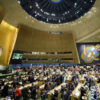
The UN General Assembly, Over Burdened with Repetitive Resolutions, Aims at Revitalization
The 193-member General Assembly (GA), the UN’s highest policy-making body, has long been the repository for scores of long-winded outdated resolutions accumulated over several decades-- and lying in cold storage.
Evaluation Finds Food Systems Programs Deliver Results but Warns of Missed Transformation Chances
A new independent evaluation of the Global Environment Facility’s food systems programs says they are delivering strong environmental and livelihood gains in many countries but warns that a narrow focus on farm production, weak political analysis, and shrinking coordination budgets are holding back deeper transformation.
‘Future Shaped by Ocean-Based Innovations Within Reach’
The oceans are a fundamental part of Earth's climate system, regulating it by absorbing and storing vast amounts of solar heat, redistributing that heat around the globe through currents, and absorbing a significant portion of human-caused carbon dioxide (CO₂) emissions—yet scientific research into them remains underfunded.
Sidelined—Quilombos Fight on for Health of World’s Largest Rainforest
Just 30 minutes from where the UN climate negotiations are unfolding in the port city of Belém, Afro-descendant communities are engaged in a fierce struggle for the full recognition and legal titling of their ancestral territories—critical as their security and livelihoods are compromised by businesses wanting to set up contaminating landfill sites and drug cartels.
From COP28 to Belém – Climate Security is Health Security
Around the world, the climate crisis is fast becoming the biggest public-health threat of the century. Extreme heat now kills more Europeans than any other natural disaster. Floods in Asia displace millions and contaminate water supplies. Mosquito-borne diseases once confined to the tropics are appearing in southern Europe and the United States.
Beyond Buzzwords: COP30’s Opportunity to Deliver on Sustainable Food Systems
The language of agricultural sustainability changes like the seasons—from “climate-smart” to “regenerative,” “agroecological,” and “nature-positive.” Each term reflects good intentions, but the growing list risks duplication, confusion and delays.
Cold or Heat, A Disputed Roadmap to Leave Fossil Fuels Behind in COP30
The heat in the Hangar Convention Center of the Amazonia, in the northeastern Brazilian city of Belém, has reached the negotiation rooms of the climate summit. Over the past 72 hours, one of the most delicate and significant discussions of this climate meeting has been taking place: the path to progressively abandon the production and use of coal, gas, and oil.
Civil Society Warns of New Land Grabs as World Bank Pushes for Tenure Reforms in Africa
As the COP30 negotiations intensify in Belém, Brazil, civil society organizations and research experts have called out major financial institutions for promoting foreign interests in controlling Africa's land by formalizing land tenure and seeking to convert Africa's land into industrial farms or carbon markets.
Explainer: Inside COP30’s 11th Hour Negotiations for Legacy-Building Belém Climate Deal
At a Conference of the Parties, where science intersects with politics, reaching agreements is often a tricky business. What is inside the last-minute negotiations as the COP presidency tries to get the parties to agreement at the final plenary?
AI and the Future of Learning
“Sometimes the best way to grasp a concept,” says Chris Folayan, co-founder and executive officer of Luma Learn, “is to learn it in your native language.”
Faith Leaders Endorse Fossil Fuel Non-Proliferation Treaty at COP30
Decades ago, a little girl was born in a place called Cleveland, Ohio, in the heart of the United States of America. Born to a woman from the deep South, the place of Martin Luther King, her mother left her ancestral lands for the economic opportunities in the north.
Why Food and Agriculture Should Be at the Centre of COP30 Agenda
As the COP30 entered its second week in Brazil, the urgency to tackle climate change has never been greater, as is the appetite to feed a growing world population.
Pan-African Activist Advocates for Climate-Resilient Food, Education Systems at Belém Talks
“I am the founder of the ‘I Lead Climate Action Initiative,’ which is a Pan-African movement that carries out grassroots-based climate action to address the climate crisis in Africa. We advocate for the restoration of Lake Chad, the world’s largest environmental crisis through research and engagement,” says Adenike Titilope Oladosu.
‘No Land Rights, No Climate Justice,’ Say Activists at Peoples’ Summit
Brazilian Indigenous leader and environmentalist Cacique Raoni Metuktire appealed for support for Indigenous peoples and their land. From the podium of the Peoples’ Summit, Cacique Raoni warned negotiators at the UN climate conference in Belém that without recognizing Indigenous peoples’ land rights, there will be no climate justice.
You Cannot Make Decisions About Our Lives—A Perspective on Global Climate Change Negotiations
Immaculata Casimero, a leader of the Wapichan Women’s Movement, remembers the beauty of the mountains that are cultural sites to her indigenous community in Guyana.
‘This People’s March for Climate is For My Son’s Future’
In the scorching heat and humidity, Canru Pataxo marched with his one-year-old son firmly held in his arms.
Shepherded by Anxious Security in Humidity-fueled Heat, Activists Plead for Climate Justice
Farmer and climate activist from Nigeria, Melody Areola, is beating the heat in Belém and voicing farmers’ rights in climate discussions. As the UN Climate Conference, COP30, in Brazil approaches the end of its first week, activists like Melody are making their voices louder.« Previous Page — Next Page »





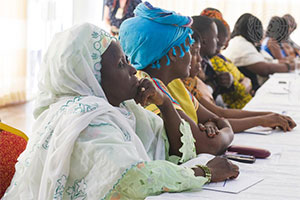 Representatives of Civil Society, Sierra Leone. Credit: UN Photo/Eskinder Debebe
Civil society faces mounting threats worldwide, even as it remains essential for democratic accountability, especially in countries struggling with economic instability and social inequality. However, at the same time, nations with weak democratic governance structures also systemically suppress the power of civil society. Human rights activists across the Global South frequently challenge issues such as political persecution and gender oppression, but in return face state-sanctioned punishment for their advocacy. Imprisonment and exile are common mechanisms of punishment that seek to erode the strength of civil society. The 2026 World Press Freedom Index has reached its lowest level in 25 years, with more than half of the world’s countries now falling into the "difficult" or “very serious” category for press freedom. IPS seeks to highlight the work of civil society across the Global South as well as the challenges that they face.
Updated by Yilan Batista and Shuli Wong August 2026

The Week with IPS

NEXT STOP - SDGs
Tracking global progress towards a sustainable world
Tracking global progress towards a sustainable world
