Languages
Tuesday, October 27, 2026



News and Views from the Global South
Aid

The Giant Plastic Tap: How art fights plastic pollution
"The size of the faucet highlights the magnitude of the problem. It makes the problem impossible to ignore. We're used to throwing things 'away'—but when we're confronted with what happens when 'away' is not an option, I think it creates an emotional wake-up call," says Benjamin Von Wong.
UNICEF Report Warns of Rising Rates of Child Mortality without Proper Funding
Despite levels of child mortality and stillbirths having significantly decreased since 2000, increasingly unequal and limited access to basic services around the world endangers millions of children around the world, a new report finds.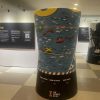
African Diaspora Exhibition Showcases Transformative Solidarity and the Legacy of Slavery
Ahead of the International Day of Remembrance of the Victims of Slavery and the Transatlantic Slave Trade on March 24, the United Nations (UN) unveiled a new exhibition examining the themes of equality and transformative solidarity in the context of the African diaspora.
Seeds of Survival, Amid Conflict Sudan Is Saving Its Agricultural Future
Sudan’s diverse crops and agricultural heritage are at risk of being lost. The ongoing conflict in Sudan is claiming lives and threatening livelihoods and food security. In the chaos of conflict, scientists like Ali Babiker are fighting to protect Sudan’s future food security—not with weapons, but with seeds.
Funding Crunch Puts Years of Progress at Risk in Fight Against Tuberculosis
Governments and donors must ensure funding is sustained to fight tuberculosis (TB), organizations working to stop the disease have said, as they warn the recent US pullback on foreign aid is already having a devastating effect on their operations. NGOs and other groups that play a critical role in national efforts to stop what is the world’s deadliest infectious disease say the US administration’s recent decisions to first freeze and then cancel huge swathes of foreign aid funding have put countless lives at risk around the world.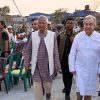
UN Chief’s Ramadan Solidarity Visit Revives Rohingya Refugees Hope
When United Nations Secretary-General António Guterres appeared before the Rohingya refugees wearing a traditional white panjabi, a costume of Muslims, to join an iftar party in Ukhiya refugee camp, thousands who had gathered waved to welcome him.
Our Investment in School Meals is Our Investment in Education
Millions of children worldwide are going hungry, and we all know that hungry children cannot learn. On International School Meals Day, we are calling on donors to significantly scale-up funding for school feeding to ensure every child can go to school, every child can access at least one nutritious meal a day, and every child can concentrate, develop and achieve.
Women and Girls in Afghanistan Bear the Brunt of the Country’s Crisis
Since the Taliban’s return to power in Afghanistan nearly four years ago, human rights have begun diminishing for over 14 million women. Heightened gender inequality has exacerbated the pre-existing humanitarian crisis in Afghanistan, which has been marked by conflict, displacement, climate change, food insecurity, and economic instability. In 2025, widespread cuts in humanitarian funding look to further strain the crisis.
Tensions Between Israel and Hamas Threaten Second Phase of Gaza Ceasefire
On March 1, the first phase of the Israel-Hamas ceasefire was scheduled to end. However, as Israel continues to block humanitarian aid from entering Gaza, and Hamas declining to release more hostages until the second phase goes into effect, the long-term feasibility of the ceasefire agreement is uncertain. Additionally, U.S. President Donald Trump’s recent inflammatory comments surrounding the conflict between the two parties might put further strain on the already fragile ceasefire agreement.
International Women’s Day, 2025
Rule Breakers: The Compelling True Story of Afghan Girls Who Risked All to Learn
Like the Afghan robotics team, Education Cannot Wait (ECW), the global fund for education in emergencies and protracted crises in the United Nations, is breaking the 'rules' and continuing to educate young women in that country despite an edict from the Taliban denying girls a secondary school education.

Education Cannot Wait Interviews Ramiz Alakbarov, UN Resident Coordinator and Humanitarian Coordinator in Ethiopia
Dr. Ramiz Alakbarov was appointed as the UN Resident Coordinator and Humanitarian Coordinator in Ethiopia by the UN Secretary-General António Guterres in August 2023.

International Women’s Day 2025: For All Women and Girls

In 2025, our world remains deeply unequal. Women earn, on average, 20% less than men globally.
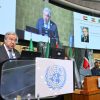
Humanitarian Groups Face Challenges in Reaching the Sudanese Displaced Population
In the final quarter of 2024 ,there has been an escalation in the Sudanese civil war, with armed clashes between the Rapid Support Forces (RSF) and the Sudanese Armed Forces (SAF) having grown in brutality. Heightened insecurity has pushed millions of people into displacement, hunger, and poverty. Additionally, the continued hostilities have made it difficult for humanitarian organizations to scale their responses up.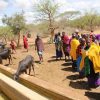
How Tanzania’s Farmers, Pastoralists Paid the Price for a World Bank Project
A hush had fallen over Mbarali District, but it was not the quiet of peace—it was the silence of uncertainty. Just months ago, the rolling plains were gripped by fear as government-backed rangers, dressed in olive green fatigues, roamed through villages, seizing cattle, torching homes, and forcing entire communities to the wobbly edge of survival. The REGROW project, a USD 150 million initiative funded by the World Bank to expand Ruaha National Park (RUNAPA), had promised tourism growth and environmental conservation. What it delivered was a brutal campaign of state-sanctioned land grabbing under the guise of protecting nature.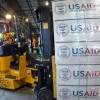
Human Rights, Healthcare Disrupted in Eastern Europe With USAID Funding Freeze
As the full effects of the US decision to freeze foreign aid funding begin to be felt across the world, organizations in Eastern Europe and Central Asia (EECA) are warning years of work in everything from delivering life-saving healthcare to defending human rights and strengthening democracy could be undone.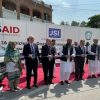
Afghan Refugees, Among Others, Feel the Impact of USAID Funding Freeze
“I was shocked when told by a security guard that the clinic has been closed down. I, along with my relatives, used to visit the clinic for free checkups,” Jamila Begum, 22, an Afghan woman, told IPS.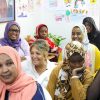
Gender Inequality in Science Limits Progress Towards Solving Complex Global Challenges
Today is the International Day of Women and Girls in Science and a time to take stock of progress, successes, and setbacks towards open and gender-inclusive science. Gender equality remains elusive in science, as only one in three scientists is a woman. Not only do these inequalities hold women back, but they also limit scientific progress.
Tanzanians with HIV Left in Crisis as USAID Funding Ends
At 9 a.m. on Monday, Mariam Msemwa clutched her clinic card tightly as she stood in line at Bagamoyo District Hospital’s HIV Clinic in Tanzania’s coastal region. The 19-year-old had been here many times before, picking up monthly doses of antiretroviral (ARV) drugs that kept her alive. But today was different.When she reached the counter, the nurse flatly told her. “There’s no more free medication, ” she said. “You’ll have to buy it yourself.”
Goma: What Have We Done to God to Deserve All This?
Zawadi Delphine is a soldier's wife and mother of three. She and her family live in Camp Katindo, east of the city of Goma, the provincial capital of North Kivu. Recalling what happened on the night of Sunday, January 26, 2025, she says that her husband had come from the front, north of the city of Goma, visibly angry and in a hurry. Without telling her what was really going on, he had told her that they would only meet again by "divine grace."
U.S. White House Executive Order Raises Concerns for Its Support to the UN
A new executive order from the United States White House calls for withdrawing support from major UN entities and a review of all international intergovernmental organizations which the United States is a member of. The U.S.’s orders against the UN Palestine Refugee Agency also do not bode well for ongoing ceasefire negotiations in Gaza.
Israel’s Ban on UNRWA Threatens to Undermine Ceasefire in Palestine
On January 19, Israel and Hamas implemented a three-phase ceasefire agreement that seeks to end the war between Israel and Palestine, facilitate the exchange of prisoners and hostages between the two nations, and begin a period of reconstruction in the Gaza Strip. Since the ceasefire took effect, humanitarian organizations have struggled to assist hordes of displaced Palestinians as they made their treacherous returns back home. Insecurity has reached new peaks as Gazans struggle to cope with inadequate levels of humanitarian aid and the dangers of unexploded ordnance. Furthermore, the Israeli Knesset’s ban on the United Nations Relief and Works Agency for Palestinian Refugees (UNRWA) is set to greatly exacerbate living conditions and access to aid.« Previous Page — Next Page »





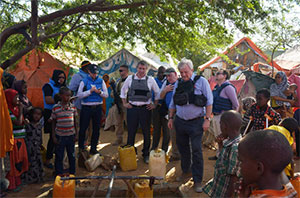 UN Emergency Relief Coordinator Visits Somalia. Credit: UN Photo/Tobin Jones
In recent years, conflicts have broken out across the world with no sign of slowing down or stopping. In times like this, millions of people globally are in dire need of humanitarian aid. Famine, warfare, natural disasters, and economic decline plague a host of nations, including Palestine, Sudan, Chad, Lebanon, and Haiti, to name a few. Humanitarian aid provides millions of people with critical services including healthcare, food, clean drinking water, psychosocial support, housing, and access to education. UN agencies such as the UNDP, UNICEF, the World Food Programme (WFP), UNHCR, UNRWA, and UNEP work with the UN Office for the Coordination of Humanitarian Aid (OCHA) and local organizations to come up with the best possible strategies to support affected communities. At the same time, humanitarian aid and those working on the frontlines are consistently threatened by both actors directly involved in conflict as well as those who are meant to contribute to the international humanitarian regime at large. The near-collapse of United States international aid structures in 2025, including the termination of 83% of USAID’s 6,300 global initiatives, has left millions of people without access to vital humanitarian assistance. 98 million people in 2025, only 65% of people targeted for humanitarian assistance, received the help they needed. In contrast, 123 million people received some form of humanitarian assistance in 2024, and OCHA’s 2026 Global Humanitarian Overview estimates that 239 million people are in need of assistance in 2026. IPS is well-positioned to discuss current initiatives to provide aid and relief through in-depth reporting and opinion content.

The Week with IPS

NEXT STOP - SDGs
Tracking global progress towards a sustainable world
Tracking global progress towards a sustainable world
