Languages
Saturday, November 7, 2026



News and Views from the Global South
Energy
VENEZUELA-RUSSIA: Business Deals Consolidate Alliance
"Tovariches! Comrades! Today I feel I must say to you: let us work to find gas and oil under these waters!" said Alexander Medvedev, deputy chairman of the Russian firm Gazprom, when drills on the Escorpión Vigilante marine platform finally perforated the Venezuelan sea bed.
TRADE-CAMEROON: Borders – Where Two Economies Meet
No one pays full price for petrol in northern Cameroon, not when there's cheaper Nigerian contraband available. In Garoua town for example, there are about 4,000 commercial motorcycles which all depend on "zoa zoa" or "federale" as this highly cherished liquid is generally referred to.ECONOMY-BRAZIL: Crisis Delays Threat of ‘Venezuelan Disease’
The global financial crisis has corrected the extreme overvaluation of Brazil's local currency, caused by the policies of its Central Bank, thus temporarily chasing away fears of "Dutch disease", which in the developing world could well be called "Venezuelan disease".PORTUGAL: "Angolagate" Bribes in Local Banks
Portuguese banks that received transfers of money to Angolan politicians implicated in illegal arms sales have kept mum after the Lisbon paper Público reported their involvement.ENERGY-EU: Zero Carbon Communities
This small municipality in the south of Portugal is becoming increasingly well-known for its alternative energy initiatives. The latest is the Sunflower project, which also involves communities in seven other European Union countries.FINANCE: Watchdogs Criticise World Bank, IMF Mega Projects
The World Bank and International Monetary Fund (IMF) came under fire last week for failing to adequately promote transparency in extractive industry operations in resource-rich countries where the two institutions work.
ECONOMY-MAURITIUS: Textile Manufacturing Goes Green and Clean
‘‘The cost of production is high in Mauritius as we are far away from our main markets. Our island is so small that at times our clients do forget us. We no longer benefit from any trade preferences. We don’t have any natural resources but we have plenty of sunshine and wind and we have decided to use these resources.’’BURMA: China’s Thirst for Oil Ignores Environment, Rights
The largest island off Burma’s west coast is emerging as another frontier for China’s expanding plans to extract the rich oil and gas reserves of military-ruled Burma.
ECONOMY: Global Crisis Should Spell End of Laissez-Faire Doctrine
The real question to ask about the global financial crisis is whether ‘‘it will go deep enough for the big economies to realise that the market should be controlled more. The philosophy of laissez-faire simply does not work’’.CUBA-US: A Thaw Fuelled by Oil?
The discovery of a significant offshore oilfield in Cuban waters in the Gulf of Mexico could persuade the United States to modify its policy towards the Caribbean island nation, experts say, while warning that this possibility could also entail risks.MEXICO: Oil Reforms Leave State in the Red
The oil industry reforms approved by the Mexican Congress and applauded by the government and most of the country’s parties, with the exception of factions on the left and part of the business community, will deprive the state of a source of funding that currently finances 40 percent of the public budget.ENVIRONMENT-CHINA: Coal Far Costlier Than Thought – Study
Often criticised for its massive coal-based industries that jeopardise international efforts to combat global warming, China is undoubtedly the biggest victim of its voracious coal consumption.
NETHERLANDS: When the Electricity Is in Your Feet
As everyone knows, the wind and the sun produce energy. But now there is also a way to generate electricity by dancing.
KENYA: Biofuels Boom and Bust
The Kenyan government has hailed bio-diesel as an innovation that combines green politics with poverty reduction. But recent drops in biofuel prices have caused concern about the sustainability of alternative fuel production.CORRUPTION-PERU: Officials Charged in Oil Contract Scandal
An anti-corruption Peruvian prosecutor brought charges against one current and three former high-level officials and 10 other people in a scandal over alleged bribes in lucrative oil contracts awarded to Discover Petroleum, a Norwegian company.
OIL SANDS-PART 3: Biggest Customer Has Second Thoughts
As Canada's tar sands extraction expands full steam ahead, a perfect storm of internal and external opposition could derail some of the voracious growth at the world's largest energy project.
ENVIRONMENT: A Green Lining in Market Meltdown?
Clean and green technologies may end up a big winner in the current global financial crisis, say investment professionals.
OIL SANDS-PART 2: "Where I Come From Is Ground Zero"
The wheels of the Caterpillar 797B, the world's largest truck, are always going round and round at Shell Canada's Albian Sands mine.
ENVIRONMENT: Global Financial Crisis a Bad Sign for Andean Biodiversity
The crisis affecting the financial sector and stock markets around the world could fuel the expansion of extractive industries in South America's Andean region, warn experts.
OIL SANDS-PART 1: Showdown at Ft. McMoney
The sun rises in a bright, red line over flat land, small lakes, boreal forest and peat bogs as our small double engine plane bumps through early morning turbulence between Edmonton and Ft. McMurray, Canada.
INDIA/PAKISTAN: Indus Water Treaty Agitates Kashmiris
As Pakistan and India wrangle over the waters of the Chenab, Kashmiris - through whose homeland the river and four other tributaries of the mighty Indus flow - have reason to be agitated.« Previous Page — Next Page »





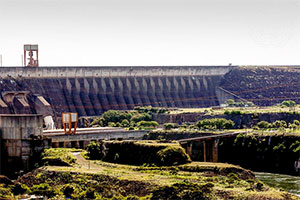 UN Power Plant, Paraguay. Credit: UN Photo/Evan Schneider
Energy has posed a great challenge for economies around the world. As global energy consumption skyrockets throughout the years, so does the need for sustainable solutions. The Sustainable Development Goals are essential in providing people with access to safe, affordable, and sustainable energy sources that minimize harm on the planet. Progress towards these goals opens the door for an advancement in modernization for communities on a global level and allows for a potential mitigation of tensions between nations.
The UN’s Summit of the Future in 2024 offered new initiatives that are being taken to achieve these goals, including a decreased reliance on fossil fuels, a switch to renewable energy sources, and improved climate financing.
IPS is well positioned to provide relevant, insightful, and compelling analysis of recent updates and measures being taken around the world to achieve a cleaner future.

The Week with IPS

NEXT STOP - SDGs
Tracking global progress towards a sustainable world
Tracking global progress towards a sustainable world
