Languages
Saturday, November 7, 2026



News and Views from the Global South
Energy
ENVIRONMENT-US: Florida Hopes Energy Farm Will Be First of Many
If an experiment to plant sweet sorghum in rural Florida and convert it to fuel ethanol pans out, it could herald a fundamental change in how the U.S. and other countries create and use renewable bio-energy, researchers say.ENERGY: Governments Must Lead on Renewables, says Shell CEO
Royal Dutch Shell, with an annual turnover of more than 350 billion dollars from extracting oil and gas, mainly in third world countries, says it is up to governments rather than companies like Shell to take the lead in finding solutions for a sustainable energy future.COLOMBIA: Sugar Workers Strike for Basic Rights
"We sugar cane cutters are neither delinquents nor terrorists; we are honest workers demanding respect for our rights," say Colombia’s cane harvesters, who have been on strike since Sept. 15, demanding basic rights.ENVIRONMENT: Climate Action Could Escape Financial Crisis
Enter the global financial crisis - exit action on climate change? That lingering apprehension is not shared by Pamela Cox, the World Bank's vice-president for Latin America and the Caribbean.BOLIVIA: Water, Energy Everywhere – But Not for Locals
Peasant farmers in 42 villages along the Zongo valley in western Bolivia stand by and watch as the flourishing electricity industry harnesses the swift-flowing river while, paradoxically, their own farms are languishing from lack of water and energy.
Q&A: "Future Prosperity Is in Green Technologies"
Achim Steiner, the eloquent executive director of the United Nations Environment Programme (UNEP), believes that Mexico could take a leadership role in the new "green" economy.
Q&A: When Intelligence Is Used Unintelligently
All eyes were on Hans Blix, the seemingly unflappable Swede, on TV screens around the world before the U.S.-led invasion of Iraq in 2003.ENVIRONMENT: Companies Scramble for Ever-Scarcer Resources
As humanity runs out of oil and minerals, the extraction of previously untouched deposits suddenly pays off - financially. But experts warn that it will likely further accelerate climate change and seriously damage the environment.
U.S.: Great Place for the Oil Business
Why do U.S. oil companies - some of the most profitable corporations on the planet - receive 20 to 40 billion dollars a year in subsidies from the U.S. government?
Q&A: 'Oil Prices Have Revived Interest in Dams'
Concerns over the future of fisheries in the Mekong River floated to the surface at the first round of discussions held here late this month to shape a blueprint to build a series of mega dams across South-east Asia’s largest body of water.ENERGY-LATIN AMERICA: PDVSA’s Growing Presence
Central America, Cuba, the Dominican Republic and islands in the eastern Caribbean are receiving more and more oil from Venezuela, while major refineries are planned in South America - at Pernambuco in northeastern Brazil, and at El Aromo, on Ecuador's Pacific coast.
DEVELOPMENT-TANZANIA: Lighting Up Women’s Lives
Anneth Laizer shoved her kerosene lantern onto the top shelf and switched on the lights after her home in Tanzania's third-largest city, Arusha, was connected to electricity earlier this year.CLIMATE CHANGE: Denmark, Norway Grapple with Growing CO2
Even as Scandinavian leaders have assumed a prominent role in international efforts to cut greenhouse gas emissions and combat climate change, both Norway and Denmark have failed to reduce their own emissions.
ENVIRONMENT-LAOS: Paying South-east Asia's Power Bill
There is an uneasy calm that swirls through this South-east Asian capital, which sits on the banks of the Mekong River. White sandbags piled waist-high over a 13 km stretch along the river offer the reason why - floods.
RIGHTS: Oil Companies’ “Self-Policing” a Dismal Failure
The intersection of human rights, the environment and corporate responsibility was highlighted today at a Capitol Hill hearing featuring activists from Burma and Nigeria who underlined the failure to date of "voluntary" controls over major oil companies operating in their countries.PORTUGAL: Waves of Energy Come Ashore
The mighty waves rolling in from the Atlantic ocean towards the northern coast of Portugal have been harnessed to produce electricity that will supply the homes of some 6,000 people.ENVIRONMENT: Push for Biofuels Losing Energy
The European Union's only directly elected body has urged that a contentious target for using agricultural crops to meet one-tenth of the bloc's transport demands should be reduced.VENEZUELA: Multi-Tentacled PDVSA, a State Within a State
"I would have liked to be taken on by PDVSA, but I didn't win that lottery," Antonio Jiménez, a 52-year-old father of four and grandfather of three who is a pump attendant at a petrol station on the outskirts of the Venezuelan capital, told IPS.ECONOMY-PORTUGAL: Angola Rising
Nearly seven years after rebel leader Jonas Savimbi was killed in combat, Angolans are doing such brisk business with Portugal that the southern European country’s largest former colony in Africa has a double-digit economic growth rate.
ENVIRONMENT-INDIA: Green Buildings Popular With Builders, Clients
India’s energy conservation laws for buildings are voluntary but this is one area in which the country is already ‘greener’ than in many parts of the developed world.CANADA: Energy Politics Could Make or Break Liberals
While U.S. media pundits dub the race for the White House as a battle between the "warrior" and the "orator", Canada's current election campaign might be characterised as "the meanie" versus "the weenie".« Previous Page — Next Page »





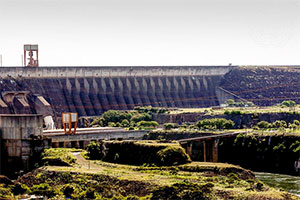 UN Power Plant, Paraguay. Credit: UN Photo/Evan Schneider
Energy has posed a great challenge for economies around the world. As global energy consumption skyrockets throughout the years, so does the need for sustainable solutions. The Sustainable Development Goals are essential in providing people with access to safe, affordable, and sustainable energy sources that minimize harm on the planet. Progress towards these goals opens the door for an advancement in modernization for communities on a global level and allows for a potential mitigation of tensions between nations.
The UN’s Summit of the Future in 2024 offered new initiatives that are being taken to achieve these goals, including a decreased reliance on fossil fuels, a switch to renewable energy sources, and improved climate financing.
IPS is well positioned to provide relevant, insightful, and compelling analysis of recent updates and measures being taken around the world to achieve a cleaner future.

The Week with IPS

NEXT STOP - SDGs
Tracking global progress towards a sustainable world
Tracking global progress towards a sustainable world
