Languages
Saturday, November 7, 2026



News and Views from the Global South
Energy
POLITICS-US: Economy High in Public’s Foreign Policy Worries
The price of oil and other international economic issues are rapidly taking centre stage among the dominant foreign policy concerns of the U.S. public, which has also become increasingly sceptical about the effectiveness of military action to further Washington's interests abroad, according to a major new survey released Wednesday by the influential Foreign Affairs journal.BURMA: US Oil Major Complicit in Abuses – Rights Lobby
An environmental group is warning U.S. energy giant Chevron to clean up its act in Burma or face legal proceedings where the multinational’s links to gross human rights violations in the military-ruled country could be exposed.FINANCE: Oil Majors Rapped Over Secrecy, Corruption
Leading oil firms impede efforts to stamp out poverty and corruption by shrouding their financial dealings in secrecy, says a global watchdog.CHILE: Environmentalists Withdraw Backing from Government
Twenty-three environmental groups in Chile withdrew their support from President Michelle Bachelet, complaining that she had failed to live up to an agreement they had signed with her during her election campaign.ECONOMY-MEXICO: Sunny Today, Cloudy Tomorrow
So far, the Mexican economy has not fallen prey to the ills affecting its principal trading partner, the United States, and is surviving internal political tensions arising from government initiatives to reform the state-owned oil company. But conditions could deteriorate in the second half of the year.CHINA: High on Ethanol Despite Rising Food Prices
Studies debunking the environmental benefits of ethanol have made little impression in this country, which is betting on bio-fuels as the green answer to coal and oil to help clear its increasingly smog-filled skies.ECONOMY: Gov’ts Must Act to Replace Oil, Poll Finds
Global public opinion believes that the world is running out of oil and that governments should be doing more to replace it as humanity's main source of energy, according to a major international survey released here Sunday by WorldPublicOpinion.org.LATIN AMERICA: Reconciling Oil and the Environment
Years of public scrutiny, ever-newer technologies, more government regulations, notions of corporate responsibility and the market-driven need for greater efficiency are all factors behind improvements in the environmental policies of Latin America's petroleum industry.ENVIRONMENT: But What Is Good About Biofuels?
The German government decision two weeks back against increased use of biofuels was based on technical reasons - more than three millions vehicles cannot burn biofuels without risking engine breakdown.SPAIN: Warning of Radioactive Leak Comes Five Months Late
Failure to inform the authorities and take safety measures after a radioactive leak at a Spanish nuclear plant nearly five months ago has alarmed people in nearby towns, environmentalists and civil society organisations.LATIN AMERICA: Food or Fuel – That Is the Burning Question
The difficult balancing act between fighting hunger, producing biofuels and defending the environment is at the centre of the debate at the 30th Regional Conference of the United Nations Food and Agriculture Organisation (FAO) in the Brazilian capital.
POLITICS-SUDAN: The Census Saga Continues
Sudan's crucial national census has been delayed by a week over concerns that displaced persons living in the north have still not been repatriated to the south, something which could seriously affect the results of the count.ENVIRONMENT: Scientists Ask EU to Drop Biofuel Targets
Scientists tasked with advising the European Union's policy-makers have called for a target on promoting the greater use of biofuels to be dropped.
VENEZUELA: Bari People Left Without Land by Oil, Cattle, Coal
For 900 years, Barí indigenous hunters roamed freely throughout a vast region in western Venezuela. "Now they want to sentence us to die by locking us up in this corral, watching the white man get rich by destroying the land that used to be ours," says schoolteacher Conrado Akambio.VENEZUELA: New Windfall Profit Tax on Oil
Venezuela is about to levy a new tax on the income of oil companies profiting from the soaring prices of crude, which have brought them petrodollars in amounts over and above provision for investment, costs and a reasonable profit margin.FINANCE: World Bank "Playing Both Sides of Climate Crisis"
A new study released by an independent policy think tank casts further doubts on the World Bank's ability to stay neutral in the global politics of climate change.MEXICO: Oil Industry Reforms Face Uphill Battle
The debate on the Mexican government’s proposed reforms of the state oil industry began Wednesday in a climate marked by threats of a social uprising by the leftwing opposition and uncertainty of the bill’s ultimate fate.
MIDEAST: Gaza Running on Near Empty
Ayman Eid stands as motionless as his orange Hyundai taxi. Never mind taking a passenger somewhere, Ayman has no idea how he will ever get home.CLIMATE CHANGE: A Game With Too Many Free Riders
The evidence is piling up that climate change threatens to bring a chaotic future unlike anything ever known. Taking collective action in time to avert the worst means rewarding climate-safe behaviour, punishing climate transgressors and publicly praising those who are trying to protect the environment, a new study suggests.
BRAZIL: Clean Gasoline Fuels Soybean Production
The Brazilian government has decided to move up the deadlines for obligatory addition of biofuels to gasoline and diesel fuel, a measure that will boost the production of soybeans, the oilseed crop with the lowest yield and that causes the most environmental damage.CLIMATE CHANGE: A Vision Worth Fighting For
Sweeping societal change is a slow and erratic business. The civil rights movement in the United States went nowhere for decades and then exploded in the 1960s. Not long ago, smokers could light up anywhere they pleased in Canada and the U.S. Now they are mostly confined to a few outdoor areas and as a consequence, far fewer people smoke.« Previous Page — Next Page »





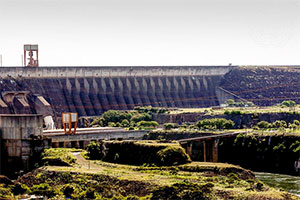 UN Power Plant, Paraguay. Credit: UN Photo/Evan Schneider
Energy has posed a great challenge for economies around the world. As global energy consumption skyrockets throughout the years, so does the need for sustainable solutions. The Sustainable Development Goals are essential in providing people with access to safe, affordable, and sustainable energy sources that minimize harm on the planet. Progress towards these goals opens the door for an advancement in modernization for communities on a global level and allows for a potential mitigation of tensions between nations.
The UN’s Summit of the Future in 2024 offered new initiatives that are being taken to achieve these goals, including a decreased reliance on fossil fuels, a switch to renewable energy sources, and improved climate financing.
IPS is well positioned to provide relevant, insightful, and compelling analysis of recent updates and measures being taken around the world to achieve a cleaner future.

The Week with IPS

NEXT STOP - SDGs
Tracking global progress towards a sustainable world
Tracking global progress towards a sustainable world
