Languages
Sunday, November 8, 2026



News and Views from the Global South
Energy
ENERGY: Electricity Transforming Rural Senegal Into 21st Century
Large-scale electrification programmes are bringing Senegal's interior villages into the 21st Century and creating a ''technological revolution''.LABOUR-NIGERIA: “You Do Not Stop Workers Through Laws”
"Leaders come and go, but there will always be workers' unions." This is the philosophical view which Elder Linus Ukamba, Senior Assistant General Secretary of the Nigerian Labour Congress (NLC), has adopted towards plans by President Olusegun Obasanjo to dismantle the union federation.ENERGY-BURKINA FASO: To Get Electricity, Try People Power
Wendemi Yanogo owns a small dairy just outside Burkina Faso's capital. At present, she earns about 50 cents for every litre of milk that she sells in Ouagadougou. By next month, however, Yanogo hopes to see the profits from her business double - after the small town she lives in, Tanghin Dassouri, gets electricity.SUSTAINABILITY: Do ‘Water Wars’ Still Loom in Africa?
When water affairs ministers from countries along the Nile met recently to discuss the fate of the river, Boutros Boutros-Ghali was not in the room with them. But the lingering memory of his comment that future wars would be fought over water probably was.ECONOMY-NIGERIA: Putting the Oil Industry in Local Hands a Slippery Business
Oil is the undisputed kingpin of Nigeria's economy, contributing over 90 percent of its export earnings. But more than four decades after the start of oil extraction in Nigeria, the industry remains in foreign hands - much to the frustration of local entrepreneurs.ENERGY-SOUTHERN AFRICA: The Challenges of Getting Malawi Wired
It's a tale of delays, missed deadlines and the grinding problems that can dog large-scale infrastructure projects. Work to connect electricity lines between Malawi and neighbouring Mozambique was scheduled to have been completed by 2002. The deadline has now been shifted to 2005, however - and officials aren't ruling out 2006.ECONOMY-NIGERIA: The Oil Leaks That Yield Vast Profits – and Tragedy
It happens at night, under cover of darkness. Thieves move into the mangrove swamps and creeks of Nigeria's southern Niger Delta region, homing in on the oil pipelines that criss-cross the area.ECONOMY-NIGERIA: Nationwide Strike Suspended
The Nigeria Labour Congress announced Wednesday that it was suspending a nationwide stay away that had been called to protest against a fuel price increase./UPDATE/ECONOMY-NIGERIA: Emergency Stockpiling as Fuel Strike Looms
A court of appeal in Nigeria's capital, Abuja, has ordered the Nigeria Labour Congress to suspend a proposed strike that had been scheduled to start on Wednesday. It has also ordered authorities to reverse the one cent petrol tax that is at the heart of the labour dispute.POLITICS-SUDAN: Division of Wealth Smooths Way for Lasting Peace
History was made this week when Sudan's government and the rebel Sudan People's Liberation Army signed an agreement on the thorny issue of how to share the country's wealth.LABOUR-NIGERIA: Trade Unions Threaten to Resume Strike
Nigeria's trade unions have announced that they would call for mass action to protest government's refusal to revert to the old price of fuel.LABOUR-NIGERIA: Unions Call Off Strike
If the strike had gone ahead as planned, it would have paralysed Nigeria.LABOUR: Panic Food Buying as Nigerians Brace for a Long Strike
Past experiences have taught Nigerians an important lesson: always stockpile food before any industrial action.ENERGY-NIGERIA: Rumours of Price Hike Trigger Fuel Queues
Economic activities in Nigeria's largest city Lagos have been paralysed as rumours of an impending fuel price hike prompted long queues at filling stations.ECONOMY-NIGERIA: Minerals to Overtake Oil as Major Foreign Currency Earner
Nigeria's new Minister for Solid Minerals, Odion Ugbesia is hoping that minerals will soon overtake oil as the country's major source of foreign currency.ENERGY-NIGERIA: Crude Oil Theft Costs Millions of Dollars
Nigeria lost 6.1 million barrels of crude oil, worth about 151 million U.S. dollars, to theft during the first quarter of this year, government officials say.ENERGY: Laissez Faire Legacy Leaves US, Canada Cursing the Dark
Pundits blaming last week's vast blackout in parts of the United States and Canada on an antiquated "third world" power grid seem to have forgotten that deregulation - which many analysts say spawned the crisis - has been Washington's mantra to developing countries for years.ENERGY-US: Critics Pan Nuke Plant Safety as Industry Revival Looms
A controversial nuclear power plant just 35 kms north of New York City will remain open despite fears that it is an attractive target for sabotage and reports that its evacuation plans are inadequate.ENERGY-CUBA: Solar Panels to Light Up Remote Households
Around 500,000 people living in remote mountainous areas of Cuba will finally be able to pack away their oil lamps, listen to radio, and even watch TV, thanks to the growing use of renewable energy sources in this Caribbean island nation.ENERGY: Fears of Mismanagement, as Oil Fever Grips Chad
''They say oil is spurting out of the ground, but I haven't seen it yet," says Faustin Gayande, a young man from the Chadian capital of N'djamena.ENVIRONMENT-GEORGIA: Court OK’s Lawsuit Against Troubled Pipeline
A lawsuit to halt a controversial 3-billion-dollar oil pipeline in the former Soviet republic of Georgia overcame its first major hurdle, with a Georgian district court granting an environmental group the right to sue the country's government for approving the Baku-Tbilisi-Ceyhan (BTC) project.« Previous Page — Next Page »





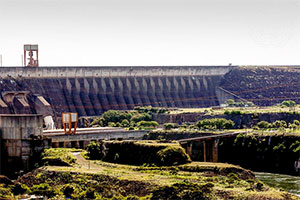 UN Power Plant, Paraguay. Credit: UN Photo/Evan Schneider
Energy has posed a great challenge for economies around the world. As global energy consumption skyrockets throughout the years, so does the need for sustainable solutions. The Sustainable Development Goals are essential in providing people with access to safe, affordable, and sustainable energy sources that minimize harm on the planet. Progress towards these goals opens the door for an advancement in modernization for communities on a global level and allows for a potential mitigation of tensions between nations.
The UN’s Summit of the Future in 2024 offered new initiatives that are being taken to achieve these goals, including a decreased reliance on fossil fuels, a switch to renewable energy sources, and improved climate financing.
IPS is well positioned to provide relevant, insightful, and compelling analysis of recent updates and measures being taken around the world to achieve a cleaner future.

The Week with IPS

NEXT STOP - SDGs
Tracking global progress towards a sustainable world
Tracking global progress towards a sustainable world
