Languages
Sunday, November 8, 2026



News and Views from the Global South
Energy
POLITICS-U.S.: Washington Lends Muscle to Besieged Colombian Pipeline
The George W. Bush administration is planning to significantly expand U.S. commitments in Colombia, with a 2004 budget request for up to 147 million dollars to protect a private oil pipeline in the South American country.ENERGY-SAO TOME AND PRINCIPE: Oil Raises Hope, Fear
The discovery of oil in the rugged and forested islands of Sao Tome and Principe has raised both hope and fear in the former Portuguese colony located off the west coast of Africa.ENVIRONMENT-US: Presidential Hopefuls Push Alternatives, Pan Kyoto
As the U.S. Congress debates an energy bill roundly rejected by environmentalists and public health advocates, the Democratic hopefuls for the presidency in 2004 are seeking to distinguish themselves with energy plans that would wean the country from its addiction to fossil fuels.ENERGY-NIGERIA: Electricity Returns to Villages after 20 Years of Darkness
This small community of about 5,000 inhabitants was among the first villages to benefit from Nigeria's first rural electrification programme in 1970, but darkness returned to the village just two years after the inauguration of the project as thieves carted away the electrical equipment.ENERGY-GABON: Abundant, but Little Used, Natural Resources
Gabon has embarked on a programme to develop its energy resources, which has remained untapped due to the country's poorly developed energy sector.ENERGY: Gas Pipeline Aims to Integrate the Economies of West Africa
Nigeria will start supplying gas to Ghana, Benin and Togo in June 2005, in a move that is expected to speed up the integration of the West African economies, says a top official at the West African Pipeline Project.ENERGY-SENEGAL: Schools Discover Virtues of Solar Power
After years of frequent power outages, especially in urban areas, Senegalese schools are discovering the virtues of solar power, thanks to the ‘'Solar Energy in Schools'' project.ENERGY-UGANDA: High Tariff Drives Consumers to Charcoal
Musa Musisi, 48, sells charcoal in Wandegeya, a suburb of Kampala, the capital of Uganda. Lucky for him, high electricity tariffs have driven consumers to charcoal.ENERGY: Growing Demands Prompt Burkina Faso to Import Electricity
Growing demands for power supply have prompted Burkina Faso to import electricity from neighbouring Cote d'Ivoire.ENERGY-ZIMBABWE: Villagers Benefit from Rural Electrification Project
Precious Munemo, 18, sits by the television set and concentrates on her favourite programme.ENERGY-ZIMBABWE: Villagers Benefit from Rural Electrification Project
Precious Munemo, 18, sits by the television set and concentrates on her favourite programme.ENVIRONMENT: North’s Fleet of Toxic Tankers a Threat to South
The industrialised North continues in its attempts to send its hazardous waste ships to be scrapped in the shipyards of the developing South, threatening human health and the environment in those nations, charged activists as delegates gathered here this week for the conference of the Basel Convention on hazardous waste trade.DEVELOPMENT: Nigeria Woos Foreign Firms to Invest in Farming
The government of President Olusegun Obasanjo has promised tax relief and a 2.5-percent tariff reduction to local and foreign firms willing to engage in large-scale farming of maize, wheat and rice in Nigeria.ENERGY: Fuel Shortages Hurt Zimbabwe
Queues of up to one kilometre have resurfaced in the Zimbabwean capital Harare as desperate motorists jump from one petrol station to the other in search of the scarce commodity. But many still go empty-handed.DEVELOPMENT: Nigeria Moving Away from Oil Economy
Nigeria, which depends on oil, plans to develop the country's non-oil sector in the next five years./ARTS WEEKLY/MUSIC-U.S.: Reggae Artist Explores His African Roots
After travelling and performing throughout the world, a Ghana-born reggae musician now based here is looking to his homeland for inspiration.DEVELOPMENT: World Bank says Oil and Mining Firms Must Open Books
The World Bank is backing an international campaign to get oil and mining companies to open their books and reveal their payments to governments in developing nations.CHINA-WATER: Water-Short Beijing Braces For Another Dry Winter
The heaps of cabbage on Beijing streets and long queues of people waiting to buy this traditionally cheap and leafy vegetable signals the onset of winter in the capital.WATER-EASTERN EUROPE: ‘Cheaper’ Means Suggested to Treat Waste
Eastern European countries should give priority to treating their waste water by using locally available technologies in order to ensure there is always a healthy supply of this precious resource, says a scientific research body.TURKEY-WATER: Massive Irrigation System to be Launched
Turkey this week celebrates the completion of the twin Urfa tunnels, a major component in a key irrigation project -- the Southeast Anatolia Project (GAP) -- which is expected to play a key role in national and regional development.« Previous Page





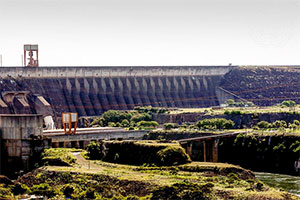 UN Power Plant, Paraguay. Credit: UN Photo/Evan Schneider
Energy has posed a great challenge for economies around the world. As global energy consumption skyrockets throughout the years, so does the need for sustainable solutions. The Sustainable Development Goals are essential in providing people with access to safe, affordable, and sustainable energy sources that minimize harm on the planet. Progress towards these goals opens the door for an advancement in modernization for communities on a global level and allows for a potential mitigation of tensions between nations.
The UN’s Summit of the Future in 2024 offered new initiatives that are being taken to achieve these goals, including a decreased reliance on fossil fuels, a switch to renewable energy sources, and improved climate financing.
IPS is well positioned to provide relevant, insightful, and compelling analysis of recent updates and measures being taken around the world to achieve a cleaner future.

The Week with IPS

NEXT STOP - SDGs
Tracking global progress towards a sustainable world
Tracking global progress towards a sustainable world
