Languages
Sunday, October 18, 2026



News and Views from the Global South
Energy

Biogas to Wipe Out Poultry Industry Pollution in El Salvador – VIDEO
 El Granjero, the second-largest egg producer in El Salvador, invested US$2.5 million in 2017 to build a biogas plant, proving that there is a solution to the thorny issue of environmental pollution caused by most poultry companies in the country.
The Missing Link in Africa’s Climate Plans: Animal Health
One would expect that this year’s wetter than average rainy season in parts of Africa would be viewed with relief, not fear. Yet many areas in the region sits at a knife’s edge—still recovering from years of drought and a historic famine, too much rain leads to flooding and water-borne diseases. Both varieties of extreme weather place enormous stress on livestock systems across the region, on which communities rely for both sustenance and livelihoods.
Belem City Limits: How to Host a Successful Climate COP
There is no question that most climate activists and governments were delighted when Brazil offered to host the 2025 UN Climate Conference taking place this November.
Climate Reparations are Necessary but Not Sufficient: World Needs Less Growth & More Justice
While recent heat waves were causing thousands of deaths, the Trump administration was busy dismantling policies that regulate greenhouse gases on the theory they don’t harm human health.
Historic Inter-American Court Ruling: A Game-Changer for Environmental Defenders?
The Inter-American Court of Human Rights has issued one of the most progressive climate justice decisions of our time. Its historic Advisory Opinion on the climate emergency and human rights, released on July 3, 2025, was unequivocal: States have legal obligations under international human rights law to reduce, prevent, and address climate damage, including reining in big polluters.
‘After Decades of Making Huge Profits, Companies Shouldn’t Be Allowed to Leave Behind a Toxic Legacy’
CIVICUS speaks with Matthew Renshaw, a partner at a UK law firm that represents Nigerian communities taking legal action against Shell over environmental damage caused by its operations in the Niger Delta.

Forests, Fossil Fuels, and the Fight for the Future: DRC’s Oil Expansion Sparks Global Alarm
The Democratic Republic of Congo (DRC) stands on the precipice of a profound environmental and social crisis, as the government prepares to auction 55 new oil blocks that cover more than half the country’s landmass.
Bullying Southeast Asia with Tariff Threats
US President Trump has successfully used tariff threats to achieve economic, political and even personal goals. These threats, reminiscent of colonialism, have secured submission and concessions.
Mining on the Rise as Clean Energy Demands Shifts Global Commodity Exports
Two-thirds of the developing world, or ninety-five out of 143 economies, are dependent on commodities for export value, making up 60 percent of their merchandise exports. For the least developed world, this number rises to 80 percent, leaving entire nation's revenue vulnerable to price swings, fiscal shocks, and evolving trade compositions. Hidden behind the numbers lies a deeper transformation, one disrupting fossil fuel trade, triggering a higher reliance on mineral exports, particularly on mining essential for green technologies.
How Clustering Multilateral Environmental Agreements Can Bring Multiple Benefits to the Environment
The UN80 Initiative, unveiled in March by Secretary-General António Guterres, is a system-wide effort to reaffirm the UN’s relevance for a rapidly changing world.
Biogas, a Solution to Poultry Pollution in El Salvador
Still in its early stages and with few players, the poultry sector in El Salvador is taking small steps toward environmentally sustainable production by using its biological waste to generate biogas and, in turn, electricity –an equation that benefits the natural environment, communities, and the farms themselves.
Clean Energy Sources Are Beginning to Overtake Fossil Fuels, But Is It Too Late?
As a result of the worsening climate crisis, extreme weather patterns have disrupted nearly all aspects of human life around the world. With the impacts of fossil fuel reliance being more pronounced than ever before, the United Nations (UN) has implored governments and industries to begin adopting more sustainable, renewable energy sources.
Global South calls for Strategic Energy Transition Amidst SDG Target Slowdowns
At the UN 2025 High Level Political Forum last week, global energy leaders warned that without urgent action in expanding access to clean energy, hundreds of millions will remain vulnerable, and the world will risk falling short of its 2030 SDG deadline.
Humans Have Blown Past 6 of 9 ‘Planetary Boundaries’: Governments Alone Won’t Fix This
Nearly ten years after the Paris Agreement — a legally binding commitment to reduce greenhouse gas emissions — the gap between climate goals and government actions remains stubborn.
China is the Driving Force Behind More, Newer Renewable Energies in Latin America
China, with its investments, products, technology, and innovation focused on solar and wind farms in Latin America and the Caribbean, as well as on electricity networks and services, stands out as a driving force for the region's shift toward energy less reliant on fossil fuels and increasingly cleaner and greener.
From Drylands to Dignity: How Solar Energy and Climate-Smart Farming Are Empowering Communities in Burkina Faso
In the heart of Burkina Faso’s drylands, in the village of Zoungou, a quiet transformation is underway. Alhaji Birba Issa, a smallholder onion farmer, bends over neat rows of lush green crops, the hum of solar-powered pumps audible in the background.
From Streets to Rivers: Driving Bangkok’s Sustainable Transport Future
Thailand’s transport sector is a significant contributor to national greenhouse gas emissions, accounting for 18.4 per cent of the country’s total emissions. Bangkok is at the centre of this challenge. With more registered vehicles than residents, the resulting traffic congestion worsens air pollution and strains the city’s roads and overall mobility infrastructure.
‘International Demand for Coltan Is Linked to Violence in the DRC’
CIVICUS speaks with Claude Iguma, a mining governance expert with a PhD in Social Sciences, who is based in Bukavu, South Kivu province, eastern Democratic Republic of the Congo (DRC).

UN Reform: Is it Time to Renew the Idea of Clustering the Major Environmental Agreements?
“Never let a good crisis go to waste.” Winston Churchill’s famous maxim feels very relevant today, when multilateralism and many environmental causes seem to be in retreat. We now face a triple planetary crisis of climate change, biodiversity loss, and pollution.
The Race Towards Clean Energy: A World Still Gripped by Coal
Global investments in energy exceeded USD 3 trillion in 2024, with at least USD 2 trillion being invested in clean energy technology and infrastructure. Infrastructure. Despite that progress, fossil fuel consumption continues to rise with little sign of slowing.
‘Only a Handful of Environmental Organisations Still Dare Challenge Corporate Projects in Court’
CIVICUS speaks to Cristinel Buzatu, regional legal advisor for Central and Eastern Europe at Greenpeace, about how Romania’s state gas company is weaponising the courts to silence environmental opposition.
« Previous Page — Next Page »





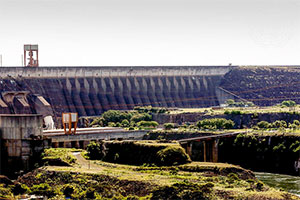 UN Power Plant, Paraguay. Credit: UN Photo/Evan Schneider
Energy has posed a great challenge for economies around the world. As global energy consumption skyrockets throughout the years, so does the need for sustainable solutions. The Sustainable Development Goals are essential in providing people with access to safe, affordable, and sustainable energy sources that minimize harm on the planet. Progress towards these goals opens the door for an advancement in modernization for communities on a global level and allows for a potential mitigation of tensions between nations.
The UN’s Summit of the Future in 2024 offered new initiatives that are being taken to achieve these goals, including a decreased reliance on fossil fuels, a switch to renewable energy sources, and improved climate financing.
IPS is well positioned to provide relevant, insightful, and compelling analysis of recent updates and measures being taken around the world to achieve a cleaner future.

The Week with IPS

NEXT STOP - SDGs
Tracking global progress towards a sustainable world
Tracking global progress towards a sustainable world
