Languages
Friday, September 18, 2026



News and Views from the Global South
Health

Women in Sudan are Starving Faster than Men; Female-Headed Households Suffer
The food crisis in Sudan is starving more day by day, yet it is affecting women and girls at double the rate compared to men in the same areas. New findings from UN-Women reveal that female-headed households (FHHs) are three times more likely to be food insecure than ones led by men.
From Semei to Hiroshima: Astana Times Editor on Bringing Global Solidarity Through Journalism
Eighty years ago, the atomic bombings of Hiroshima and Nagasaki left a lasting reminder to humanity of the inhuman nature of nuclear weapons. Kazakhstan, too, is a nation deeply scarred by nuclear tests conducted during the Soviet era. Having covered the activities of Soka Gakkai International (SGI) in Kazakhstan—including its support for exhibitions and documentary productions on nuclear abolition in Astana—, INPS Japan recently interviewed Zhanna Shayakhmetova, editor-in-chief of The Astana Times, a leading English-language newspaper in the country that continues to convey messages of disarmament and peace to the world. In the interview, Shayakhmetova spoke about the role of religious leaders who will gather in Astana from around the world this September, the importance of passing on memories to younger generations, and the responsibility journalism holds in this endeavor.
Global Supply Chain Failures are Causing Pharmaceutical Contamination
The contamination of pharmaceutical medicines through toxic excipients is killing many and harming others. The UN agencies for health and drugs and crime warn that systemic vulnerabilities in the global supply chain have been exploited to introduce industrial-grade toxic chemicals into medicines, harming thousands of people, including children.
UN Trade and Environment Agencies Target Plastic Pollution through Global Negotiations and Trade Measures
They are lightweight, cheap, and able to be used in every sector of every supply chain. Few materials have revolutionized manufacturing and the global economy as much as plastics have. They are essential in almost everything, however this comes at a cost. A cost of 1.5 trillion annually in environmental damage, and a 75 percent waste ratio of all plastic ever produced.
IPC Alert Declares the Worst Famine Conditions in Gaza since October 2023
Amidst the ongoing conflict in Gaza, the risk of famine among rising need of consumption and nutrition have reached their worst levels since the start of the conflict. Without urgent analysis to latest report from the Food Security Classificat “IPC ALERT: Worst-case scenario of Famine unfolding in the Gaza Strip”.
‘After Decades of Making Huge Profits, Companies Shouldn’t Be Allowed to Leave Behind a Toxic Legacy’
CIVICUS speaks with Matthew Renshaw, a partner at a UK law firm that represents Nigerian communities taking legal action against Shell over environmental damage caused by its operations in the Niger Delta.

Violence Escalates in Sudan as Humanitarian Aid Struggles to Meet Growing Needs
Earlier this month, Sudanese civilians began facing a considerable escalation of hostilities, with the most recent attacks from the Rapid Support Forces (RSF) and the Sudanese Armed Forces (SAF) claiming dozens of lives. Amid a rapidly growing scale of needs and an overwhelming lack of funding, the United Nations (UN) and its partners have struggled to deliver adequate amounts of humanitarian aid.
To Tackle Microplastic Pollution from Synthetic Textiles, Rebuild Natural Fibre Markets
Plastic pollution has emerged as one of the most pressing environmental challenges of our time. Since the mid-20th century, over 8 billion metric tons of plastic have been produced globally (UNEP, 2021). Shockingly, more than 90% of this plastic waste has not been recycled. Instead, it has been incinerated, buried in landfills, or leaked into the environment where it can persist for hundreds of years, fragmenting into microplastics.
US Republican Lawmakers Don’t Care About Mortality in the Country
The recent legislation passed by the US Congress, oddly named the One Big Beautiful Bill (OBBB), and signed by the US President, reveals that Republican lawmakers in the nation’s capital do not care about excessive and premature mortality in the United States.
‘The Lesson from Gaza Is Clear: When Ai-powered Machines Control Who Lives, Human Rights Die’
CIVICUS discusses the military use of artificial intelligence (AI) in Gaza with Dima Samaro, a Palestinian lawyer and researcher, and director of Skyline International for Human Rights, a civil society organisation (CSO) that defends digital freedoms and human rights in the Middle East and North Africa. Dima serves on multiple boards focused on civic space and surveillance issues, including Innovation for Change’s MENA Hub, the Surveillance in the Majority World Network and the VUKA! Solidarity Coalition, and volunteers with Resilience Pathways to help Palestinian CSOs counter Israeli efforts to restrict civic space and manipulate public narratives.

Israeli Airstrikes Inflame Syria’s Humanitarian Crisis
Over the past week, the humanitarian situation in Syria has significantly deteriorated, with tensions between the Druze religious minority and the Syrian military reaching new peaks. On July 16, Israel launched a series of powerful airstrikes on Syria’s capital city, Damascus, in defense of Syria’s Druze population, further spurring regional instability and exacerbating the dire scale of needs.
Intersectional Feminist Leadership Needed to Realise Global Goals
In its 80-year history the UN has never once been led by a woman. As the international community convenes for the 2025 High-Level Political Forum (HLPF) to review progress on gender equality and other Sustainable Development Goals (SDGs), this remains a fundamental hypocrisy at the heart of global governance. How can an institution that has systematically excluded women from its highest office credibly champion gender justice worldwide?
From Gaza to Georgia, Human Rights Defenders Pay a High Price for Change. Here’s How You Can Help
Across the globe—from Gaza’s rubble to the streets of Tbilisi—people are standing up for justice, dignity, and basic rights. But far too often, they are paying with their freedom, their safety, even their lives.
Human Rights in an Increasingly Digitizing World
Over the past several decades, digital technologies have transformed nearly every aspect of human life, revolutionizing developments across multiple sectors, including healthcare, education, and commerce, to name a few. However, these changes have also brought forth new concerns surrounding the preservation of human rights in an increasingly digitizing world.
3.4 Billion People Left Behind: Interest Payments Now Outpace Education Spending in Half the World
Today, 3.4 billion people live in countries that spend more on debt interest payments than on health or education. This marks a trembling indication that the United Nations’ promise for the 2030 Agenda could be slipping away.
To Be, or Not To Be, An Undocumented Migrant
To be, or not to be, an undocumented migrant, that is the question for millions of men, women and children in many less developed countries. “Whether ‘tis nobler in the mind to suffer the slings and arrows of outrageous fortune, or to take arms against a sea of troubles and by opposing end them” for a better life as an undocumented migrant in a foreign land.
HLPF 2025: Civil Society Is Not A Service Provider – We Are The Frontline Of Transformation
As delegates gather in New York over the coming weeks for the 2025 High-Level Political Forum (HLPF), we see this moment as a test. A test of whether world leaders are serious about rescuing the Sustainable Development Goals (SDGs) - or content to let the promises of Agenda 2030 drift quietly into irrelevance.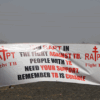
Sweet Hope to End Bitter Pills for Multidrug-Resistant Tuberculosis
Every day, Yondela Kolweni has to hold down her son, who screams and fights when it is time for his daily life-saving TB tablets—a painful reminder of her battle with the world’s top infectious killer disease. “It is a fight I win feeling awful about what I have to do,” says Kolweni (30), a Cape Town resident and a TB survivor. “The tablets are bitter, and he spits them out most of the time, and that reminds me of the time I had to take the same pills.”
WHO, UNICEF Find the World Is Off Track To Meet Childhood Immunization Goals
The latest data highlights that the world is off track to meet the targets set by the Immunization Agenda 2030 (IA2030) to achieve 90 percent global immunization coverage for essential childhood vaccines and halve the number of unvaccinated children by 2030.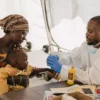
A Crisis of Contagion and Collapse: Why Cholera Continues To Be a Problem in the DRC
The Democratic Republic of Congo (DRC) is grappling with one of its worst cholera outbreaks in recent history, exposing deep systemic cracks in public health, water infrastructure, and humanitarian response, leaving its youngest citizens in peril.
NATO’s Trillion-dollar Gamble: The Dangers of Defence Without Accountability
Donald Trump’s bullying tactics ahead of NATO’s annual summit, held in The Hague in June, worked spectacularly. By threatening to redefine NATO’s article 5 – the collective defence provision that has anchored western security since 1949 – Trump won commitments from NATO allies to almost triple their defence spending to five per cent of GDP by 2035. European defence budgets will balloon from around US$500 billion to over US$1 trillion annually, essentially matching US spending levels.« Previous Page — Next Page »


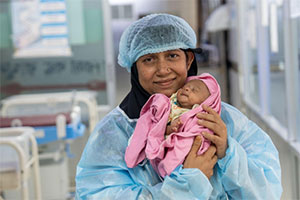 Bangladesh: Sarid, born one month early, receives specialized newborn care and grows stronger every day. Credit: UNICEF/UNI944397/Mojumder
Since the onset of the 2000s, global life expectancy has seen an overall rise, attributed to significant technological and scientific innovations in healthcare. Due to an increased understanding of different conditions as well as a rise in cooperation among healthcare experts around the world, there have been major strides made in ensuring that as few people die from chronic illnesses as possible. Despite the belief that healthcare is a fundamental human right, people from low- or middle-class backgrounds, marginalized groups, and underdeveloped countries have far more limited access to basic healthcare services.
The COVID-19 pandemic showed how marginalized communities are disproportionately affected by health crises, proving that we have much work to do in ensuring that no one dies of terminal conditions. While the global response to the coronavirus saw significant strides in immunization and vaccine development, the global outbreak of mpox in 2022 and its upsurge in parts of Africa in 2024 must remind us to remain vigilant.
Other major disease outbreaks in recent years have been linked to the destruction of infrastructure during warfare. Notably, in 2024, the Gaza Strip witnessed a return of the poliovirus since its eradication in the region 25 years ago. Israel’s blockade on Gaza has resulted in the collapse of the region’s sewage plants and desalination plants, and also destroyed healthcare capacities. The UN stated that this lack of clean water and sanitation would lead to an outbreak of cholera and other deadly infectious diseases. The 2026 OCHA Humanitarian Situation Report confirmed that the over two years of conflict in Gaza has produced a catastrophic health emergency, with millions remaining dependent on relief aid amid tight restrictions and no functioning public health system.
IPS is committed to providing full and comprehensive coverage on healthcare challenges around the world. IPS seeks to address the multifaceted causes of such challenges, including unprecedented pandemics, conflict-driven disease outbreaks, as well as socioeconomic barriers to equal healthcare access. IPS is also dedicated to reporting on innovations in the healthcare industry.

The Week with IPS

NEXT STOP - SDGs
Tracking global progress towards a sustainable world
Tracking global progress towards a sustainable world
