Languages
Friday, November 20, 2026



News and Views from the Global South
Health
ENVIRONMENT: Ministers Say Yes to Mercury Treaty
Six thousand tonnes of mercury enter the environment every year, posing a threat to human and animal health. Environment ministers meeting in Kenya have agreed to negotiate a treaty to reduce the supply and use of mercury worldwide.
IRAQ: Doctors in Hiding Treat as They Can
Seventy percent of Iraq's doctors are reported to have fled the war-torn country in the face of death threats and kidnappings. Those who remain live in fear, often in conditions close to house arrest.PAKISTAN: Fatal Polio Thrives on Conflict Along Porous Border
The battle to eradicate polio in Pakistan has become more complicated.POLITICS: Afghanistan Still World’s Opium Capital
Despite the heavy military presence of the United States and other Western powers, Afghanistan remains the world's largest illicit producer of opium, according to a new study released by experts who monitor the worldwide trade in narcotics on behalf of the United Nations.HEALTH-BOTSWANA: HIV Prevalence Remains High
Despite significant financial investments in both prevention and treatment, Botswana has been experiencing only a modest decline in HIV prevalence, especially among women.HEALTH: Warmer Climate Gives Malaria New Hunting Grounds
Climate change is bringing malaria to regions of Africa where the disease was previously unknown, researchers report from the conference of the American Association for the Advancement of Science in Chicago this week.
DEVELOPMENT: U.N. Seeks a Green Revolution in Food
The food crisis that spilled over from last year could take a turn for the worse in the next decade if there are no explicit answers to a rash of growing new problems, including declining agricultural production, a faltering distribution network and a deteriorating environment worldwide.
HEALTH-UGANDA: Pads From Papyrus
The average income in the Kyenjojo district in western Uganda is less than a dollar a day. Spending twice that on a single sanitary pad is an unaffordable luxury for most women.
HEALTH-NIGERIA: Polio – Making Up For Lost Time
Six years ago, authorities in the northern Nigerian state of Kano suspended polio vaccination campaigns for thirteen months. It was a major setback for eradication of the disease, which has since regained a foothold in Africa's most populous nation and re-infected several other countries that were considered polio-free.HEALTH-BRAZIL: Older Women at Higher Risk from AIDS
The HIV infection rate in women over 50 in Brazil has more than tripled since 1996, making this population group the prime target of the government's HIV/AIDS prevention campaign during the carnival festivities.POLITICS: Latin American Leaders Say 'No' to U.S. Drug War
A commission led by three former Latin American heads of state has called the 30-year U.S. "war on drugs" in Latin America a failure and urged a drastic change in policy.
DR-CONGO: How Many More Will Be Raped?
As people around the world celebrate their loved ones on Valentine's Day weekend, activists are working to ensure that the ongoing horrors of the conflict in the Democratic Republic of Congo (DRC) are not forgotten.HEALTH: Privatised Care More Placebo than Panacea
Rich countries and the World Bank should stop pushing privatised health care in poor countries, Oxfam International said Wednesday.AGRICULTURE-INDIA: Looking Beyond Wheat and Rice
Food security experts say India must wean itself away from dependence on wheat and rice and look to the sub-continent’s rich agro-diversity in order to address the kind of food crisis that hit the country last year - as well as longer-standing nutrition deficiency issues.
HEALTH-ARGENTINA: No End to Chagas Disease
After two years of the government health programme "Argentina justa, Argentina sin Chagas" (Fair Argentina, Chagas-Free Argentina) the fight against the endemic disease of that name is weakening, according to experts.
Q&A: "Sanitation Is Becoming a Social Movement"
While 2008 - declared by the U.N. as the "International Year of Sanitation" - came and went with 2.6 billion people, including almost one billion children, still living without basic facilities, UNICEF's sanitation and hygiene senior advisor, Therese Dooley, says there is reason for hope.
Q&A: Water Pushed to the Limit
When it comes to water, "humanity does not have the full awareness of the danger it is facing and will only act under extreme circumstances. The bad news is that those extremes are drawing near," Manuel Baquedano, president of the Chilean non-governmental Institute of Political Ecology, told Tierramérica.HEALTH: U.S. Urged to Pay Fair Share of Global Fund
The Global Fund to Fight AIDS, Tuberculosis (TB) and Malaria is facing a critical funding gap of five billion dollars - an amount that could save nearly two million lives in the coming year, leading public health advocates said at a teleconference Thursday.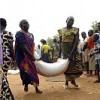
DEVELOPMENT: Urgent Aid Sought for Victims of “Silent” Crises
The United Nations children's agency UNICEF said Tuesday that it must raise over a billion dollars this year to meet the basic needs of women and children in disaster zones worldwide, most of them in sub-Saharan Africa.HEALTH: Obama Lifts "Global Gag Rule"
U.S. President Barack Obama Friday lifted an eight-year ban on U.S. funding for overseas family-planning groups and clinics that perform or promote abortion or lobby for its legalisation.Q&A: Zimbabwe – Fighting Cholera on a Shoestring
Nearly 50,000 cases of cholera have been reported in Zimbabwe by the World Health Organisation; the death toll stood at 2,755 on Jan. 21.« Previous Page — Next Page »


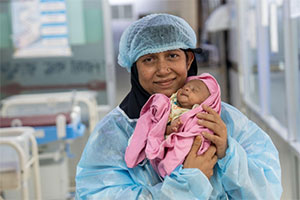 Bangladesh: Sarid, born one month early, receives specialized newborn care and grows stronger every day. Credit: UNICEF/UNI944397/Mojumder
Since the onset of the 2000s, global life expectancy has seen an overall rise, attributed to significant technological and scientific innovations in healthcare. Due to an increased understanding of different conditions as well as a rise in cooperation among healthcare experts around the world, there have been major strides made in ensuring that as few people die from chronic illnesses as possible. Despite the belief that healthcare is a fundamental human right, people from low- or middle-class backgrounds, marginalized groups, and underdeveloped countries have far more limited access to basic healthcare services.
The COVID-19 pandemic showed how marginalized communities are disproportionately affected by health crises, proving that we have much work to do in ensuring that no one dies of terminal conditions. While the global response to the coronavirus saw significant strides in immunization and vaccine development, the global outbreak of mpox in 2022 and its upsurge in parts of Africa in 2024 must remind us to remain vigilant.
Other major disease outbreaks in recent years have been linked to the destruction of infrastructure during warfare. Notably, in 2024, the Gaza Strip witnessed a return of the poliovirus since its eradication in the region 25 years ago. Israel’s blockade on Gaza has resulted in the collapse of the region’s sewage plants and desalination plants, and also destroyed healthcare capacities. The UN stated that this lack of clean water and sanitation would lead to an outbreak of cholera and other deadly infectious diseases. The 2026 OCHA Humanitarian Situation Report confirmed that the over two years of conflict in Gaza has produced a catastrophic health emergency, with millions remaining dependent on relief aid amid tight restrictions and no functioning public health system.
IPS is committed to providing full and comprehensive coverage on healthcare challenges around the world. IPS seeks to address the multifaceted causes of such challenges, including unprecedented pandemics, conflict-driven disease outbreaks, as well as socioeconomic barriers to equal healthcare access. IPS is also dedicated to reporting on innovations in the healthcare industry.

The Week with IPS

NEXT STOP - SDGs
Tracking global progress towards a sustainable world
Tracking global progress towards a sustainable world
