Languages
Saturday, November 21, 2026



News and Views from the Global South
Health
HEALTH: Universal HIV/AIDS Treatment Goals Receding
As millions of people across the world continue to die from HIV/AIDS, top U.N. officials and civil society leaders are reiterating calls for increased funding to fight the deadly epidemic.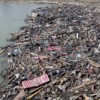
BURMA: One Million Survivors Not Yet Reached – U.N.
U.N. officials are giving the impression that the world body is making headway in helping the millions of survivors in Burma’s cyclone-hit Irrawaddy Delta.
Q&A: “Criminalisation of HIV/AIDS Will Not Help Us”
As the United Nations winds down a major two-day conference to take stock of the global response to the HIV/AIDS pandemic, the problem of persistent discrimination against people living with the virus has been high on the agenda.EGYPT: Protests Rise Against Fertiliser Plant
For the last two months, controversy has raged over planned construction of a massive fertiliser plant near the port city of Damietta. Residents fear the plant could adversely affect the local environment.AFRICA: Women Say Regional AIDS Plan Falls Short
Despite the admirable progress made by some African countries in preventing and treating HIV/AIDS since 2000, 14 million Africans have died of AIDS in that time span, and an additional 17 million have been infected, says a new report on HIV/AIDS on the continent.
BOLIVIA-PERU: Titicaca Truths Revealed
Nobody doubts that Lake Titicaca, a watershed and resource shared by Bolivia and Peru, is polluted. But a half-century after the two governments realised there was a problem there are still no detailed studies of the state of its waters.CANADA: Safe Injection Site Mired in Political Squabble
The Canadian government has decided to appeal a British Columbia Supreme Court decision allowing North America's first supervised injection site, the facility known as Insite in Vancouver's Downtown Eastside neighbourhood, to remain open without a federal government exemption.HEALTH-SOUTH AFRICA: Children in the Path of the Pandemic
There is barely a path leading down the steep incline and through the dense bush to the Mabuyakhulu homestead. It would be easy to pass by without finding 13 year old Zanele* and her eight year old sister Andiswa who stay there on their own.HEALTH-CUBA: Free Sex Change Operations Approved
New horizons opened up for transsexuals in Cuba with the approval of a Public Health Ministry resolution that establishes guidelines for their health care, including free gender reassignment operations.
BURMA: Nargis Victims Forced From Camps
A global human rights lobby slammed Burma’s military regime for driving survivors who have endured untold hardship since last month’s powerful cyclone into further misery.BURMA: Thousands of Children Orphaned By Nargis
Ko Ko Aung remembers the moment when he thought he had lost his older brother, Wai Yan Soe, to the powerful waters that tore through their house on the night Cyclone Nargis struck, one month ago.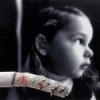
HEALTH-LATIN AMERICA: Tobacco Regulations as Solid as Smoke
Government funds to fight tobacco use in Latin America, which kills one million people each year, pale in comparison to the health costs of this epidemic and receive only a small portion of the tax revenues from the tobacco industry.
MEDIA-INDIA: Child Scribes in Villages Raise Development Issues
Children should be seen, not heard - an adage that remains in practice in most parts of rural India even today where the orthodox patriarchal traditions continue to hold sway in tightly-knit local communities.RIGHTS-INDIA: State-Sponsored Repression, Say Human Rights Activists
The People’s Union for Civil Liberties (PUCL), a 32-year-old Indian human- rights group, has decried India’s judiciary for refusing bail to ‘jungle doctor’ and human rights activist Binayak Sen. Sen is widely-respected for his 30 years of healthcare work among tribals in the central Indian State of Chhattisgarh, and has criticised the State for the mass-eviction of thousands of tribal villagers.DEVELOPMENT: Blessed and Cursed by Water
Millions of people are threatened by poor, unreliable, or non-existent water resources, and climate change could make things worse. IPS looked at some of the issues before participants at a World Bank conference on water and sanitation issues held in Oslo last week.HEALTH: Bird Flu – Vietnam Reports Headway in Human Vaccine
Vietnamese researchers have announced significant progress in their effort to develop a prototype vaccine for the H5N1 avian influenza, despite criticism from some scientists that their methods are "unorthodox".
DEVELOPMENT-KENYA: Water Studies – But Where Are the Water Supplies?
The road leading to the informal settlement of Korogocho is narrow and winding. Here, in Nairobi's third largest slum, up to 150,000 people are crammed into an area of just over one square kilometre, their shanties made of cardboard, wood or metal.IRAQ: Death Toll 'Above Highest Estimates'
The real number of the dead is far higher than even the highest declared in death tolls, many Iraqis say.
HEALTH-AFRICA: UNICEF Reports Five Million Child Deaths Every Year
When four-year-old Alice Were suddenly developed a fever, her mother Miriam took her to the local medicine woman close to her house in Kangemi, a poor, cramped settlement on the outskirts of the Kenyan capital, Nairobi. Two days later, Alice was unconscious. Her frantic mother rushed to hospital with the child in her arms. But it was too late. Alice died of malaria.DEVELOPMENT-BOTSWANA: Of Tourists, Bushmen – and a Borehole
A planned lodge development at the settlement of Molapo in Botswana's Central Kalahari Game Reserve (CKGR) has become a source of controversy.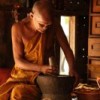
BIODIVERSITY: Biological Patents Yield Unequal Benefits
The medicinal or nutritional properties of many plants can give rise to enormous economic benefits, which put patents for naturally existing plants at the centre of an ethical, commercial and legal debate.« Previous Page — Next Page »


 Bangladesh: Sarid, born one month early, receives specialized newborn care and grows stronger every day. Credit: UNICEF/UNI944397/Mojumder
Since the onset of the 2000s, global life expectancy has seen an overall rise, attributed to significant technological and scientific innovations in healthcare. Due to an increased understanding of different conditions as well as a rise in cooperation among healthcare experts around the world, there have been major strides made in ensuring that as few people die from chronic illnesses as possible. Despite the belief that healthcare is a fundamental human right, people from low- or middle-class backgrounds, marginalized groups, and underdeveloped countries have far more limited access to basic healthcare services.
The COVID-19 pandemic showed how marginalized communities are disproportionately affected by health crises, proving that we have much work to do in ensuring that no one dies of terminal conditions. While the global response to the coronavirus saw significant strides in immunization and vaccine development, the global outbreak of mpox in 2022 and its upsurge in parts of Africa in 2024 must remind us to remain vigilant.
Other major disease outbreaks in recent years have been linked to the destruction of infrastructure during warfare. Notably, in 2024, the Gaza Strip witnessed a return of the poliovirus since its eradication in the region 25 years ago. Israel’s blockade on Gaza has resulted in the collapse of the region’s sewage plants and desalination plants, and also destroyed healthcare capacities. The UN stated that this lack of clean water and sanitation would lead to an outbreak of cholera and other deadly infectious diseases. The 2026 OCHA Humanitarian Situation Report confirmed that the over two years of conflict in Gaza has produced a catastrophic health emergency, with millions remaining dependent on relief aid amid tight restrictions and no functioning public health system.
IPS is committed to providing full and comprehensive coverage on healthcare challenges around the world. IPS seeks to address the multifaceted causes of such challenges, including unprecedented pandemics, conflict-driven disease outbreaks, as well as socioeconomic barriers to equal healthcare access. IPS is also dedicated to reporting on innovations in the healthcare industry.

The Week with IPS

NEXT STOP - SDGs
Tracking global progress towards a sustainable world
Tracking global progress towards a sustainable world
