Languages
Saturday, November 21, 2026



News and Views from the Global South
Health
WORLD AIDS DAY-CUBA: Volunteers on the Front Line of Prevention
While scientists devote their best efforts to developing an AIDS vaccine, prevention continues to be the most effective way of containing the pandemic which has already caused the deaths of 2.1 million people this year, and new infections in another 2.5 million people.HEALTH: Drug Firms Lose by Shutting Out Poor, Oxfam Says
Drug firms are missing potentially valuable business opportunities by failing to meet the needs of consumers in developing countries, an international charity said Tuesday.
WORLD AIDS DAY: "The Search for a Vaccine Must Go On"
When one of the world's most promising large-scale HIV vaccine trials was shut down in September after it became clear that not only did the drug fail to block the virus, but may have even increased the vulnerability of some test volunteers to contracting HIV, it was a profoundly disappointing moment in the more than 20-year quest for a vaccine.HEALTH: 100-Million-Dollar Polio Grant Targets Final Four
An international campaign to eradicate polio received a major boost Monday with the announcement that the Bill & Melinda Gates Foundation would give 100 million dollars to support intensified immunisation in the handful of countries where the virus remains active.
HEALTH: Developing World Bears Brunt of "Lifestyle Diseases"
Chronic, non-infectious diseases like heart disease, stroke, cancer and diabetes kill more than twice as many people than HIV/AIDS, malaria or tuberculosis, experts warn.HEALTH: Global Campaign Vows to Fight MNC Drug Monopoly
Public health and HIV/AIDS activists from the developing world are seeking to break the monopoly over drugs held by pharmaceutical giants through a new global campaign designed to influence international debate over the issue.
ENVIRONMENT: 'Flush Out the Toilet From the Water-Cycle'
The one message that came across at the just concluded general assembly of the World Toilet Association (WTA) was that conventional flush toilets are not only environment unfriendly but are also a serious public health hazard.HEALTH: Toilet Association Needs Women on Top Seats
It was a happy day for Sim Jae-Duck. "The World Toilet Association (WTA) history has begun,’’ said the president of the newly formed association at the close, Friday, of the four-day assembly in which it was formally established.DEVELOPMENT: GDP Poor Gauge of Well-Being
Conventional measures of economic success do not take sufficient account of the social and environmental challenges of the twenty-first century, according to senior European Union economists.
HEALTH: Talking About a Toilet Revolution
The rhythmic beat at the inaugural conference of the World Toilet Association seemed to roll away cultural taboos surrounding the act of defecation.ENVIRONMENT-PERU: A (Toxic) River Runs Through It
The Mantaro river basin, one of the main water sources in Peru’s central Andes mountains, is a dump for toxic substances, according to an independent scientific study. Lead levels, for instance, are 180 times higher than those accepted by the World Health Organisation (WHO).
Q&A: 'Out-of-the-Box Solutions Needed to Solve World's Sanitation Problems'
Born in a lavatory, South Korean legislator Sim Jae-Duck prefers to be addressed as ‘Mr. Toilet’ and hopes to die in one too. He moved into a home shaped like a giant toilet bowl in time for the launch, in Seoul, of the World Toilet Association (WTA) general assembly from Nov. 21-25.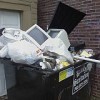
ENVIRONMENT-US: An E-Waste Free-for-All
U.S. citizens will buy 30 million new digital televisions this year alone, sending their old lead-laden TVs to the dump, or more likely, overseas to China or India.HEALTH: U.N. Highlights Global Sanitation Disaster
The world's sanitation crisis, caused primarily by the lack of toilet facilities for over 2.6 billion people, is "an insult to humanity", says the Geneva-based Water Supply and Sanitation Collaborative Council.COLOMBIA: Quarries in Slums Seen as Health Risk
Local residents of shantytowns on the outskirts of the Colombian capital complain that sand, gravel and limestone quarries operating in the area pose serious risks to their health as well as the danger of landslides. But they are afraid to speak out.HEALTH: Tropical Species Migrating North
New species of insects have begun to establish themselves all across Europe, raising concerns about the impact of global warming on biodiversity and public health.MEXICO: Ex Crackhead Cop Says God Can Heal Addicts
Miguel Fernández was a police officer in the Mexican capital who used and sold cocaine and crack for 18 years in collusion with his superiors and colleagues. Now he runs a small rehabilitation centre for addicts, where the Bible and God’s healing power are the treatment of choice.SOUTH KOREA: At Home in Mr Toilet’s House
Generally relegated to the far and hidden corners of a house, or even outside in rural areas, toilets have never been given the attention they deserve.ECONOMY-US: Hunger Stalks World's Wealthiest Country
More than one in 10 people in the United States go hungry, according to new official figures that suggest government food programmes are falling short in the world's wealthiest country.ENVIRONMENT-BRAZIL: Clean-up Efforts, a Drop in the Ocean
The contrasts are striking, and are plain to visitors from the moment they arrive in Rio. From the plane they can see the sparkling jewel of Guanabara bay, as they land on its largest island, but then they have to drive past the fetid waters of a sluggish channel and a number of "favelas" or shanty towns to get to the city centre and tourist areas.
SCIENCE: Reproductive Cloning Could Be "Inevitable"
As scientists master the technology to clone primates, some legal experts worry that human clones are no longer in the realm of science fiction, and wonder what legal rights they would have in the absence of an international ban on the practice.« Previous Page — Next Page »


 Bangladesh: Sarid, born one month early, receives specialized newborn care and grows stronger every day. Credit: UNICEF/UNI944397/Mojumder
Since the onset of the 2000s, global life expectancy has seen an overall rise, attributed to significant technological and scientific innovations in healthcare. Due to an increased understanding of different conditions as well as a rise in cooperation among healthcare experts around the world, there have been major strides made in ensuring that as few people die from chronic illnesses as possible. Despite the belief that healthcare is a fundamental human right, people from low- or middle-class backgrounds, marginalized groups, and underdeveloped countries have far more limited access to basic healthcare services.
The COVID-19 pandemic showed how marginalized communities are disproportionately affected by health crises, proving that we have much work to do in ensuring that no one dies of terminal conditions. While the global response to the coronavirus saw significant strides in immunization and vaccine development, the global outbreak of mpox in 2022 and its upsurge in parts of Africa in 2024 must remind us to remain vigilant.
Other major disease outbreaks in recent years have been linked to the destruction of infrastructure during warfare. Notably, in 2024, the Gaza Strip witnessed a return of the poliovirus since its eradication in the region 25 years ago. Israel’s blockade on Gaza has resulted in the collapse of the region’s sewage plants and desalination plants, and also destroyed healthcare capacities. The UN stated that this lack of clean water and sanitation would lead to an outbreak of cholera and other deadly infectious diseases. The 2026 OCHA Humanitarian Situation Report confirmed that the over two years of conflict in Gaza has produced a catastrophic health emergency, with millions remaining dependent on relief aid amid tight restrictions and no functioning public health system.
IPS is committed to providing full and comprehensive coverage on healthcare challenges around the world. IPS seeks to address the multifaceted causes of such challenges, including unprecedented pandemics, conflict-driven disease outbreaks, as well as socioeconomic barriers to equal healthcare access. IPS is also dedicated to reporting on innovations in the healthcare industry.

The Week with IPS

NEXT STOP - SDGs
Tracking global progress towards a sustainable world
Tracking global progress towards a sustainable world
