Languages
Saturday, November 21, 2026



News and Views from the Global South
Health
HUNGARY: NATO Radar Runs Into Opposition
Hungary's plans to host a NATO radar are being met with stiff resistance by locals who cite health and environmental fears. But their municipal representatives are seemingly yielding to government pressure.
DEVELOPMENT-MOZAMBIQUE: Explosions End But Trauma Continues
Six hours of terrifying explosions and projectiles flying everywhere, killing people indiscriminately, are over but the fear and the trauma live on.NICARAGUA: Sandinistas Wage a New War – Against Hunger
With the support of international cooperation, the Nicaraguan government is preparing to launch an all-out offensive against hunger, as part of an ambitious plan to help the rural poor achieve food sufficiency.RIGHTS: Objects of “Charity and Pity” No More
A new treaty designed to promote and protect the rights of the world's 650 million persons with disabilities opens for signature at the United Nations on Friday.HEALTH: Living in Portugal, Giving Birth in Spain
Drastic public health budget cuts in Portugal have led to the closure of emergency and maternity services and prompted protests against the government of socialist Prime Minister José Sócrates.HEALTH-US: Top Army Hospital Swamped by Tide of Wounded
As a nine-member commission prepares to investigate allegations of ineptitude at the United States' largest and most prestigious military hospital, politicians in Washington are waiting to see if any more colleagues associated with the scandal will lose their jobs.SOUTH PACIFIC: Lifestyle Diseases – a Heavy Burden
Pacific Island Countries (PIC) have made no real effort to deal with a public health crisis arising from overweight populations because it is "silent" and the effects are not immediate say experts.
ENVIRONMENT-US: Organic Gardens vs. Chem-Fed Lawns
Sandalistas are on the march here to create a homegrown organic food movement, encouraging gardeners to tear up their lawns for healthier, more natural alternatives.ASIA: Facing the Threat of GE Rice
With an eye to the future of rice farming in Thailand, a local grassroots organisation is bringing together youth in a north-eastern rice-growing province in a celebration of the diverse varieties of this staple grown in the traditional way.POLITICS-ZIMBABWE: “This Dictator Must Be Brought Down”
Zimbabwe's outspoken Catholic archbishop, Pius Ncube, has volunteered to lead peaceful, mass protests to remove President Robert Mugabe from power, as Cardinal Jaime Sin did to unseat dictator Ferdinand Marcos in the Philippines more than two decades ago.HEALTH: TB Still World’s Number Two Killer
Although most people in the developed world view tuberculosis (TB) as a disease of the past, this curable ailment still kills a human being every 20 seconds.WORLD WATER DAY-KENYA: Holes in the Legal System, Leaks in the Pipes
Kenya's capital, Nairobi, takes its name from a Maasai word meaning "place of cool waters". In parts of the city, however, this term is less descriptive than ironic - as demand for water is outstripping supply.MEXICO: Legal Abortion No Longer a Distant Goal for Activists
Mexico could join Cuba and Guyana as the only countries in Latin America where abortion is legal in cases other than those involving rape or a threat to a pregnant woman's life.HEALTH-THAILAND: US Pharma Giant Faces Public Boycott
A broad coalition of Thai non-governmental organisations (NGOs) is threatening to tap the spirit of nationalism, which runs deep and wide here, in a showdown with a Chicago-based pharmaceutical giant. The need for access to cheaper life-saving drugs has sparked this row.Q&A: “We Want to Take Control of Our Water”
In a State of the Nation address delivered in February, South African President Thabo Mbeki said his country had "already achieved the Millennium Development Goals in respect of basic water supply, with improvement of access from 59 percent in 1994 to 83 percent in 2006."RIGHTS: Pacific Islanders Preyed on by Bio-Pirates
The Pacific region has long been a favourite target of gene hunters, unethical bio-researchers and "patent bottom trawlers" looking to profit from its unique flora, fauna - and human beings.HEALTH: Novartis Lobbies European Parliament on Patents
The leading pharmaceuticals firm Novartis is seeking to prevent the EU's political bodies from supporting an Indian law allowing access to cheap medicines in developing countries.
DEVELOPMENT-MOZAMBIQUE: What To Do When a Cyclone Hits
Sandra Alberto (picture) was heavily pregnant when Cyclone Favio struck Mozambique earlier this month on 2 March, ripping the zinc roof off the house she and her two children had taken refuge in.SOUTH AMERICA: Climate Change Fuels Spread of Dengue Fever
Climate change, which has resulted, for example, in heavier and more persistent rains in South America, is forcing countries to take more proactive measures to prevent the spread of diseases like dengue fever.WATER DAY: Key Development Goals Stagnating
Halfway to 2015, the year when the globally agreed Millennium Development Goals (MDGs) are supposed to be reached, the crisis in water and sanitation as well as in water resources management remains among the great human development and environmental challenges.DEVELOPMENT-AFRICA: Forced to Choose ”Which Rights to Violate”
Images of tiny, malnourished African children, some scavenging for leftover food, have continued to grace the covers of brochures, posters and video clips of aid agencies since the devastating famine that claimed more than one million lives in Ethiopia 22 years ago.« Previous Page — Next Page »


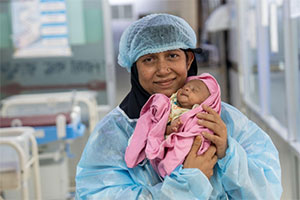 Bangladesh: Sarid, born one month early, receives specialized newborn care and grows stronger every day. Credit: UNICEF/UNI944397/Mojumder
Since the onset of the 2000s, global life expectancy has seen an overall rise, attributed to significant technological and scientific innovations in healthcare. Due to an increased understanding of different conditions as well as a rise in cooperation among healthcare experts around the world, there have been major strides made in ensuring that as few people die from chronic illnesses as possible. Despite the belief that healthcare is a fundamental human right, people from low- or middle-class backgrounds, marginalized groups, and underdeveloped countries have far more limited access to basic healthcare services.
The COVID-19 pandemic showed how marginalized communities are disproportionately affected by health crises, proving that we have much work to do in ensuring that no one dies of terminal conditions. While the global response to the coronavirus saw significant strides in immunization and vaccine development, the global outbreak of mpox in 2022 and its upsurge in parts of Africa in 2024 must remind us to remain vigilant.
Other major disease outbreaks in recent years have been linked to the destruction of infrastructure during warfare. Notably, in 2024, the Gaza Strip witnessed a return of the poliovirus since its eradication in the region 25 years ago. Israel’s blockade on Gaza has resulted in the collapse of the region’s sewage plants and desalination plants, and also destroyed healthcare capacities. The UN stated that this lack of clean water and sanitation would lead to an outbreak of cholera and other deadly infectious diseases. The 2026 OCHA Humanitarian Situation Report confirmed that the over two years of conflict in Gaza has produced a catastrophic health emergency, with millions remaining dependent on relief aid amid tight restrictions and no functioning public health system.
IPS is committed to providing full and comprehensive coverage on healthcare challenges around the world. IPS seeks to address the multifaceted causes of such challenges, including unprecedented pandemics, conflict-driven disease outbreaks, as well as socioeconomic barriers to equal healthcare access. IPS is also dedicated to reporting on innovations in the healthcare industry.

The Week with IPS

NEXT STOP - SDGs
Tracking global progress towards a sustainable world
Tracking global progress towards a sustainable world
