Languages
Tuesday, November 10, 2026



News and Views from the Global South
Health
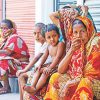
Women’s access to stimulus packages and post Covid-19 gender equality
All crises—natural disasters, wars, pandemics—affect different sections of people in different ways. Like any other crisis, Covid-19 has differing impacts on society. It has affected men and women, rich and poor, and adults and children differently. Since the ramifications of the coronavirus pandemic vary across people, measures towards the recovery from this crisis should also be focused towards each section of society distinctively.
Technology Meets Creativity on Women’s Empowerment Platform
Eight years ago, at the age of eleven, Fuzia co-founder Riya Sinha decided to start a writing club for school girls. Stemming from this initiative a few years later Sinha, along with co-founder Shraddha Varma, decided to start the online platform for women. Their story and Fuzia's DNA are intrinsically wrapped around each other – and highlight how even in the age of feminism where women’s voices tend to be drowned out, a platform for them can become a global success.
Trump Undermines WHO, UN System
After accusing the World Health Organization (WHO) of pro-China bias, President Donald Trump announced US withdrawal from the UN agency. Although the US created the UN system for the post-Second World War new international order, Washington has often had to struggle in recent decades to ensure that it continues to serve changing US interests.
Looking Back to Look Forward: What Does the Next Normal Look Like?
In the last 100 years there have been seven crises that have had a truly global impact. Two global wars (1914-18 & 1939-1945); two global health pandemics, the Spanish Flu (1918) and HIV/AIDS (1980s onwards); one major political crisis (1989 – the end of the cold war); and two financial crises (1929 and 2008).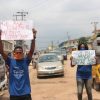
Standing Up to Myths and Misinformation in Nigeria During the Pandemic
‘An apple a day keeps the doctor away’ is a common and seemingly harmless saying. But what happens when commonly eaten foods like pepper, garlic and ginger are wrongfully said to prevent COVID-19? What can we do to fight harmful misinformation?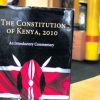
Katiba at 10: A Landmark Constitution and a Blueprint for Deepening Democracy
On 27 August 2020, we mark the tenth anniversary of the New Constitution of Kenya – a landmark social contract inspired by citizens’ desire for a country characterised by participatory governance, inclusive development, human rights and the rule of law.
Covid is a Great Unequaliser, But the Crisis Could Enable us to Build a More Equal Future
Any of the first names that the media reported as having Covid were those of the rich and powerful, from movie stars to political leaders. Be ye ever so high, the virus is above thee – or so it seemed.
Approval of a Coronavirus Vaccine Would Be Just the Beginning – Huge Production Challenges Could Cause Long Delays
The race for a SARS-CoV-2 vaccine is well underway. It’s tempting to assume that once the first vaccine is approved for human use, all the problems of this pandemic will be immediately solved. Unfortunately, that is not exactly the case.
Fueling Pacific Economic Engines with Open Data in Times of Covid-19
Throughout my career, I have always championed the value of open data, especially geospatial and earth observation data for the social, environmental and economic growth that it brings. Access to timely and accurate data is critical to maximizing the efficiency of development programmes and is a critical economic as well as scientific imperative for our region.
Transforming the Global Economy or Parachuting Cats into Borneo?
The COVID 19 Pandemic continues relentlessly. Deaths approaching a million globally, 22 million infected and growing. Brazil, India, the US and Russia accounting for almost 50% of the total cases in the world.
Tourism Trauma and COVID-19
Pandemic-related lockdowns, flight cancellations, and border closures may be putting a crimp on summer vacation plans. However, the precipitous drop in tourism will have an outsized impact on countries that rely on foreign travelers—with potentially large-scale effects on their economies’ national accounts.
Q&A: Ageing Africa Left out of COVID-19 Policies
Nearly three quarters of respondents in a survey across 18 African countries have claimed that their countries’ COVID-19 responses are gravely lacking in addressing the ageing population.

To Understand the ”Other”: How Disabilities Define Us

Future of Education Is Here
There are moments when the world has no choice but to come together. Those moments become historic turning points. This is one of them. We are now faced with the greatest education emergency of our time. Over one billion children are out of school. The COVID-19 pandemic has created an unprecedented crisis of such magnitude and depth that the next generation might neither have the capacity and tools, nor the will, to rebuild - let alone build back better.
Sudan May Have Banned FGM, but the Harsh Practice Continues
Just four months ago, Sudan took the monumental step to ban female genital mutilation, a painful, unnecessary and dangerous procedure that leaves lasting scars. Generally carried out on girls before they reach puberty, genital mutilation is now punishable in Sudan by up to three years in prison and subject to a fine.
Call for Urgent Action by 275 World Leaders on Global Education Emergency In Face of Covid19
We write to call for urgent action to address the global education emergency triggered by COVID-19. With over 1 billion children still out of school because of the lockdown, there is now a real and present danger that the public health crisis will create a COVID generation who lose out on schooling and whose opportunities are permanently damaged. While the more fortunate have had access to alternatives, the world’s poorest children have been locked out of learning, denied internet access, and with the loss of free school meals - once a lifeline for 300 million boys and girls - hunger has grown.
ISDS Enables Making More Money from Losses
With the Covid-19 contagion from late 2019 spreading internationally this year, governments have responded, often in desperation. Meanwhile, predatory international law firms are encouraging multimillion-dollar investor-state dispute settlement (ISDS) lawsuits citing Covid-19 containment, relief and recovery measures.
The Battle over Barriers for People with Disabilities
According to the World Health Organization (WHO) at-least 15% of the population globally has some form or other of a disability- considered the world’s largest minority population and one that any of us can join at any point in our lives. It therefore makes so much sense for each one of us to invest towards inclusion, so everyone has the right to live their life to their full potential and contribute meaningfully to society. This article seeks to highlight the updates from the disability world in the past four months, particularly the last month, both globally and in India.
Leading in Time of COVID: A True Test of Leadership
In 1918, the Spanish Flu, a deadly influenza caused by the H1N1 virus, decimated the world. Over the course of four successive waves, it infected 500 million people, about a third of the world’s population at the time, resulting in 50 million deaths.
Enough Is Not Enough – Call for Urgent Change in Mexican Economic Policy
A group composed by women and men, called Nuevo Curso de Desarrollo (New Course for Development) based at the National University of Mexico recently published a document to propose a set of measures to change the current economic policy in Mexico. This proposal responds to a diagnosis of the current situation: at this point of the year, the serious social damage inflicted by the health and economic crisis can already be observed. As we know, in Mexico as in many other countries, there was a great economic disruption caused by COVID. Millions of people ceased to receive income from their work. However, the Mexican government has not carried out sufficient support measures to compensate for these losses. The result is easy to guess: many households have been rapidly impoverished. It is estimated that between 10 and 16 million people in April earned much less to the point of not being able to acquire the basic food basket , a situation that has continued for many of them during May, June and July. And while it is true that more and more workers are returning to their jobs, the losses caused have not been repaired.
COVID-19 Sharpens Caste Discrimination in Nepal
Across Nepal, it is the already under-served and vulnerable who have been affected by the prolonged lockdowns. But it is the Dalit returnees from India who have tested positive and their families who face double discrimination.« Previous Page — Next Page »





 Bangladesh: Sarid, born one month early, receives specialized newborn care and grows stronger every day. Credit: UNICEF/UNI944397/Mojumder
Since the onset of the 2000s, global life expectancy has seen an overall rise, attributed to significant technological and scientific innovations in healthcare. Due to an increased understanding of different conditions as well as a rise in cooperation among healthcare experts around the world, there have been major strides made in ensuring that as few people die from chronic illnesses as possible. Despite the belief that healthcare is a fundamental human right, people from low- or middle-class backgrounds, marginalized groups, and underdeveloped countries have far more limited access to basic healthcare services.
The COVID-19 pandemic showed how marginalized communities are disproportionately affected by health crises, proving that we have much work to do in ensuring that no one dies of terminal conditions. While the global response to the coronavirus saw significant strides in immunization and vaccine development, the global outbreak of mpox in 2022 and its upsurge in parts of Africa in 2024 must remind us to remain vigilant.
Other major disease outbreaks in recent years have been linked to the destruction of infrastructure during warfare. Notably, in 2024, the Gaza Strip witnessed a return of the poliovirus since its eradication in the region 25 years ago. Israel’s blockade on Gaza has resulted in the collapse of the region’s sewage plants and desalination plants, and also destroyed healthcare capacities. The UN stated that this lack of clean water and sanitation would lead to an outbreak of cholera and other deadly infectious diseases. The 2026 OCHA Humanitarian Situation Report confirmed that the over two years of conflict in Gaza has produced a catastrophic health emergency, with millions remaining dependent on relief aid amid tight restrictions and no functioning public health system.
IPS is committed to providing full and comprehensive coverage on healthcare challenges around the world. IPS seeks to address the multifaceted causes of such challenges, including unprecedented pandemics, conflict-driven disease outbreaks, as well as socioeconomic barriers to equal healthcare access. IPS is also dedicated to reporting on innovations in the healthcare industry.

The Week with IPS

NEXT STOP - SDGs
Tracking global progress towards a sustainable world
Tracking global progress towards a sustainable world
