Languages
Sunday, October 25, 2026



News and Views from the Global South
International Justice

Bay of Despair: Rohingya Refugees Risk Their Lives at Sea
Dawn is breaking and the world’s biggest refugee camp stirs to life. Smoke rises from small cooking fires among rows of bamboo and tarpaulin shelters as children line up for food.
‘We Are Seeing an Economic Transition, but No Democratic Transition’
CIVICUS discusses the situation following the US intervention in Venezuela with Guillermo Miguelena Palacios, director of the Venezuelan Progressive Institute, a think tank that promotes spaces for dialogue and democratic leadership.
Myanmar: Five Years Since the Coup and No End in Sight To War
Five years of conflict since the military seized power have reduced Myanmar to a failed state and taken a huge toll of lives lost and destroyed. But with all sides seeking total victory, there is no end in sight.
Venezuela at a Crossroads
When US special forces seized Nicolás Maduro and his wife from the presidential residence in Caracas on 3 January, killing at least 24 Venezuelan security officers and 32 Cuban intelligence operatives in the process, many in the Venezuelan opposition briefly dared hope.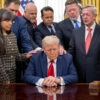
Do Resources Define the Parameters of Faith-based Engagement and Diplomacy Today?
Several events, meetings, consultations, initiatives, etc. taking place among faith-inspired, ‘faith-based’ and a variety of other similar efforts, over the past year, in the United States especially, concern me.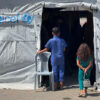
‘Unfathomable But Avoidable’ Suffering in Gaza Hospitals, Says Volunteer Nurse
“I’d never encountered anything like it before. I had no idea that there could be a place that needed humanitarian aid and that a government entity wouldn’t allow physicians or health workers into [that place],” says Jane.*
Binalakshmi Nepram: Engineering Peace, Creating History
It was Christmas eve: some two decades ago. Binalakshmi Nepram was a witness to the killing of a 27-year-old. In utter disbelief, she saw a group of three men dragging the victim from his workshop. Within minutes, he was shot dead.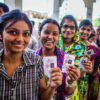
Global Survey Finds Citizens back a World Parliament as Trust in International System Erodes
As democracy faces pressure around the world and confidence in international law drops, a new global survey reveals that citizens in a vast majority of countries support the idea of creating a citizen-elected world parliament to deal with global issues.
Children and Armed Conflict Must be at the Forefront of the Global Agenda
Thirty years ago, the groundbreaking report by Graça Machel, renowned and widely respected global advocate for women's and children's rights, to the United Nations General Assembly laid bare the devastating impact of armed conflict on children and shook the conscience of the world. It led to the historic decision of the General Assembly to create the mandate of the Special Representative of the Secretary-General for Children and Armed Conflict (SRSG-CAAC).
Jailed by the Generals She Defended as ICJ Opens Genocide Case Against Myanmar
Held incommunicado in grim prison conditions for nearly five years, Aung San Suu Kyi quite possibly does not even know that this week the International Court of Justice (ICJ) opened a landmark case charging Myanmar with committing genocide against its Rohingya minority a decade ago.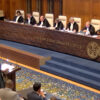
ICJ Begins Proceedings for Rohingya Genocide Allegations Case Against Myanmar
On January 12, the International Court of Justice (ICJ), opened landmark hearings in a case brought by the Republic of The Gambia, alleging that Myanmar’s military committed acts of brutal genocide against the Rohingya minority during its 2017 crackdown. Described by the United Nations (UN) as a case “years in the making,” the ICJ will spend the next three weeks reviewing evidence and testimony from both sides to determine whether the Myanmar military violated the Genocide Convention.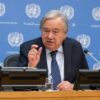
The Iranian Military Is the Only Institution Capable of Catalyzing the Downfall of the Regime
Unlike ever before, Iran’s Islamic regime is facing a revolt led by a generation that has lost its fear. Young and old, men and women, students and workers, are flooding the streets across the country.
Is the US Moving Towards the UN’s Exit Door?
Judging by the mass US withdrawal from 66 UN entities, including UN conventions and international treaties, is it remotely possible that the unpredictable Trump administration may one day decide to pull out of the UN, and force the Secretariat out of New York-- despite the 1947 UN-US headquarters agreement?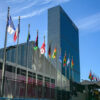
Our New Colonial Era
We’re living in an age where the world is loudly proclaiming the death of empire, yet reproducing its structures. This is not nostalgia for colonial postcards — it’s a reinvention of foreign policy, international governance and global economic power that resembles colonial logic far more than it does meaningful cooperation.
Funding for Human Rights Organizations – including at the Grassroots Level – have Been Slashed Worldwide
Human rights are underfunded, undermined and under attack. And yet. Powerful. Undeterred. Mobilizing. This year no doubt has been a difficult one. And one full of dangerous contradictions. Funding for human rights has been slashed, while anti-rights movements are increasingly well-funded.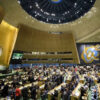
UNGA’s Long-Drawn Revitalization Efforts Need a Meaningful Outcome, Not Another Repetitive Regularity of an Omnibus of Redundancy
From its inception, the UN General Assembly (UNGA) has been engaged in improving its working methods, mindful of, as early as in 1949, “… the increasing length of General Assembly sessions, and of the growing tendency towards protracted debates.”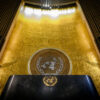
UN80 is Less a Reform Than a Survival Manual
Let’s just say the quiet part out loud: the UN is not reforming because it suddenly woke up one morning inspired by efficiency. It’s reforming because the Organization is broke. Not metaphorically broke. Not diplomatically broke. Actually broke. The kind of broke where arrears sit at $1.586 billion and everyone pretends that’s just an unfortunate bookkeeping hiccup instead of the fact that the lights are flickering.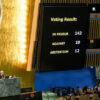
For 78 Years, the Palestinians have Been Denied their Inalienable Rights & their Right to Self-Determination
For seventy-eight years, the question of Palestine has been on the agenda of this General Assembly, almost as long as the institution itself.
Rising Arms Revenues and Death Tolls Underscore Ongoing Military Conflicts, Civil Wars
The revenues from arms sales and military services by the 100 largest arms-producing companies rose by 5.9 percent in 2024, reaching a record USD 679 billion, according to new data released by the Stockholm International Peace Research Institute (SIPRI).
COP30 Fails the Caribbean’s Most Vulnerable, Leaders Say: ‘Our Lived Reality Isn’t Reflected’
Caribbean small island states say this year’s UN climate conference has once again failed to deliver the urgency and ambition needed to tackle escalating climate devastation across the region. From slow-moving climate finance to frustrating political gridlock, leaders say COP30 did not reflect the realities that small islands are living through every day.
The UN’s ‘International Days’ Range from the Sublime to the Ridiculous
The 193-member General Assembly, the UN’s highest policy-making body, routinely designates “International Days” and “World Days” on a wide range of subjects and events—from the sublime to the ridiculous—described as “a sudden shift from something grand and awe-inspiring to something silly and unimportant.« Previous Page — Next Page »





The Week with IPS

NEXT STOP - SDGs
Tracking global progress towards a sustainable world
Tracking global progress towards a sustainable world
