Languages
Tuesday, October 27, 2026



News and Views from the Global South
International Justice

Weaving Wisdom and Science: Pacific Voices Call for Ocean Protection
In the packed conference hall of the Heritage Hotel, the sound of Pacific voices filled the air—not just through speeches, but in song, rhythm, and poetry. The Dreamcast Theatre Performing Arts group opened the Second Pacific Island Ocean Conference with an evocative performance, reminding leaders and practitioners why they had gathered: to listen. To listen to science. To listen to communities. To listen to the ocean itself.
West Bank: Record Number of Demolitions over Building Permits as Israel Furthers Annexation Agenda
In less than nine months, Israel has demolished more Palestinian homes and structures in the occupied West Bank, including East Jerusalem, over building permits than in the whole of last year.
Multilateralism Minus the People: 80 Years of the UN’s Broken Promise
Last week, the United Nations (UN) marked its 80th anniversary against the backdrop of an unprecedented global crisis. With the highest number of active conflicts since 1946, trust in multilateralism is faltering.
Climate Finance Will Be the First Casualty of Rising Militarism: Ali T. Sheikh Warns Ahead of COP30
As the COP30 approaches amid darkening geopolitical clouds—marked by rising rightwing extremism, corporate backtracking and rising militarism—Ali T. Sheikh, Pakistan’s leading expert on sustainable development and climate change, views the world’s largest diplomatic gathering with a mix of apprehension and caution.
Record Number of Women Living Within Striking Distance of Military Conflicts
The battlefield is no longer distant; for millions of women, it’s next door. An estimated 676 million women – nearly 17 percent of the global female population – lived within 50 kilometres of a deadly conflict last year, according to a new report from the Peace Research Institute Oslo (PRIO). That is the highest figure recorded since the end of the Cold War.
Prospects for the Upcoming High-Level Conference on Rohingya
Last month marked eight years since hundreds of thousands of Rohingya were forcibly displaced from Myanmar’s Rakhine State to Bangladesh by the Myanmar military.
‘The State Cannot Pardon Itself for Violating Human Rights’
CIVICUS discusses Peru's new amnesty law with Nadia Ramos Serrano, founder and researcher at the Leadership Centre for Women of the Americas, a civil society organisation working on democratic development and the role of women in politics.
Mamdani’s Stand on Genocide is More Important than the Dynamics of Arresting Netanyahu
No leader responsible for mass atrocities enjoys greater impunity on the international stage than Benjamin Netanyahu. This is due to the strange stranglehold of the pro-Israel lobby on the two major political parties in the United States.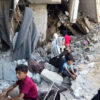
World Leaders Should Commit to Human Rights, International Justice
World leaders gathering at the United Nations General Assembly from September 22-30, 2025, should commit to protecting the UN from powerful governments seeking to defund and undermine the organization’s capacity to promote human rights and international justice, Human Rights Watch said today.
Loss and Damage at COP30: Indigenous Leaders Challenge Top-Down Finance Models
As climate-induced disasters continue to devastate the Global South, nations are steadily mounting pressure at the United Nations for wealthier countries to deliver on long-promised climate reparations through the Loss and Damage Fund. For Indigenous peoples, whose territories are often the most ecologically intact yet most damaged by climate change, these negotiations define survival, sovereignty and recognition as rights-holders in global climate governance.
When Civil Society is Kept Outside, We Should Build a Bigger Room
The recent IPS article, "UNGA’s High-Level Meetings: NGOs Banned Again," served as a stark and painful reminder of a long-standing paradox: the United Nations, an organization founded on the principle of "We the Peoples," often closes its doors to the very communities it was created to serve.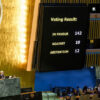
The Cruel Deceptions of Peace in Palestine
In a long past due move, the UN General Assembly voted 142-10 to approve a plan called “The New York Declaration” that hopes to revive the long dead Two State Solution for Palestinian Independence.
NGOs on a Virtual Blacklist at UN High-Level Meetings of World Leaders
When the high-level meeting of over 150 world political leaders takes place September 22-30, thousands of non-governmental organizations (NGOs) and their accredited UN representatives will either be banned from the UN premises or permitted into the building on a strictly restricted basis-- as it happens every year.
Israel, Hamas, the US and Qatar—Unraveling the Mess
Israel’s brazen attack on Hamas’ negotiating team in Qatar while they were deliberating a new ceasefire with Israel raises serious questions not only about the legality of the attack, which violated international laws and norms, and concerns over Qatar’s sovereignty, but also the potential regional and international fallout.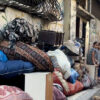
Palestinians Pushed into Deeper Crisis with Israeli Displacement Order on Entire Gaza City
Israel’s intent to displace around 1 million civilians, half of whom are living in famine, is impossible and illegal Oxfam said, while the Israeli military continued to flatten Gaza City building by building as its mass forced displacement of civilians in the city gains terrifying momentum.
Translating Recognition of a Palestinian State into Reality
During the upcoming annual UN General Assembly, several key European countries are expected to recognize a Palestinian state. The question that looms is how to translate such a significant development into reality, whereby the Palestinians will realize their national aspiration for statehood
Is Western Support for Israel Beginning to Crumble?
When the high-level meeting of over 150 world leaders takes place at the United Nations, September 22-30, one of the political highlights would be the announcement by at least 10 Western nations to recognize Palestine as a sovereign nation state. The 10 countries-- some already announcing their recognition ahead of the UN meeting -- include UK, France, Canada, Australia, Portugal, Malta, Belgium, Spain, Ireland and Norway-- proving the longstanding support for Israel is gradually diminishing in the Western world.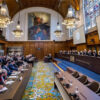
African Debt & Climate Change: How the ICJ’s Vanuatu Ruling Could be Used for Broader Justice
African sovereign debtors in distress face terrible choices. They are often forced to choose between fully paying their creditors and financing the needs of their populations – health, education, renewable energy, water.
UN Reforms Include “Painful Staff Reductions”—and Forcible Return to Home Countries
The 193-member General Assembly, the UN’s highest policy-making body, will make the ultimate decision on the proposed UN restructuring, which will include staff cutbacks, merging or eliminating of departments and relocating UN agencies from high-cost to low-cost locations.
‘Israeli Offensive in Gaza City an Existential Threat to the Two-State Solution’
Ahead of the Security Council meeting on the situation in the Middle East, United Nations Secretary-General António Guterres spoke to the press on the “unfolding tragedy that is Gaza,” calling Israel’s new plans to take over Gaza City with the military a “deadly escalation” and an “existential threat to the two-state solution.”
President Trump: You Must Stop Netanyahu’s Second Genocide in Gaza
President Trump, you are the only leader who can stop Netanyahu from committing another genocide in Gaza. The whole world is watching. Do not allow yourself to become an accessory to the murder of thousands of innocent Palestinian women and children and the utter destruction of what’s left of Gaza« Previous Page — Next Page »





The Week with IPS

NEXT STOP - SDGs
Tracking global progress towards a sustainable world
Tracking global progress towards a sustainable world
