Languages
Wednesday, September 23, 2026



News and Views from the Global South
International Justice

Two-State Solution Conference Presents an “Exceptional Moment” for International Community – The Elders
Dignitaries across the international community have convened in New York to promote the two-State Solution - the coexistence of Israel and Palestine as sovereign states - as the only path forward to shared sustainable peace in the Middle East. Former and current leaders from 145 countries and independent groups will speak at the United Nations to demonstrate their ‘near-universal support’ and discuss the steps that need to be taken to achieve it.
When the System Protects Itself, Not People
In Geneva, nearly 600 UN staff based at the UN Office there held an Extraordinary Staff Union meeting on July 24, 2025, passing a unanimous motion of no confidence in the UN80 reform initiative, the Secretary General António Guterres, and Under Secretary General Guy Ryder—with no abstentions and no dissenting voices (source).
Western Powers Are Complicit in Crimes Against Humanity in Gaza
The West, led by the Trump administration, has enabled the Netanyahu government to commit crimes against humanity and became complicit in the unfathomably horrific disaster that is being inflicted on the Palestinians in Gaza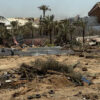
How Israel Lost its Soul
The dramatic story of Israel’s birth in 1948 following the Nazi Holocaust captured the wonder and admiration of the world. Its founders claimed that Israel would be a light to the nations, but now the Jewish State’s identity has gone from being the victim of genocide to perpetrator in less than two generations.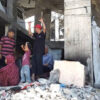
End Impunity for Israeli Crimes Against Palestinians: Demand Targeted Sanctions & Arms Embargo –at High-Level UN Conference
United Nations member countries should use the ministerial-level conference on Palestine on July 28-29, 2025, to publicly commit to concrete actions aimed at ending decades of impunity for Israeli authorities’ violations of international humanitarian and human rights law against Palestinians, Human Rights Watch said today.
The Gaza Conundrum: Multilateralism is failing. Here’s why.
“Multilateralism is not an option but a necessity as we build back a better world with more equality and resilience and a more sustainable world."
Price and Power of Freedom: Celebrating Nelson Mandela International Day
The United Nations celebrated Nelson Mandela International Day in honor of the activist and politician’s lifelong commitment to peace and democracy.
UN Funding Crisis Threatens Work of Human Rights Council
The United Nations Human Rights Council (HRC) has expressed concern at the UN High Commissioner for Human Rights’ announcement that certain activities mandated by the council cannot be delivered due to a lack of funding. The council has sought clarity on why certain activities had been singled out.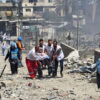
Genocide Made Invisible
Whatever the outcomes of Benjamin Netanyahu’s visit to the White House on Monday and the latest scenario for a ceasefire in Gaza, a bilateral policy of genocide has united the Israeli and U.S. governments in a pact of literally breath-taking cruelty.
Staff Union Dismisses UN Restructuring as “Chaotic, Incoherent, Rushed & Lacking Strategy”
A coalition of UN staff unions, led by the 60,000-strong Coordinating Committee of International Staff Unions and Associations (CCISUA), has written to UN member states criticizing the UN80 reform process as “incoherent and lacking strategy”. The union, one of the largest single coalitions in the world body, is asking the 193 member states to take over the UN reform process which is currently in the hands of a Task Force.
The Rise of Islamophobia in New York’s Mayoral Elections– with the Statue of Liberty in a Burqa
The prospect of New Yorkers electing their first Muslim Mayor, come November, has ignited a rash of paranoid statements by right-wing US politicians, including Islamophobia-- the irrational fear and hatred against Islam and Muslims. Last week, a Republican politician caricatured America’s iconic Statue of Liberty wearing a burqa-- an outer garment worn by some Muslim women that covers the entire body and face. But that internet meme, spreading across social media, was deleted after protests.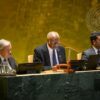
Does the UN Overstep Its Responsibility to Protect Mandate?
The UN has been criticized by some member states for overstepping the mandate of its Responsibility to Protect (R2P) doctrine during a debate in the General Assembly.
UN80: Alternative Reform Pathways — Fiscal Prudence, Relocation Realities, & Underutilized Charter Mechanisms
Recent proposals to relocate UN operations to lower-cost duty stations ignore demonstrable economic patterns. Empirical evidence suggests that establishing UN hubs often triggers localized inflation, negating projected savings.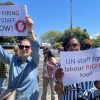
UN80: Beyond Disposable Staff Distracting Reforms Restoring UN Effectiveness
In an era defined by the gig economy and pervasive job insecurity, advocating for permanent contracts within the United Nations might seem anachronistic, even counterintuitive.
Fixing the House the World Built: A Realistic Plan for UN Reform
I’ve spent much of my life in the machinery of international development, navigating acronyms, crises, and committee rooms with stale coffee. Through it all—amid war zones, climate summits, and remote island consultations—one institution has remained constant: the United Nations.
A Crisis-Stricken UN’s Frantic Hunt for Low-Cost Locations—away from New York & Geneva
In the US, the success of a business enterprise or the value of real estate is reflected in a repetitive and alliterative phrase: “LOCATION, LOCATION, LOCATION”. As the UN continues its plans for system-wide restructuring-- amidst a growing liquidity crisis-- one of the key issues on the negotiating table is the re-location of UN agencies: a choice between high-cost and low-cost duty stations.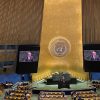
A Growing Gap between Principle and Implementation: 20 Years of Responsibility to Protect
United Nations member states this week reiterated their commitment to the prevention of genocide, war crimes, ethnic cleansing and crimes against humanity—at a time when world powers are failing to meet these obligations.
Iran— Deja Vu All Over Again
Chest thumping “Mission Accomplished” claims by President Trump that he ordered the world’s biggest conventional bombs to be dropped on a sleeping nation of 90 million people, were premature. To top it off he bragged that Iran’s nuclear capacity was devastated and that the whole nation fired “not a single shot” back.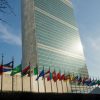
“Slash and Burn” Approach to UN Reforms Under Fire
“We are writing to you regarding the cuts being undertaken under the UN80 Initiative and, more broadly, across the UN system. While we are mindful of the current funding challenges, we believe that the rushed and chaotic manner in which these changes are being implemented is causing deeper harm to both the effectiveness and reputation of the United Nations.
Bombing Iran Is Part of the USA’s Repetition Compulsion for War War War
Twenty years ago, one day in June 2005, I talked with an Iranian man who was selling underwear at the Tehran Grand Bazaar. People all over the world want peace, he said, but governments won’t let them have it.
The Path to Peace Between Israel and Iran
A deal between the US and Iran is possible if Iran’s bottom line -- its right to nuclear enrichment -- and Israel’s bottom line, guarantees that Iran will never have a nuclear bomb are met. This “win-win” outcome would require Donald Trump’s personal engagement. With weapons turned to plowshares, Trump would be considered for the Nobel Peace Prize.« Previous Page — Next Page »


The Week with IPS

NEXT STOP - SDGs
Tracking global progress towards a sustainable world
Tracking global progress towards a sustainable world
