Languages
Wednesday, October 21, 2026



News and Views from the Global South
Humanitarian Emergencies

Civil Society’s Reform Vision Gains Urgency as the USA Abandons UN Institutions
Today’s multiple and connected crises – including conflicts, climate breakdown and democratic regression – are overwhelming the capabilities of the international institutions designed to address problems states can’t or won’t solve. Now US withdrawal from global bodies threatens to worsen a crisis in international cooperation.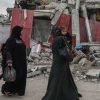
Collapse of Gaza Ceasefire and its Devastating Impact on Women and Girls
The end of the tenuous ceasefire in Gaza is having disastrous consequences for women and girls. From 18 to 25 March—in just those 8 days, 830 people were killed—174 women, 322 children, with 1,787 more injured.
Global Climate Action Progressing, but Speed and Scale Still Lacking
2025 marks the tenth anniversary of the Paris Climate Agreement. One of its chief architects, Christiana Figueres, says the world is heading in the right direction but warns that urgent action is needed to close critical gaps. The pact, adopted in 2015 by 195 nations, set out to limit global warming to "well below 2°C" above pre-industrial levels, striving for 1.5°C. But in 2024, the world shattered records as the hottest year ever, surpassing that crucial threshold.
UNICEF Report Warns of Rising Rates of Child Mortality without Proper Funding
Despite levels of child mortality and stillbirths having significantly decreased since 2000, increasingly unequal and limited access to basic services around the world endangers millions of children around the world, a new report finds.
Seeds of Survival, Amid Conflict Sudan Is Saving Its Agricultural Future
Sudan’s diverse crops and agricultural heritage are at risk of being lost. The ongoing conflict in Sudan is claiming lives and threatening livelihoods and food security. In the chaos of conflict, scientists like Ali Babiker are fighting to protect Sudan’s future food security—not with weapons, but with seeds.
Funding Crunch Puts Years of Progress at Risk in Fight Against Tuberculosis
Governments and donors must ensure funding is sustained to fight tuberculosis (TB), organizations working to stop the disease have said, as they warn the recent US pullback on foreign aid is already having a devastating effect on their operations. NGOs and other groups that play a critical role in national efforts to stop what is the world’s deadliest infectious disease say the US administration’s recent decisions to first freeze and then cancel huge swathes of foreign aid funding have put countless lives at risk around the world.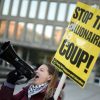
Civil Society: The Last Line of Defence in a World of Cascading Crises
In a world of overlapping crises, from brutal conflicts and democratic regression to climate breakdown and astronomic levels of economic inequality, one vital force stands as a shield and solution: civil society. This is the sobering but ultimately hopeful message of CIVICUS’s 14th annual State of Civil Society Report, which provides a wide-ranging civil society perspective on the state of the world as it stands in early 2025.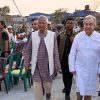
UN Chief’s Ramadan Solidarity Visit Revives Rohingya Refugees Hope
When United Nations Secretary-General António Guterres appeared before the Rohingya refugees wearing a traditional white panjabi, a costume of Muslims, to join an iftar party in Ukhiya refugee camp, thousands who had gathered waved to welcome him.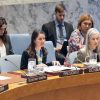
Women and Girls in Afghanistan Bear the Brunt of the Country’s Crisis
Since the Taliban’s return to power in Afghanistan nearly four years ago, human rights have begun diminishing for over 14 million women. Heightened gender inequality has exacerbated the pre-existing humanitarian crisis in Afghanistan, which has been marked by conflict, displacement, climate change, food insecurity, and economic instability. In 2025, widespread cuts in humanitarian funding look to further strain the crisis.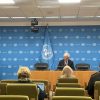
Surges in Violence in Haiti Push Basic Services to the Brink of Collapse
In 2025, the humanitarian crisis in Haiti has grown increasingly dire amid the ongoing gang wars. With rates of displacement, child recruitment, food insecurity, physical violence, and sexual violence having skyrocketed in the past year alone, the national police have found it difficult to keep gang activity under control.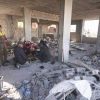
Energy is a Catalyst for Peace Between Israel and Gaza
Israel’s decision to suspend electricity supplies to Gaza has far-reaching consequences for daily life of Palestinians as well as Gaza’s reconstruction. Managing Gaza’s energy crisis will require the development of alternative supplies, which are found in off-shore natural gas fields that can be developed off the coast of Israel and Gaza in the Eastern Mediterranean (EastMed).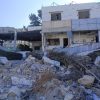
Gaza Counts Costs of Catastrophic Impacts of Israeli Bombardment on Healthcare
With enough steel and concrete, the hospitals that have been smashed to bits in Gaza can be rebuilt. But a construction plan paired with an army of bulldozers will not be enough to reconstruct the entirety of Gaza's health care system, which, after many months of war, has been decimated by the Israeli military forces.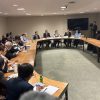
Nuclear Testing in Kazakhstan Documentary Showcases Urgent Need for Nuclear Abolition
The documentary I Want to Live On: The Untold Stories of the Polygon exposes the lifelong impacts of nuclear testing in Kazakhstan’s Semey region. As a third-generation survivor born in Semey, international relations legal expert based in New York, Togzhan Yessenbayeva said she was aware of the “profound impact” that nuclear testing has had on her community and environment. She remarked that the tests in Semipalatinsk have left a “legacy of challenges” that people must deal with to this day.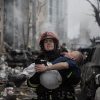
Ukrainians Stress That a Peace Agreement Must Include Justice
After three years of bloodshed, extraordinary courage and immense sacrifices in resisting Russia’s invasion, the people of Ukraine are in limbo as peace negotiations to end the war, instigated by United States President Donald Trump, remain unpredictable.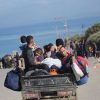
Tensions Between Israel and Hamas Threaten Second Phase of Gaza Ceasefire
On March 1, the first phase of the Israel-Hamas ceasefire was scheduled to end. However, as Israel continues to block humanitarian aid from entering Gaza, and Hamas declining to release more hostages until the second phase goes into effect, the long-term feasibility of the ceasefire agreement is uncertain. Additionally, U.S. President Donald Trump’s recent inflammatory comments surrounding the conflict between the two parties might put further strain on the already fragile ceasefire agreement.
International Women’s Day, 2025
Rule Breakers: The Compelling True Story of Afghan Girls Who Risked All to Learn
Like the Afghan robotics team, Education Cannot Wait (ECW), the global fund for education in emergencies and protracted crises in the United Nations, is breaking the 'rules' and continuing to educate young women in that country despite an edict from the Taliban denying girls a secondary school education.

Education Cannot Wait Interviews Ramiz Alakbarov, UN Resident Coordinator and Humanitarian Coordinator in Ethiopia
Dr. Ramiz Alakbarov was appointed as the UN Resident Coordinator and Humanitarian Coordinator in Ethiopia by the UN Secretary-General António Guterres in August 2023.

International Women’s Day, 2025
UN: Women’s Rights Face ‘Unprecedented’ Pushbacks
Girls and women worldwide are facing growing threats to their security and rights, from threats to their education access to severe poverty and multiple forms of violence. In 2024, nearly one in four governments worldwide reported a backlash to women’s rights, as a new report from UN Women reveals. 
Anti-LGBTQI Legislation in Europe Curbs Speech Freedom, Democracy—Report
LGBTQI communities across Europe and Central Asia are being ‘weaponized’ by governments as part of a wider attack on fundamental human rights and freedoms, rights activists have warned.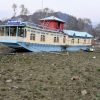
Not Seen in Living Memory: Kashmir’s Rivers Run Dry, Snow Disappears, and Hope Dissipates
The picturesque Kashmir Valley is battling nature’s fury. This time of year, its majestic mountains would typically be capped with thick snow, and its emerald streams would gush with fresh waters. However, none of these scenes are visible this year.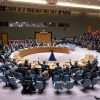
U.S. Passes on UN Ukraine Resolution amid the Humanitarian Crisis
From late 2024 to early 2025, the humanitarian situation in Ukraine has taken a turn for the worst, with poverty, violence, displacement, and damage to critical infrastructures having grown in intensity. Following the 2022 invasion of Ukraine by Russia, tensions have grown among member states of the United Nations (UN) on how to resolve the Russo-Ukrainian War.« Previous Page — Next Page »





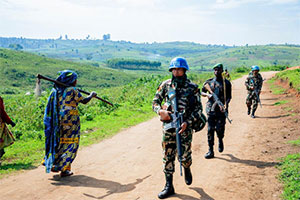 MONUSCO Peacekeepers and FARDC Soldiers Patrol Fataki Area. Credit: UN Photo/Jorkim Jotham Pituwa
Conflict, human rights violations, natural disasters, and famine have been at the forefront of concerns for humanitarian organizations. The escalation of humanitarian crises has led to over 239 million people in need of humanitarian assistance at the start of 2026, as estimated by OCHA’s Global Humanitarian Overview. The 2025 humanitarian appeal received only $12 billion, the lowest funding in over a decade, which has left 24 million fewer people reached in comparison to 2024. Conflict has remained the primary driver of crisis.
Humanitarian emergencies massively impact progress towards the Sustainable Development Goals (SDGs), adversely affecting economic development, inequality, education, planetary well-being, and poverty. Millions of people are faced with reduced access to essential services, including shelter, food, healthcare, and access to clean drinking water. UN Organizations such as UNHCR and the United Nations Children’s Fund (UNICEF) are committed to providing direct relief to affected communities when state governments cannot.
The United Nations 2024 Summit of the Future discussed measures that will be taken to reduce global inequality and promote peacekeeping efforts around the world. The recent UN Climate Change Conference (COP30) in Belém, Brazil, agreed to mobilize $1.3 trillion annually for climate action by 2035, operationalize the loss and damage fund, and triple adaptation finance. However, a fossil fuel transition commitment was not secured, despite climate change and the greenhouse effect being major contributors to humanitarian crises worldwide.
Countries across the world have also rallied to end humanitarian crises, as witnessed in conflicts such as Palestine and Ukraine. IPS is committed to providing relevant and in-depth reports of humanitarian emergencies around the world and their implications.

The Week with IPS

NEXT STOP - SDGs
Tracking global progress towards a sustainable world
Tracking global progress towards a sustainable world