Languages
Friday, October 2, 2026



News and Views from the Global South
Development & Aid

Don’t Cry for Milei, Argentina
Sunday’s World Cup final focused world attention on the stench of corruption, past and current, surrounding some of its main protagonists, including Argentina, and the presidents of FIFA, Argentina and the main host nation.
Children in Conflict Zones and Remote Areas Bear the Brunt of Global Immunization Gaps
Despite growing up and working in vastly different geographic regions and environments — one shaped by decades of armed conflict and political instability, and the other by remote, hard-to-reach areas — both Sagal and Johao encounter children daily who have never been vaccinated. Sagal and Johao are members of UNICEF’s Global Youth Health Advisory Group, where they advance children’s health by shaping UNICEF’s strategies, policies, and campaigns, while working directly in their own countries to connect community realities to global conversations about children's health.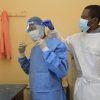
Africa’s Health Defenses Have Improved But Its Funding Has Not
In September 2024, an outbreak of Marburg virus disease in South Ethiopia was confirmed, contained, and declared over within three months.
US Plans to Restrict Visas to Foreign Journalists Come Under Fire
A proposal to restrict US visas to foreign journalists assigned to cover the US has triggered a strong protest from the New York-based Foreign Press Association (FPA).
Africa Can Grow Faster With AI—If It Moves Now
A farmer in Kenya gets weather and planting advice on a basic phone. A teacher in Nigeria uses a chatbot to help students catch up in math. South Africa’s revenue authority uses data analytics to better target tax audits. These are not futuristic examples from Silicon Valley. They are early signs of the broader transformation that artificial intelligence (AI) could bring to sub-Saharan Africa.
ALBANIA: ‘The Public Only Learns about These Development Megaprojects Once Construction Machinery Arrives’
CIVICUS discusses land grabs and environmental damage linked to a luxury coastal resort project with Eva Kushova, Director of Destination Management Organisation Albania, a civil society organisation that supports sustainable tourism in Albanian destinations, seeking to preserve culture and nature while maximising benefits for communities.
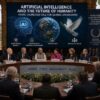
Artificial Intelligence and the Future of Humanity: Nobel Laureates Call for Global Safeguards
"I’m sorry, Dave. I’m afraid I can’t do that.” By bringing the supercomputer HAL 9000 to life in his 1968 film 2001: A Space Odyssey, American director Stanley Kubrick created one of the most powerful symbols of the fear of artificial intelligence (AI) escaping human control.
Global Value Chain Trade Reaches Historic Highs, Despite Push for Reshoring
Despite rising geopolitical tensions, trade restrictions and calls to bring production back to domestic shores, the global economy remains more interconnected than it may appear. Trade through global value chains (GVCs) reached historic levels in 2024, according to a new report from the Organisation for Economic Co-operation and Development (OECD).
Global AI Governance Cannot Wait As the Digital Divide Widens
Throughout July 2026, various United Nations (UN) bodies and global experts have underscored the need for increased comprehensive artificial intelligence (AI) governance. Although AI yields significant potential gains for global development, persistent structural barriers continue to impede equitable access and deepen the digital divide.
Changing Age Distributions of Populations
In many countries, older adults (aged 65 and above) now outnumber younger individuals (under the age of 18), reflecting a significant demographic transformation known as demographic ageing.
Efficiency Becomes the World’s ‘First Fuel’ as Leaders at IEA Conference Chart Course for Cleaner, More Secure Energy Future
As geopolitical tensions, rising electricity demand and climate pressures reshape the global energy landscape, more than 600 energy ministers, chief executives, financial leaders and policy experts gathered in Montreal, deliberating upon how to deliver at an unprecedented scale.
Communities vs. Datacentres
Few things unite Donald Trump’s most ardent supporters with the Democratic Party’s progressive wing, but datacentres are one of them. Across the USA, communities are joining forces across the political divide to oppose developments few want but governments seem determined to impose.
The Oil Market Absorbed the War Shock, but Buffers Are Running Low
The largest disruption to the global oil market in decades should have sent prices soaring. But after spiking at the start of the war in the Middle East, crude prices soon settled in a range of $90 to $100 per barrel, much lower than many had feared. Why didn’t prices climb higher? The answer is that a combination of factors helped cushion the initial blow. But much of that room has now been used up.
As Gold Prices Soar, Communities Pay the Price in Poisoned Rivers, Vanishing Forests and Organized Crime
The sweltering heat inside a London conference hall did not deter Indigenous leader Jackeline Mendoza Díaz from condemning the sheer destruction of the Peruvian Amazon. Her voice occasionally trembled with emotion but delivered a strong message — painting a picture far removed from the glittering gold bars traded in the world’s financial capitals.
Renewed Hostilities in the Strait of Hormuz Threaten to Compound Global Supply Chain Costs
A continuation of hostilities within the Strait of Hormuz is once again threatening one of the world's most critical supply chain arteries, posing another wave of disruption which could choke the global energy, shipping and commodity markets. With roughly a quarter of global seaborne oil trade transiting through the Strait, alongside significant flows of liquefied natural gas and fertilizers, further constraints on commercial traffic could send new cost pressures cascading through supply chains that have yet to absorb the full effects of the earlier conflict.
Three years of War in Sudan: A Crisis the World Can’t Ignore
Three years into the war in Sudan, survivors and human rights defenders are struggling to respond to overwhelming needs amid widespread violence, displacement, and limited global attention. As horrific violations and abuses intensify and those documenting them become targets, calls for accountability and sustained international engagement grow more urgent.
Autonomous Weapons: The Wave of the Future in Military Conflicts Worldwide
As the international community continues to weigh the good, the bad and the deadly in artificial intelligence (AI), which is spreading far and wide with apparently no guardrails, the United Nations is taking a closer look at the impact, both positive and negative, of AI.
Full Effects of Strait of Hormuz Disruption May Not Be Felt Until Second Half of 2026
The full economic impact of the disruptions in the Strait of Hormuz may not become clear until the second half of 2026, warns the United Nations Conference on Trade and Development (UNCTAD).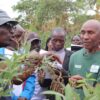
How Farmers Are Learning About Restoring Soils and Scaling Agroecology in Kenya
At Yumbuni Village in Kenya’s Makueni County, farmers from Vihiga and Kakamega counties have travelled over 560 kilometres to join their colleagues in Kathonzweni Ward and see the progress of experiments being carried out on different homemade organic fertilisers and other farm inputs.
WHO: Urgent Action Needed for the Future of Cancer Care
One in five people will be diagnosed with cancer in their lifetime, and when the emotional and physical toll on close family members is factored in, an estimated 92 percent of people globally will be affected by cancer at least once in their lifetime. This staggering statistic is the centerpiece of the World Health Organization (WHO)’s latest global report on cancer.
A License Is Not a Teacher
Ask why so many Indian classrooms struggle, and the answers arrive in the language of audit: Too few trained teachers, too many vacancies, weak colleges of education and low accountability. Each of these is real, and each matters. Yet none of them explains a quiet confession a veteran teacher made to me, years into her career, holding a teacher training degree all the while. “Only this program”, she said, “made me realize what my prior training had left out”. The program she was referring to is a small teaching preparation program in Gurugram, North India called I Am A Teacher, or IAAT.« Previous Page — Next Page »


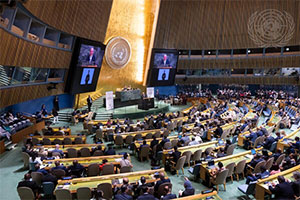 2026 High-level Political Forum on Sustainable Development. Credit: UN Photo/Eskinder Debebe
In 2015, the United Nations and its Member States adopted the Sustainable Development Goals (SDGs) in an effort to make the world a more sustainable and peaceful place for future generations. Progress on the 17 SDGs has been uneven, and inequality persists across the globe. 10 years after adoption, the 2025 UN SDGs Report revealed that only 35% of the SDG targets are on track, with more than half moving too slowly, and 18% moving backwards from the 2015 baseline. Poverty remains one of the world’s most pressing issues, with hunger, violence, and inequality impeding the opportunities for all people to achieve success. In September 2024, the United Nations Summit of the Future introduced a new goal: to eradicate global poverty by 2030, ensure universal rights to basic services, and increase the overall standard of living in terms of industrialization, economic well-being, citizen health, and literacy. Furthermore, recent shifts in United States foreign aid policy – notably, major budget cuts to USAID and the termination of thousands of development programmes– have severely threatened vital lifelines of financial aid to impoverished communities around the world. Additionally, the United States’ withdrawal from the Paris Climate Agreement has undercut international efforts at sustainable development. With the upcoming 2030 deadline, the UN Secretary-General has called for urgent multilateralism across six priority areas: food systems, energy, digital connectivity, education, jobs and social protection, and climate and biodiversity. IPS sheds light on marginalized communities that struggle on a daily basis to survive and have their stories heard and respected.
Updated by Yilan Batista and Shuli Wong August 2026

The Week with IPS

NEXT STOP - SDGs
Tracking global progress towards a sustainable world
Tracking global progress towards a sustainable world
