Languages
Friday, November 13, 2026



News and Views from the Global South
Development & Aid

Solar Energy Expands in Brazil Despite the Pandemic
Solar energy has continued to expand in Brazil during the COVID-19 pandemic and should contribute to the economic recovery in the wake of the health crisis.
Neglected, Sacrificed: Older Persons During the COVID19 Pandemic
Failing to help those in most need COVID19 is devastating on older persons. The numbers are staggering, more than 80 percent of the fatalities due to coronavirus in the US and East Asia occurred among adults aged 65 and over. In Europe and Australia, the figures are even higher, 94 and 97 per cent of the deaths were persons aged 60 and over.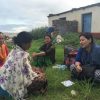
Include Indigenous People in COVID-19 Response
In Nepal the COVID-19 crisis has been especially hard on indigenous peoples. We had to learn a new vocabulary and use words like quarantine, self-isolation, hand sanitizers and social distancing.
COVID-19 Means Development Setbacks for Mongolia
Mongolia has recorded very few cases of COVID-19, less than 300 as on date, despite its more than 4,000 kilometre porous border with China. However, the country faces a major economic impact from the pandemic.
Fight Pandemic, Not Windmills of the Mind
With uneven progress in containing contagion, worsened by the breakdown in multilateral cooperation due to mounting US-China tensions, recovery from the Covid-19 recessions of the first half of 2020 is now expected to be more gradual than previously forecast. Pandemic response measures In the face of the Covid-19 pandemic, many governments, especially of Organization for Economic Cooperation and Development (OECD) economies, have introduced massive fiscal and monetary packages for contagion containment, relief and recovery.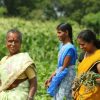
Securing Property and Land Rights in India
Secure property rights are fundamental to the economic and social development of any country. However, in India, we are faced with a curious conundrum where more than 70 percent of a household’s assets are held in land and housing, yet there is insufficient data and research on people’s property rights.
The Charter of the United Nations After 75 Years: Personal Reflections
The Charter of the United Nations is not only the constituent instrument of the United Nations as an organization. It is a multilateral legal manifesto encompassing a set of basic principles and norms aimed at ensuring peace, freedom, development, equality and human rights throughout the world. These principles and norms reflect the shared values proclaimed in the preamble on behalf of the “Peoples of the United Nations”. As such, it is the most innovative and trailblazing multilateral treaty ever concluded among States. Today, it is a universal instrument by which all States have solemnly accepted to be bound in their international relations.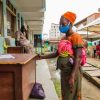
COVID-19: Smarter Response & Recovery Measures Can Help Preserve Human Rights in Africa
As COVID-19 cases continue to rise in Africa, countries are simultaneously dealing with the health and socio-economic impacts of the pandemic, and how and when to ease lockdowns and curfews imposed to stop the disease spreading and get onto the path of recovery.
A Determined Path to the SDGs in 2030 Despite the COVID-19 Pandemic
As lockdowns ease in countries across Asia and the Pacific in the wake of the COVID-19 pandemic, one thing is clear—a return to business as usual is unimaginable in a region that was already off track to meet the Sustainable Development Goals (SDGs). The virtual High-Level Political Forum on Sustainable Development recently convened governments and stakeholders across the globe to focus on the imperative to build back better while keeping an eye on the Global Goals.
Gender Inequality and Oppression of Women: A Survivor’s Story
“What do you think happens to kerosene when it is poured on your head?” Surya stumbles as she speaks to IPS. “It goes down, it goes trickling down.” When someone speaks to a burn victim, one naturally feels shocked, sad, and sympathetic. But in talking to Surya, who has the major part of her body burned, the feelings were of hope and inspiration. How is it possible to survive this trauma and still have so much love and joy to share?
Rohingya Women Take a Seat at the Table & Share Stories in a Growing Rights Movement
Rohingya women are coming together to feature their own work, plight and stories in mainstream conversations about their community — a space they say they’ve been left out of. “If we think of revolutions or liberty or think of any ways to liberate ourselves from the shackle of suffering and being dubbed as 'the most persecuted minority on earth', women have to be part of it,” Yasmin Ullah, president of the Rohingya Human Rights Network, told IPS.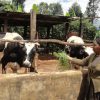
How Smart Investments in Technology Can Beef up Africa’s Economy
There is no shortage of technological innovations designed to boost animal agriculture in Africa. These range from GPS tracking systems which identify and trace pastoralists’ herds to livestock vaccine SMS services that alert farmers to disease outbreaks.
Sino-Indian Disengagement at Galwan: Two Steps Back and One Step Forward?
On the first Sunday of July, there was an important telephone call between the Chinese Foreign Minister and State Councillor Wang Yi and the Indian National Security Adviser Ajit Duval. Some important decisions were announced thereafter. This is not to say that these were the outcome of that interaction only. For weeks the militaries of both China and India and their diplomats had been negotiating on the grounds of the disputed territory along the Line of actual Control at the Galwan Valley, as well as through other channels to end the bloodiest border stand-off between the two Asian powers that had lasted two months. True, while not a bullet was fired in anger, troops had battled with sticks and stones that left twenty Indian soldiers dead and, reportedly, an unknown number of Chinese casualties. Indeed, it appeared that the two sides, who had fought a war in the Himalayas in 1962, was yet again on the brink of a possible war.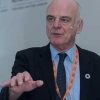
Three Steps for Leaders to Tackle Covid and Climate Emergency
Dr David Nabarro is Special Envoy to the World Health Organisation on COVID-19 and Strategic Director of 4SD. He sets out his challenge to leaders to use COVID-19 as an opportunity for radical change that responds to the needs and the interests of all of humanity.- • Countries must work together
• Focus on equity
• Effective local action
It was Meant to Be a Ground-breaking Year for Gender Equality but COVID-19 Widened Inequalities
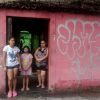
Sixteen-year-old Suhana Khan had just completed her grade 10 exams in March, when India imposed a nationwide COVID-19 lockdown. Since then, she has been spending her mornings and evenings doing household chores, from cooking and cleaning to fetching drinking water from the tube well.
Marking 75 Years of the Charter of the United Nations
The Charter of the United Nations has been a constant presence in my life. My awareness of it started with the usual brief introduction to the basics of the United Nations as an organization that many young people receive in school. Later, as my political awareness took shape against the backdrop of military rule in Portugal and my country’s status as a colonial power, the Charter’s calls for self-determination and other freedoms registered with urgency. During the time I spent as a volunteer in the poor neighbourhoods of Lisbon, the Charter’s vision of social justice was equally resonant. In subsequent service as a parliamentarian and then as Prime Minister, I was privileged to have an opportunity to advance not only national progress but one of the Charter’s other main objectives: international cooperation. Across a decade as High Commissioner for Refugees and now in my current role, the Charter’s power inspires me onward every day in serving “we the peoples”, including the most vulnerable members of the human family, who have a special claim on that landmark document’s provisions and protections.
Involve Marginalized Groups to Make Food Systems More Climate-Resilient
At last week’s 2020 High Level Political Forum (HLPF), UN member states discussed how to get back on track to achieve the Sustainable Development Goals (SDGs) in light of the Covid-19 pandemic. They focused on a dire need for “accelerated action and transformative pathways to realize the decade of action and delivery for sustainable development.”
As COVID-19 Cases Rise, African Countries Grapple with Safely Easing Lockdowns
Re-opening economies is a tough balancing act between keeping people safe from the virus while ensuring they can still make a living. Some four months after the first COVID-19 case in Africa was reported in Egypt, countries on the continent are beginning to ease public health and social measures, such as lockdowns and curfews, imposed to curb the spread of the pandemic.
Covid-19 Compounds Developing Country Debt Burdens
Covid-19 is expected to take a heavy human and economic toll on developing countries, not only because of contagion in the face of weak health systems, but also containment measures which have precipitated recessions, destroying and diminishing the livelihoods of many.
Research Provides the Bricks and Mortar for Our Food Systems to ‘Build Back Better’
The COVID-19 pandemic has exposed the structural weaknesses of today’s food systems, showing how quickly global networks of food production, trade and supply can waver under the impact of a single disease.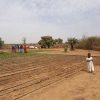
‘One CGIAR’ with Two Tiers of Influence? The Case for a Real Restructuring of Global Ag-Research Centres
While the ‘CGIAR System’ may sound like a technocratic body, few organizations have exerted as much influence on today’s food systems as this network of global agricultural research centres. Since its inception at the height of the ‘Green Revolution’ in 1971, the CGIAR has driven advances in crop breeding and agricultural mechanization and modernization across multiple continents. Its mission – to develop knowledge and innovation for agriculture in the global South – is as relevant today as ever, in light of climate change, COVID-19 and a host of additional challenges.« Previous Page — Next Page »


 2026 High-level Political Forum on Sustainable Development. Credit: UN Photo/Eskinder Debebe
In 2015, the United Nations and its Member States adopted the Sustainable Development Goals (SDGs) in an effort to make the world a more sustainable and peaceful place for future generations. Progress on the 17 SDGs has been uneven, and inequality persists across the globe. 10 years after adoption, the 2025 UN SDGs Report revealed that only 35% of the SDG targets are on track, with more than half moving too slowly, and 18% moving backwards from the 2015 baseline. Poverty remains one of the world’s most pressing issues, with hunger, violence, and inequality impeding the opportunities for all people to achieve success. In September 2024, the United Nations Summit of the Future introduced a new goal: to eradicate global poverty by 2030, ensure universal rights to basic services, and increase the overall standard of living in terms of industrialization, economic well-being, citizen health, and literacy. Furthermore, recent shifts in United States foreign aid policy – notably, major budget cuts to USAID and the termination of thousands of development programmes– have severely threatened vital lifelines of financial aid to impoverished communities around the world. Additionally, the United States’ withdrawal from the Paris Climate Agreement has undercut international efforts at sustainable development. With the upcoming 2030 deadline, the UN Secretary-General has called for urgent multilateralism across six priority areas: food systems, energy, digital connectivity, education, jobs and social protection, and climate and biodiversity. IPS sheds light on marginalized communities that struggle on a daily basis to survive and have their stories heard and respected.
Updated by Yilan Batista and Shuli Wong August 2026

The Week with IPS

NEXT STOP - SDGs
Tracking global progress towards a sustainable world
Tracking global progress towards a sustainable world
