Languages
Friday, November 13, 2026



News and Views from the Global South
Development & Aid

Inadequate Water & Sanitation Threatens Women’s & Girls’ Development in Senegal
With Tabaski (Eid al-Adha) around the corner, 11-year-old Fatoumata Binta from Terrou Mballing district in M'Bour, western Senegal, wakes up early and joins her brothers Iphrahima Tall and Ismaila to fetch water from a river several miles from home.
COVID-19 Impact Means Women and Girls Will Still Eat Last, Be Educated Last
Catherine Bertini, former executive director of the World Food Programme, began the IPS United Nations Bureau webinar “The Impact of the COVID-19 Pandemic on Women and Girls” by reminiscing on a talk she gave in 1995 entitled “Women eat last”. She remarked that after 25 years, the phrase is still something that is relevant to the present day.
Tobacco Industry Factoid on Illicit Trade Leading Governments Astray
A factoid is unreliable information repeated so often that it becomes accepted as fact. One such factoid repeatedly echoed across the globe by the tobacco industry is that tobacco tax increases worsen cigarette smuggling.
Dead Rats Can Raise GDP, Economists Have Lowered It
GDP has been increasingly challenged on many grounds as a measure of economic and social progress. Clearly, GDP does not take account of other dimensions of wellbeing, natural resource depletion or environmental damage.
Pros and Cons of a Super Regulator – The case of the Spanish Regulator
On June 10, 2020, Senator Ricardo Monreal, President of the Political Coordination Board of the Senate of Mexico, presented a legislative initiative to reform Article 28 of the Political Constitution of the United Mexican States, in order to cluster in a single regulator of economic competition, the Telecommunications, Broadcasting and Energy sectors.
The World Needs You. Now.
“We may all come on different ships, but we are in the same boat now,” Martin Luther King Jr once said. His timeless wisdom rings truer than ever today for the many challenges the world is facing. COVID-19, continued armed conflicts and forced displacement, climate-change induced disasters, deep divides and widespread discrimination mark the human family in the 21st century.
The United Nations At 75 Remains The World’s Moral Compass
“The vision and promise of the United Nations is that food, healthcare, water and sanitation, education, decent work and social security are not commodities for sale to those who can afford them, but basic human rights to which we are all entitled.” Those were the poignant words of the UN Secretary-General, Antonio Guterres, in a hard hitting speech on 18 July 2020 to mark Mandela Day.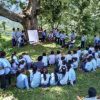
Digital Divide Exposes Class Divide in Nepal Schools
Nepal’s education system was in crisis long before the pandemic hit. But with schools closed now for four straight months, remote learning has also exposed the class divide in access to education.
Are Women-led Startups Key to Sustainability in Senegal?
Growing up in the Senegalese capital of Dakar, Siny Samba (28) watched with fascination as her grandmother made snacks for her family, using the fresh fruit from their garden. She would often help her grandma make these snacks to feed the neighbourhood children.
Relevance of US Peace Corps in Post-COVID World
I have had 5-decade long and happy association with the Peace Corps since I was a 7th grade student in the hills of Nepal. My wonderful Peace Corps teachers were instrumental in helping transform my life. And the 4000+ Peace Corps Volunteers who have served in Nepal have contributed immensely to my country’s development.
How will COVID-19 Affect Women Entrepreneurs?
Two years ago, Aarti started a small business selling traditional handicrafts online, supporting artisans based in rural Karnataka. After an initial phase of struggle, she had a steady stream of orders and was looking to procure manufacturing equipment and scale the impact of her business by supporting more local talent.
Journals Opening up to Science Expertise from South
Global travel restrictions as a result of the COVID-19 outbreak are accelerating a trend towards research publications focussed on the global South, publishers say.
World Poverty: We Have Come So Far… But So Much Further To Go
The United Nations’ first Sustainable Development Goal (SDG) is “No poverty,” the most important because almost half the world, 46%, lives on less than $5.50 a day according to the World Bank. But world attention has turned away from poverty. Why?
COVID-19-Induced Policy Reforms in India: Overcoming Implementation Challenges
The global outbreak of Covid-19 has disrupted the food system throughout the world. From initial lockdown by the national governments to slow the spread of the Covid-19 to now opening of the economies have had food security implications for all players in the food system ranging for the farmers to consumers and the rest in between.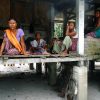
With Poverty & Hunger Skyrocketing, is a Global Economic Rescue Package the Answer?
The United Nations has been relentlessly pursuing a highly-ambitious blueprint for the sustainable future of humanity –harking back to the adoption of a new global economic agenda by the General Assembly back in 2015.
The SDGs, COVID-19 and the Global South: Insights from the Sustainable Development Report 2020
COVID-19 has claimed more than 550,000 lives and disrupted the entire world, sparing no region. As of July 2020, the number of daily new confirmed cases and deaths due to COVID-19 are growing rapidly in Latin America and the Caribbean, especially in Brazil and Mexico but also in many African countries as well as India. As highlighted in a recent article, these numbers are likely underestimated given the reduced testing capacity in many low and middle-income countries.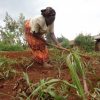
Dealing with Food Insecurity, on a Longer Term
African countries are beginning to reopen borders, and this is finally enabling many citizens to resume their normal life. However, there is still an urgent need for African countries to prioritize agriculture to tackle food insecurity issues that have been exacerbated by COVID and will continue to be an issue into the near future. According to the latest estimates by the United Nations World Food Programme, COVID-19’s compounding effects could drive 270 million people into food insecurity.
Covid-19 Cannot Be Defeated by a Divided World
Announcing an independent evaluation of the global Covid-19 response on 9th July, World Health Organization (WHO) Director-General Dr Tedros Adhanom Ghebreyesus asked why it has been “difficult for humans to unite and fight a common enemy that is killing people indiscriminately?”.
IPS Webinar: Gender Equality Crucial in ‘Building Back Better’ Post-COVID-19
While men are more likely to die from COVID-19, women are facing the full blow of the socio-economic fallout from the ongoing pandemic as well as seeing a reversal in equality gains made over the last two decades, says an all-women panel of international thought leaders, who met virtually during a discussion convened by IPS.
Fog Traps Save Chilean Farming Community from Severe Drought
"The harvested water has helped us at critical times and the fog nets have also brought us visibility. Today we produce beer here and many tourists come," says Daniel Rojas, president of the Peña Blanca Agricultural Community in Chile.
Coronavirus Shows the Dangers of Letting Market Forces Govern Health and Social Care
In March, 10,000 NHS staff signed a letter to UK prime minister Boris Johnson demanding better protection against COVID-19. Nurses and doctors wanted to treat patients without fear of infecting them and to minimise their own risk of falling ill. But they lacked the proper protective equipment.« Previous Page — Next Page »


 2026 High-level Political Forum on Sustainable Development. Credit: UN Photo/Eskinder Debebe
In 2015, the United Nations and its Member States adopted the Sustainable Development Goals (SDGs) in an effort to make the world a more sustainable and peaceful place for future generations. Progress on the 17 SDGs has been uneven, and inequality persists across the globe. 10 years after adoption, the 2025 UN SDGs Report revealed that only 35% of the SDG targets are on track, with more than half moving too slowly, and 18% moving backwards from the 2015 baseline. Poverty remains one of the world’s most pressing issues, with hunger, violence, and inequality impeding the opportunities for all people to achieve success. In September 2024, the United Nations Summit of the Future introduced a new goal: to eradicate global poverty by 2030, ensure universal rights to basic services, and increase the overall standard of living in terms of industrialization, economic well-being, citizen health, and literacy. Furthermore, recent shifts in United States foreign aid policy – notably, major budget cuts to USAID and the termination of thousands of development programmes– have severely threatened vital lifelines of financial aid to impoverished communities around the world. Additionally, the United States’ withdrawal from the Paris Climate Agreement has undercut international efforts at sustainable development. With the upcoming 2030 deadline, the UN Secretary-General has called for urgent multilateralism across six priority areas: food systems, energy, digital connectivity, education, jobs and social protection, and climate and biodiversity. IPS sheds light on marginalized communities that struggle on a daily basis to survive and have their stories heard and respected.
Updated by Yilan Batista and Shuli Wong August 2026

The Week with IPS

NEXT STOP - SDGs
Tracking global progress towards a sustainable world
Tracking global progress towards a sustainable world
