Languages
Monday, October 26, 2026



News and Views from the Global South
Development & Aid

Belarus Prisoner Release a Diversion, Say Rights Activists
As Belarusian president Alexander Lukashenko continues to pardon political prisoners in an apparently increasingly successful attempt to improve diplomatic relations with the US, rights groups have warned the international community must not let itself be ‘tricked’ into thinking repressions in the country are easing.
‘The Government Was Corrupt and Willing to Kill Its Own People to Stay in Power’
CIVICUS discusses recent protests that led to a change of government in Nepal with Dikpal Khatri Chhetri, co-founder of Youth in Federal Discourse (YFD). YFD is a youth-led organisation that advocates for democracy, civic engagement and young people’s empowerment.

No African Development from Western Trade Policies
The World Bank’s 1981 Berg Report provided the blueprint for structural adjustment, including economic liberalisation in Africa. Urging trade liberalisation, it promised growth from its supposed comparative advantage in agriculture.
World War II Era Weapons Still Threatening Lives and Development in the Solomon Islands
Last century the remote Solomon Islands was the stage for some of the most intense battles fought during the Pacific campaign of the Second World War. But while Allied troops departed on the heels of victory, the military forces of both sides left a massive legacy of unexploded ordnance (UXO) which is still scattered across the country and others in the region.
Our Teachers, Our Heroes
1 calls on people everywhere to provide teachers and the communities they serve with the resources they need to succeed in their crucial profession.
From Storm to Strength: Odisha’s “Zero Casualty” Model for Community-Centered Disaster Resilience
South Asia is home to nearly two billion people and ranks among the most disaster-prone subregions in Asia and the Pacific. Every year, millions face exposure to floods, cyclones and other extreme events. The Bay of Bengal alone accounts for nearly 80 per cent of global cyclone-related deaths, with storms striking Bangladesh, India and Sri Lanka with growing frequency.
Afghanistan: Ban on Girls’ Education Linked to Rise in Forced and Child Marriage
After the Taliban returned to power in Afghanistan, they banned girls’ education beyond the sixth grade. Human rights groups say the policy is a major driver of the rise in underage and forced marriages involving Afghan girls.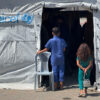
More than 42,000 Gazans Suffer Life-Changing Injuries as Health System Nears Collapse
In recent months, the humanitarian situation in Gaza has sharply deteriorated, with escalating hostilities driving mass civilian displacement and overwhelming the already fragile healthcare system, pushing it to the brink of collapse. UN officials are warning that thousands of civilians have been left with life-altering injuries without treatment.
Justice for Palestinians Can’t Wait for a Peace Deal
The calamitous situation in Gaza, with Palestinian civilians facing extermination and ethnic cleansing by Israeli forces, was a major focus of the annual United Nations General Assembly (UNGA) high-level week. Along with recognition of the state of Palestine by France, the United Kingdom, Australia, and Canada, among others, states made key commitments on human rights and accountability that were overwhelmingly adopted by the UNGA and now need to be fulfilled.
Israel, Gaza, and the Erosion of International Order
As a world leader and beneficiary of the international system, the United States should be at the forefront of efforts to enforce rules and laws to prevent the proliferation of weapons of mass destruction, protect civilians in conflict, and block weapons transfers to states that engage in war crimes or genocide.
Weaving Wisdom and Science: Pacific Voices Call for Ocean Protection
In the packed conference hall of the Heritage Hotel, the sound of Pacific voices filled the air—not just through speeches, but in song, rhythm, and poetry. The Dreamcast Theatre Performing Arts group opened the Second Pacific Island Ocean Conference with an evocative performance, reminding leaders and practitioners why they had gathered: to listen. To listen to science. To listen to communities. To listen to the ocean itself.
The Ranch Fighting to Save Nigeria’s Endangered Drill Monkeys
For the past 23 years, Gabriel Oshie has started his mornings at Drill Ranch in the Afi Mountain Wildlife Sanctuary, Boki, Cross River state, southern Nigeria.
Are Youth-led Revolutions in South Asia a Cause for Concern?
In the Global South, where people under the age of 18 comprise more than 50 percent of the population, youth activism is increasing rapidly. Youngsters are more agile and volatile than older people, less restrained by family, prestige and work. However, many suffer from marginalisation, lack of employment, and poverty. Furthermore, insecurity and limited life experience make young people an easy target for manipulating and unscrupulous politicians, criminal networks, and religious fanatics.
West Bank: Record Number of Demolitions over Building Permits as Israel Furthers Annexation Agenda
In less than nine months, Israel has demolished more Palestinian homes and structures in the occupied West Bank, including East Jerusalem, over building permits than in the whole of last year.
International Community, Civil Society Urge Minority Rights and Accountability Amid Ongoing Violence Against Rohingyas in Myanmar
On September 30, the United Nations (UN) convened a high-level meeting on the situation of Rohingya Muslims and other minorities in Myanmar shortly following the end of the 80th session of the General Assembly (UNGA80). The conference was an opportunity to draw global attention once more to the Rohingya refugee situation with dialogue from UN officials, world representatives and civil society organizations.
UN Conference Recommits to Solidarity With Rohingyas, People of Myanmar
The international community convened for a high-level meeting at UN Headquarters, this time to mobilize political support for the ongoing issue of the persecution of the Rohingya Muslims and other minorities in Myanmar.
Drought-hit Tanzania’s Villages Confront Harshest Reality of Climate Change
The dust was already swirling when Asherly William Hogo lifted himself from a makeshift bed before dawn. The 62-year-old pastoralist, lean from a lifetime of walking these plains, slipped into his sandals and stepped outside. Stars glittered over Dodoma, but the air was warmer than it used to be, Hogo swears. He whistled for his cows. Years ago, this hour meant an arduous trek to distant waterholes.
It’s Past Time to Make Polluters Pay
I was 16 years old when Super-Typhoon Haiyan tore through my community in Eastern Samar in the Philippines. It remains one of the deadliest storms in history, killing more than 6,000 people and displacing millions. My community lost everything: Loved ones, family homes and land, our ways to earn a living and rebuild, and our sense of safety all vanished overnight.
Historical Expansion and Sustainability in Chile’s Main Port
The port of San Antonio, Chile's main port, is promoting a historic and sustainable expansion with its own investment and that of international consortiums, aiming to improve its current ninth place among the largest and busiest ports in Latin America.
Beijing+30: A Culmination of International, Intergenerational Dialogue
Thirty years since the UN Fourth World Conference on Women in Beijing, the resolve that defined and united the world toward a global agenda for gender equality make it just as relevant in 2025.
Food Inflation: a Key Challenge To Sustain the Achievements of Latin America and the Caribbean
Just a few years ago, at the height of the COVID-19 pandemic, millions of families in Latin America and the Caribbean did not know whether they would have enough food for the next day. The shutdown of economies, massive job losses, and the sharp rise in prices pushed food insecurity to levels not seen in decades.« Previous Page — Next Page »





 2026 High-level Political Forum on Sustainable Development. Credit: UN Photo/Eskinder Debebe
In 2015, the United Nations and its Member States adopted the Sustainable Development Goals (SDGs) in an effort to make the world a more sustainable and peaceful place for future generations. Progress on the 17 SDGs has been uneven, and inequality persists across the globe. 10 years after adoption, the 2025 UN SDGs Report revealed that only 35% of the SDG targets are on track, with more than half moving too slowly, and 18% moving backwards from the 2015 baseline. Poverty remains one of the world’s most pressing issues, with hunger, violence, and inequality impeding the opportunities for all people to achieve success. In September 2024, the United Nations Summit of the Future introduced a new goal: to eradicate global poverty by 2030, ensure universal rights to basic services, and increase the overall standard of living in terms of industrialization, economic well-being, citizen health, and literacy. Furthermore, recent shifts in United States foreign aid policy – notably, major budget cuts to USAID and the termination of thousands of development programmes– have severely threatened vital lifelines of financial aid to impoverished communities around the world. Additionally, the United States’ withdrawal from the Paris Climate Agreement has undercut international efforts at sustainable development. With the upcoming 2030 deadline, the UN Secretary-General has called for urgent multilateralism across six priority areas: food systems, energy, digital connectivity, education, jobs and social protection, and climate and biodiversity. IPS sheds light on marginalized communities that struggle on a daily basis to survive and have their stories heard and respected.
Updated by Yilan Batista and Shuli Wong August 2026

The Week with IPS

NEXT STOP - SDGs
Tracking global progress towards a sustainable world
Tracking global progress towards a sustainable world
