Languages
Friday, October 30, 2026



News and Views from the Global South
Development & Aid

UN at 80: Civil Society Must Have a Say in the Struggle for Renewal
As the high-level opening week of the UN General Assembly unfolds, with heads of states delivering often self-serving speeches from the UN’s podium, the organisation is undergoing one of its worst set of crises since its founding 80 years ago. This year’s General Assembly – ostensibly focused on development, human rights and peace – comes as wars are raging across multiple continents, climate targets are dangerously being missed and the institution designed to address these global challenges is being hollowed out by funding cuts and political withdrawals.
African Voices at UNGA80: Building Sustainable and Self-Reliant Systems Through Innovation
On September 24, African-led organizations convened a high-level side event during the 80th session of the United Nations General Assembly (UNGA80) The event - African-led Innovation: Shaping Sustainable Futures With or Without Aid - was organized in partnership with eHealth Africa, Population Services International (PSI), Population Council, and Reach Digital Health. The dialogue amplified voices from African-led organizations and highlighted the importance of homegrown innovations for sustainability—regardless of the availability of foreign aid—amid shrinking donor funding and widening global inequalities.
Ending Child Marriage Needs a Culture of Accountability, Respect for the Rule of Law
Global leaders came together at the sidelines of this year’s UN General Assembly to commit to ending child marriage, calling on all world leaders to make concerted efforts to ensure accountability and enforce the laws that prohibit it.
An Overdose of Renewables, New Energy Risk in Brazil
Wind and solar power sources, essential for the energy transition to mitigate the climate crisis, have become a risk of power outages in Brazil.
The Struggle to Be Heard on Sign Language Rights in Uganda
Every Last week of September the Deaf community in Uganda and the rest of the world celebrates sign languages and the rich identity of Deaf people and Deaf culture. The day is also an opportunity to advocate for the enforcement of sign language laws and policies.
Record Number of Women Living Within Striking Distance of Military Conflicts
The battlefield is no longer distant; for millions of women, it’s next door. An estimated 676 million women – nearly 17 percent of the global female population – lived within 50 kilometres of a deadly conflict last year, according to a new report from the Peace Research Institute Oslo (PRIO). That is the highest figure recorded since the end of the Cold War.
African Leaders Commit to Climate-Health Nexus and Adaptation Solutions
At the Second Africa Climate Summit (ACS2) held in Addis Ababa, Ethiopia, from 8-10 September, African leaders committed to the climate and health nexus and their desire to advance climate-resilient and adaptive health systems on the continent.
Food Insecurity Rising in Africa, Falling in Latin America and Caribbean
The 2025 State of Food Security and Nutrition in the World (SOFI) report shows a modest global decline in hunger since 2022, with 673 million people facing hunger in 2024, indicating a decrease of 22 million compared to 2022. While progress is seen in Asia and South America, hunger is rising in Africa and Western Asia.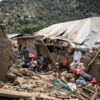
Afghan Women Die Needlessly After Natural Disasters
In normal times, women in Afghanistan face dire living conditions relative to their counterparts in other parts of the world, given the iron grip of Taliban repression. However, the powerful 6.0-magnitude earthquake that struck the eastern Afghan provinces of Kunar, Nangarhar, and Laghman at the end of August was out of the ordinary.
Toxic Air in Tanzania’s Port City Threatens Millions, Researchers Warn
On a hot afternoon in Kariakoo, Dar es Salaam’s bustling commercial hub, the air is a swirling mix of diesel exhaust, charcoal smoke and dust kicked up by the shuffle of feet. Traders tie handkerchiefs over their noses to deter haze from drifting into their throats and lungs.
Prospects for the Upcoming High-Level Conference on Rohingya
Last month marked eight years since hundreds of thousands of Rohingya were forcibly displaced from Myanmar’s Rakhine State to Bangladesh by the Myanmar military.
‘The State Cannot Pardon Itself for Violating Human Rights’
CIVICUS discusses Peru's new amnesty law with Nadia Ramos Serrano, founder and researcher at the Leadership Centre for Women of the Americas, a civil society organisation working on democratic development and the role of women in politics.
Mamdani’s Stand on Genocide is More Important than the Dynamics of Arresting Netanyahu
No leader responsible for mass atrocities enjoys greater impunity on the international stage than Benjamin Netanyahu. This is due to the strange stranglehold of the pro-Israel lobby on the two major political parties in the United States.
Beware Independent Central Banks
US President Trump’s snide barbs against his appointee, US Federal Reserve Bank Chairman Jerome Powell, have revived support for central bank independence – long abused by powerful finance interests against growth and equity.
WHO Warns of Global NCD Crisis, Calls for Urgent Investment to Save 12 Million Lives By 2030
The World Health Organization (WHO) is urging global efforts to address and invest in tackling non-communicable diseases, and that by doing so, can yield economic benefits of up to USD 1 trillion by 2030.
UN80 – Is it time for the Re-emergence of the Global Ministerial Environment Forum?
“We shall have to do more with less” was the summary message from a meeting in Oslo, Norway, this spring (2025), where the Minister of Foreign Affairs of Norway, Espen Barth Eide and Guy Ryder, Under-Secretary-General for Policy at the UN and Chair of UN80, both spoke about UN80 and the necessity to reform the UN.
The Humanitarian Sector is at a Breaking Point: Here’s How to Fix It
As world leaders convene in New York, September 22-30, for the 80th session of the UN General Assembly, they will confront a humanitarian sector in crisis. With only 9% of the $47 billion requested for global humanitarian needs currently funded, the sector faces what UN Emergency Relief Coordinator Tom Fletcher calls "a crisis of morale and legitimacy" alongside devastating funding cuts. So where do we go from here?
How Stigma Undermines Contraceptive Use Among Women in Sierra Leone
Eunice Dumbuya, a young activist in Freetown, Sierra Leone, still remembers being called promiscuous after getting a contraceptive implant a few years ago. She knew the risks of an unplanned pregnancy in her conservative country, so she made a choice.
To Sanctify Bigotry: The Case of Charlie Kirk
On September 11, Charlie Weimers, a Swedish Member of the European Parliament and active within the European Conservatives and Reformists Group, rose up during a Parliamentary session and asked for a minute of silence to honour the memory of Charlie Kirk, who the day before had been shot and killed during a political meeting at the Utah Valley University in the U.S.
Frontline of a Planetary Emergency: Africa Demands Climate Justice and Action
The room at the Swiss Inn Nexus Hotel in Bole was silent but tense as Sunita Narain, one of the world’s most influential environmental voices, fixed her gaze on rows of African journalists, scientists, and policymakers. Her tone was gentle, but the words cut deep.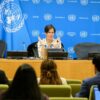
New Report Investigates Violence Against Women and Girls Through Surrogacy, Sparks Global Dialogue
A United Nations report calling for the global abolition of surrogacy has sparked intense debate among experts, with critics arguing that blanket bans could harm the very women the policy aims to protect.« Previous Page — Next Page »





 2026 High-level Political Forum on Sustainable Development. Credit: UN Photo/Eskinder Debebe
In 2015, the United Nations and its Member States adopted the Sustainable Development Goals (SDGs) in an effort to make the world a more sustainable and peaceful place for future generations. Progress on the 17 SDGs has been uneven, and inequality persists across the globe. 10 years after adoption, the 2025 UN SDGs Report revealed that only 35% of the SDG targets are on track, with more than half moving too slowly, and 18% moving backwards from the 2015 baseline. Poverty remains one of the world’s most pressing issues, with hunger, violence, and inequality impeding the opportunities for all people to achieve success. In September 2024, the United Nations Summit of the Future introduced a new goal: to eradicate global poverty by 2030, ensure universal rights to basic services, and increase the overall standard of living in terms of industrialization, economic well-being, citizen health, and literacy. Furthermore, recent shifts in United States foreign aid policy – notably, major budget cuts to USAID and the termination of thousands of development programmes– have severely threatened vital lifelines of financial aid to impoverished communities around the world. Additionally, the United States’ withdrawal from the Paris Climate Agreement has undercut international efforts at sustainable development. With the upcoming 2030 deadline, the UN Secretary-General has called for urgent multilateralism across six priority areas: food systems, energy, digital connectivity, education, jobs and social protection, and climate and biodiversity. IPS sheds light on marginalized communities that struggle on a daily basis to survive and have their stories heard and respected.
Updated by Yilan Batista and Shuli Wong August 2026

The Week with IPS

NEXT STOP - SDGs
Tracking global progress towards a sustainable world
Tracking global progress towards a sustainable world
