Languages
Sunday, November 8, 2026



News and Views from the Global South
Development & Aid

Defending Biodiversity in Armed Conflict: Can COP16 Meet the Expectations?
José Aruna, a forest defender from Sud Kivu province in the Democratic Republic of the Congo (DRC), remembers the night in September 2019 when a group of heavily armed men barged into his house in the middle of the night. Aruna and his wife—6 months pregnant at the time—were in bed when he heard sounds of boots on the front yard and quickly knew something was about to happen.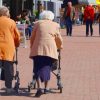
The World’s Demographic Sky Is Not Collapsing
Alarmists, mainly politicians, economists and wealthy elites, are announcing that the world’s demographic sky is collapsing. The world’s demographic sky is not collapsing but simply changing.
Hurricane Oscar Threatens Humanitarian Crisis in Cuba
Although classified as a compact tropical cyclone and considered one of the smallest in the North Atlantic, Hurricane Oscar has caused considerable damage in eastern Cuba since it made landfall on October 20, 2024. Cuban authorities have confirmed that the death toll has risen to seven, in additional to the damage in infrastructure. Communications and relief efforts were greatly impeded by a nationwide power grid blackout, which continues on in much of Cuba at the time of publication.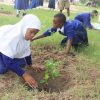
Tanzanian Students Drive Climate Action Through Tree Planting
At Gabimori primary school, located at Nyamagaro ward in Tanzania’s northern Rorya district, a 15-year-old Florence Sadiki kneels among polyethylene bags, carefully examining the seedlings she and her classmates have nurtured from tiny sprouts “We’ve planted many trees to make our school look better and to help fight climate change,” she says.
A Triple Planetary Crisis Scarring Africa’s Landscapes
Some of the creeping impacts of this triple crisis are possibly the most debilitating: Africa is the most severely impacted region by desertification and land degradation, with approximately 45% of its land area affected. In the Horn of Africa and the Sahel alone, it imposes food shortages on more than 23 million people. Just last month, more than 700,000 people were affected by floods in Central and West Africa, and tens of millions in southern Africa are facing drought.
Small Farmers Reap Growing Benefits From Solar Energy in Chile
The production of solar energy by means of panels installed on small farmers' properties or on the roofs of community organisations is starting to directly benefit more and more farmers in Chile.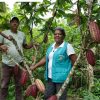
Food Security Is Key To Making ‘Peace with Nature’
As countries are meeting in Cali, Colombia, for the 2024 UN Biodiversity Conference (CBD COP 16), the fate of biodiversity hangs in the balance, and with it, the sustainability of our food systems.
Scientific Research Can Play a Key Role in Unlocking Climate Finance
Climate finance will be at the epicenter of the discussion at the UN Climate Change Conference 2024 (COP29). The focus will be on strengthening the fund and defining the conditions under which the countries of the Global South will be able to access this money. However, little is said about the scientific research that is required to gather the evidence and data to prove the loss and damage caused by the impact of climate change in developing countries.
Chickens as Well as Cheetahs: Biodiversity Conservation Must Also Include Livestock
As the UN’s COP16 biodiversity conference continues, the temptation is to focus on the wild flora and fauna under threat. But there is another, less obvious yet just as critical biodiversity crisis unfolding around the world that also deserves attention.
Seeds of Resilience Despite Massive Destruction in Gaza
It was two weeks before October 7—when Hamas attacked Israel—that Prime Minister Benjamin Netanyahu stood behind the rostrum in the United Nations General Assembly hall clutching a crude map of what he called the "new Middle East," a visual that erased the land of Palestine.
The July Revolution in Bangladesh Is Rooted in Meta-Modernist Philosophy
The students and the common people of Bangladesh dared to do something in 36 days of July-August that was considered simply impossible by most people just days before August 5, 2024. They said ‘enough is enough’ to an old order that outraged their humanity, robbed their dignity and the rulers imagined that their citadel of power was simply impenetrable. The revolutionists refused to bow down to the murderous regime that knew no bounds to its cruelty and plundering. They were ready to sacrifice their lives for the freedom of the besieged nation.
Sudanese Civil War Exacerbates Economies in Neighbouring Countries
Critical levels of nationwide hunger in Sudan has only increased to critical levels since the start of the Sudanese civil war in April 2023. Escalated hostilities between the Sudanese Armed Forces (SAF) and the Rapid Support Forces (RSF) have led to limited mobility and repeated blockages of humanitarian aid. This, coupled with the volatile floods and droughts, have decimated crop fields which has only exacerbated famine levels greatly. All of these factors have left nearly 25 million people in Sudan in need of humanitarian assistance in 2024.
By Choosing What We Eat, We Choose the World We Want To Live In
“How we prepare and eat food should not be at the expense of our biodiversity,” says 3-Michelin-starred chef Mauro Colagreco, who is on a mission to change our relationship with food and what we choose to eat. Colagreco, the owner of Mirazur, an award-winning restaurant in Menton, France, is a tribute to gastronomy. Among other world rankings, Mirazur's fine food and service have earned it first place in the World's 50 Best Restaurants. In the 2020 edition of the "100 Chefs" world ranking, Colagreco's peers named him the Best Chef in the World and Chef of the Year in 2019.
IMF isn’t doing enough to support Africa: billions could be made available through special drawing rights
At the 2021 UN Climate Summit, Barbados prime minister Mia Mottley called for more and better use of special drawing rights (SDRs), the International Monetary Fund’s reserve asset.
The Impact of Media Literacy for Meat Production
With the emergence of generative artificial intelligence (AI) and social media, the dissemination of public information moves at a faster speed than ever before. Social media platforms have become an integral tool for users of younger generations to access the news. Although this shift has led to public news being more accessible to younger users, it has also led to an overall decline in media literacy.
The Impact of Global Megatrends on Poverty in Asia & the Pacific
In the coming decades, the Asia-Pacific region faces a series of challenges that threaten to exacerbate poverty. Among these, climate change, demographic shifts, particularly population ageing and the rise of digital technologies stand out as three interconnected global megatrends.
Biden’s Middle East Endgame Spells a Death Sentence for Thousands More Palestinians and the Israeli Hostages
Nobody should be fooled by President Biden's recent warning to Israel that the U.S. may level consequences if it doesn't do more to surge humanitarian aid into Gaza within the next 30 days. Biden's warning, along with Anthony Blinken's 11th trip to Israel and the region to try and revive ceasefire talks, is nothing more than cynical double talk designed to appease domestic audiences and buy time for Israel to deepen its genocidal aims against the Palestinian people and brutally punish those who support their liberation.
Without Accelerated Action, We Will Miss the Chance to Limit Warming to 1.5°C, Says UNEP Chief Climate Advisor
Anne Olhoff, Chief Climate Advisor at UNEP, underlined the urgent need for accelerated climate action ahead of COP29 in an exclusive interview with IPS. “The next six years are crucial—without accelerated action, we will miss the chance to limit warming to 1.5°C,” she warned.
UNEP’s 2024 Emissions Gap Report Warns: ‘No More Hot Air, Please’
The United Nations Environment Programme’s (UNEP) Emissions Gap Report 2024 delivered a stark reminder that the world is still far from meeting its climate commitments.
Israel Escalates Offensives on Lebanon
Attacks on Lebanon over the past two months, as instigated by the Israeli Defense Forces (IDF) have been increasingly indiscriminate. The Disaster Risk Management Unit at the Lebanese Council of Ministers confirmed that the death toll of Lebanese civilians has risen to over 2,530. Furthermore, Israel’s hostilities have led to casualties among United Nations (UN) personnel, which has been described as “violations of international law”.
Unlocking Urban Climate Finance: Key insights from Indonesia
Over half of Asia-Pacific's population now live in cities. While urbanization brings people closer to opportunities and better services, many urban dwellers are also experiencing the adverse impacts of climate change such as floods, urban heat and infectious diseases. Urban activities are among the major contributors to greenhouse gas (GHG) emissions.« Previous Page — Next Page »





 2026 High-level Political Forum on Sustainable Development. Credit: UN Photo/Eskinder Debebe
In 2015, the United Nations and its Member States adopted the Sustainable Development Goals (SDGs) in an effort to make the world a more sustainable and peaceful place for future generations. Progress on the 17 SDGs has been uneven, and inequality persists across the globe. 10 years after adoption, the 2025 UN SDGs Report revealed that only 35% of the SDG targets are on track, with more than half moving too slowly, and 18% moving backwards from the 2015 baseline. Poverty remains one of the world’s most pressing issues, with hunger, violence, and inequality impeding the opportunities for all people to achieve success. In September 2024, the United Nations Summit of the Future introduced a new goal: to eradicate global poverty by 2030, ensure universal rights to basic services, and increase the overall standard of living in terms of industrialization, economic well-being, citizen health, and literacy. Furthermore, recent shifts in United States foreign aid policy – notably, major budget cuts to USAID and the termination of thousands of development programmes– have severely threatened vital lifelines of financial aid to impoverished communities around the world. Additionally, the United States’ withdrawal from the Paris Climate Agreement has undercut international efforts at sustainable development. With the upcoming 2030 deadline, the UN Secretary-General has called for urgent multilateralism across six priority areas: food systems, energy, digital connectivity, education, jobs and social protection, and climate and biodiversity. IPS sheds light on marginalized communities that struggle on a daily basis to survive and have their stories heard and respected.
Updated by Yilan Batista and Shuli Wong August 2026

The Week with IPS

NEXT STOP - SDGs
Tracking global progress towards a sustainable world
Tracking global progress towards a sustainable world
