Languages
Sunday, November 8, 2026



News and Views from the Global South
Population
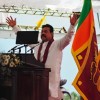
SRI LANKA: A Powerful President Promises Prosperity
Percy Mahinda Rajapaksa is the quintessential Sri Lankan politician - someone who senses the subtle shifts in the political landscape quickly and can turn a narrowest of victories into the strongest of legacies.
LATIN AMERICA: Community Projects Want to Graduate to Public Policy
"On Dec. 15, we will make the great leap ahead when we present our health programme, our hospital boat, to the country," Caetano Scannavino announced in the name of a community project that has achieved one of its aims: to be included in the Brazilian government's social policies.
Brazil’s President-Elect Brings Gender to Government
In a move seen as a sign that gender will be important in her government, Brazil's president-elect Dilma Rousseff is preparing a Cabinet that is one-third women.
Lebanon Pressured to Improve Palestinians’ Lot
Abu Yussif doesn't want to talk about his work any more. "It's not going to help and nothing will change anyway," he says. The tall, white-haired Palestinian has just returned from work and relaxes in his little garden in the refugee camp Bourj ash-Shamali near the southern Lebanese city of Tyre.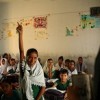
BANGLADESH: School’s In To Drive Poverty Out
Since her admission in January 2009 into Kurmitola government primary school in the Khilkhet district of capital Dhaka, 10- year-old Anju Aktar has never missed a day of class. In fact, Aktar’s mid-term report card shows that she is one of the school’s top students.
RIGHTS-PAKISTAN: Educated, Glamorous and Wearing A Hijab
They are young, educated, urban women who frequent cafes, shop at ritzy fashion outlets, and go to yoga classes whenever they have time off work.
CHINA: For Now, Old Beijing Community Gets a Reprieve
On a chilly but bright fall day near the Drum and Bell Towers, one of the Chinese capital’s top tourist draws, business is brisk for Boss Liu. Drivers working for Liu’s rickshaw business ferry dozens of foreign and domestic tourists through the historic alleyways of a treasured neighbourhood that, as recently as October, was slated for demolition.
TIMOR-LESTE: Snipping Away at Youth Unemployment
In a small city where most of the 22,000 inhabitants rely on subsistence farming to put food on the table, one young woman has gone against the grain with a business venture that embodies the changing times in Timor-Leste, South-east Asia's newest and poorest nation.RIGHTS-CHINA: Stagnant Wages, Inflation Point to More Labour Unrest
Labour unrest appears to be far from over in southern China, although striking workers at the Japanese-owned Ricoh Elemex factory in Bao’an district in this city were recently forced back to work by local officials accompanied by around 400 armed police officers.
PAKISTAN: Pneumonia Season Takes Toll on Poor Children
Asleep in her mother’s lap, three-year-old Amna Ghafoor looks at peace with the world. But mother and child are at Karachi’s National Institute of Child Health (NICH), and a plastic cannula inserted in the child’s tiny left wrist is a sure sign that all is not well.
LAOS: For Cluster Bomb Survivors, War Far From Over
Eighteen-year-old Phongsavath Manithong rubbed his eyes with the back of his arms as he described how his life changed forever.POLITICS-BURMA: Few Surprises in First Poll in 20 Years
"People were busy watching Al-Jazeera and DVB (Democratic Voice of Burma) TV, but not about the vote," a Buddhist monk here remarked at the end of election day on Nov. 7, the first general poll to be held in this military-ruled country in 20 years.
PAKISTAN: Behind Bars, Music and Art Free Prisoners
It’s an odd group of 30 men, all of different ages, crammed together in one room. There’s a man who used to run a computer shop. Another is an ex-car dealer. There’s a tailor and beside him is a truck driver.INDONESIA: Minority Religions Pray For End to Discrimination
Clutching bibles and song leaflets, members of a Protestant church flocked into a one-storey building here, situated next to a new shopping mall on one of the busiest streets in this municipality in Indonesia’s West Java province.
HAITI: As Cholera Spreads, Heavy Rains Wreak Havoc in Camps
Standing on a raised piece of pavement across from the makeshift home where she has lived for the past 10 months, Violet Nicola threw up her hands.
SYRIA: Iraqi Kids Struggle on Dangerous Edges
Leila, 17, presses her hijab-clad head against the front door and strains to hear outside. "There's nothing," she says cautiously, turning towards her mother Rawda, the head of the household, in their quiet basement apartment. Along the brocade couch sit her two sisters, Mona, 19, Nadja, 15, and 10-year-old brother Khaled.*
POLITICS-BURMA: To Vote or Not to Vote
Near markets, bus stops and busy areas in this city, groups of young people are busy handling out leaflets with a photograph of Nobel laureate Aung San Suu Kyi and her message saying "people have a right not to vote if they don’t want to".BAHRAIN: Poll Win Gives Women Candidates A Push
The recent election of Bahrain’s first female municipal councilor is boosting hopes among women here that they are seeing the beginning of the end to gender-based voting in this country.CHINA: And Why Not A Baby Girl
Although Li Xiaoxue and her husband, Dai Chunlin, are already happy parents to a young boy, they plan to skirt China’s one-child policy by having another baby. And like a growing number of affluent, urban Chinese, their fingers are crossed for a baby girl.
BANGLADESH: Dose of Vigilance Helps Manage HIV, AIDS
It is one of the poorest countries in the world, has a low literacy rate, and is next door to at least two countries that have a considerable portion of their respective populations with HIV and AIDS. Yet even having a large migrant population has not made Bangladesh a hot spot for HIV and AIDS.
HAITI: Quake Refugees Seek Moratorium on Evictions
The children standing at the tent beside the filthy pool of water put their needs simply when asked what they wish for: "À manger; l'école," they said, practically in unison. In English, "We want to eat; we want to go to school."« Previous Page — Next Page »





 One Thousand Internally Displaced Persons (IDPs) Relocated from Tomping Camp in South Sudan. Credit: UN Photo/Isaac Billy
It took hundreds of thousands of years for the world’s human population to cross one billion in 1804. Approximately 200 years later, the population has multiplied sevenfold. In 2023, the global population crossed 8 billion, and is expected to reach 9 billion before 2050. With the planet more crowded than ever, it is essential to keep track of population trends, urbanization, migration, and reproduction across the world.
Life expectancy has seen significant strides in the past century, largely due to economic development and increased standards of living. On the contrary, trends in global fertility are shifting, with certain regions in Africa and Asia reporting higher rates, while parts of Europe and North America report stagnant or lower rates. This is in part due to differences in sexual and reproductive healthcare, as well as societal and economic conditions around the world. For example, child marriage is prevalent in certain societies, where childbearing is also considered a familial duty. Meanwhile, stagnating economies frequently experience lower marriage and childbearing rates.
The increase in migration and urban development around the world is also linked to global population trends. By 2050, it is expected that approximately 66 percent of all people will live in cities. Furthermore, global crises such as warfare and natural disasters also prompt transnational migration. Transnational migration is linked to a variety of socioeconomic issues in both host and receiving countries: migrants often leave developing countries with less access to educational and economic opportunities and arrive in developed countries where they are frequently the targets of ethnic, racial, and cultural discrimination, and economic exploitation. Recent crises in Europe and the United States demonstrate the importance of advocating for migrants worldwide. As migrants from the Global South are increasingly stripped of their legal and civic rights in unlawful deportations, or targeted in acts of identity-based violence, it is essential to keep track of population trends and protect the human rights of migrant populations. Climate-related disasters are now a major driver of displacement, with nearly half of all new internal displacements in 2025 being disaster-related.
IPS is devoted to covering issues surrounding population trends, migration, and reproduction through its compelling articles, which use both statistics and human stories to provide readers with robust and informative viewpoints.

The Week with IPS

NEXT STOP - SDGs
Tracking global progress towards a sustainable world
Tracking global progress towards a sustainable world
