Languages
Wednesday, October 21, 2026



News and Views from the Global South
Sustainable Development Goals

Leveraging Artificial Intelligence and Enhancing Countries’ Preparedness
It is a pleasure for me to join His Excellency, Minister Al Hussaini in welcoming you to this important dialogue here in the United Arab Emirates—a fast-growing global AI hub. A recent Microsoft study reports that 64 percent of the UAE’s working age population uses AI, which is the highest rate globally.
A Business Necessity: Align With Nature or Risk Collapse, IPBES Report Warns
Business can still remain profitable while protecting the environment but invest in nature-positive operations, says a landmark report by the Intergovernmental Platform on Biodiversity and Ecosystem Services (IPBES), which finds that global companies have contributed to the escalating loss of biodiversity.
Goal 1: End Poverty in all its Forms –Everywhere
Eradicating extreme poverty for all people everywhere by 2030 is a pivotal aim of the Sustainable Development Goals. Extreme poverty, defined as surviving on less than US$3.00 per person per day at 2021 purchasing power parity, has witnessed remarkable declines over recent decades.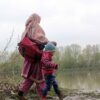
‘When Rains Come, Our Hearts Beat Faster’
When the rain begins in Kashmir's capital Srinagar, Ghulam Nabi Bhat does not watch the clouds with relief anymore. He watches them with calculation. How much can the gutters take? How fast will the river rise? Which corner of the house will leak first? Where should the children sleep if the floor turns damp?
When Protection Meets the Sea: Rethinking Marine Protected Areas with Fishing Communities
Melanie Brown has been fishing salmon in Bristol Bay, Alaska, for more than 30 years. An Indigenous fisherwoman and a coordinating committee member of the World Forum of Fisher Peoples, she speaks about the sea with deep care and lived knowledge.
To Fix the Rupture, Trade is not Enough
Will trade be enough to navigate the current waves of chaos and disorder that are underpinning the ongoing rifts among competing powerful and hegemon nations and the rest?
Support Science in Halting Global Biodiversity Crisis—King Charles
British Monarch King Charles says science is the solution to protecting nature and halting global biodiversity loss, which is threatening humanity’s survival.
Explainer: Why Nature Is Everyone’s Business
Our food, fuel, and fortunes come from nature, but as these resources are turned into profits, the balance between exploiting and replenishing the planet is ever more precarious. Global businesses impact nature through mining, manufacturing, processing and retail operations. At the same time, nature impacts business operations because there is a loss of biodiversity and extreme weather events such as droughts, floods, and high temperatures.
High Seas Treaty Will Transform Our Fragile Ocean for the Better
“The ocean’s health is humanity’s health”, said UN Secretary-General Antonio Guterres, in September 2025. He was commenting after the High Seas Treaty (BBNJ) [1] finally achieved ratification, going on to call for “a swift, full implementation” from all partners. As of January 17, 2026, the treaty has come into force, meaning the time for implementation is now. What is the High Seas Treaty?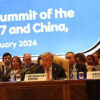
Group of 77—Representing 134 Nations, Plus China—Protest Funding Cuts for South-South Cooperation
A sharp cut in funding for “South-South Cooperation” (UNOSSC) has triggered a strong protest from the 134-member Group of 77 (G-77), described as the largest intergovernmental organization of developing countries within the United Nations.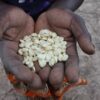
To Develop a Continent, Africa Must Nourish Its Children
Hunger shadowed Mercy Lung’aho’s childhood, fueling her campaign to promote nutrition as a foundation for Africa’s development.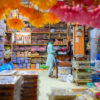
Business Growth and Innovation Can Boost India’s Productivity
India’s productivity growth over the past two decades has been impressive, reflecting rapid expansion in high-value services, gradual efficiency-enhancing reforms, and scale advantages from a large domestic market.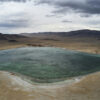
Melting Reserves of Power: Mongolia’s Glaciers and the Future of Energy and Food Security
The International Year of Glaciers’ Preservation in 2025 was a timely reminder that the stability of Mongolia’s economy rests on fragile mountain systems that are melting faster than ever recorded. The loss reverberates across the country’s energy and agricultural systems, two development pillars that draw from the same finite resource: water.
Binalakshmi Nepram: Engineering Peace, Creating History
It was Christmas eve: some two decades ago. Binalakshmi Nepram was a witness to the killing of a 27-year-old. In utter disbelief, she saw a group of three men dragging the victim from his workshop. Within minutes, he was shot dead.
As Korea Ages, Fiscal Reforms Can Help Safeguard Government Finances
Korea’s population is aging faster than almost any other country. That’s because people live longer than in most other countries, while the birth rate is one of the lowest in the world.
Moving Towards Agroecological Food Systems in Southern Africa
In a quiet village known as Nkhondola, in Chongwe District, Eastern Zambia, Royd Michelo and his wife, Adasila Kanyanga, have transformed their five-acre piece of land into a self-sustaining agroecological landscape. With healthy soils built over time, the farm teems with diverse food crops, fruit trees, livestock and birds, nourishing their family and the surrounding community.
Big Nature-Based Finance Turnaround Needed to Restore, Protect Ecosystems
The world is pouring trillions of dollars each year into activities that destroy nature while investing only a fraction of that amount in protecting and restoring the ecosystems on which economies depend, according to a new United Nations report released on January 22.
Steering Nepal’s Economy Amid Global Challenges
Nepal has a unique opportunity for transformation. The recent youth-led protests underscored aspirations for greater transparency, governance and a more equal distribution of economic opportunities and resources. This yearning resonated in Nepal and beyond.
World Enters ‘Era of Global Water Bankruptcy’
The world is already in the state of “water bankruptcy”. In many basins and aquifers, long-term overuse and degradation mean that past hydrological and ecological baselines cannot realistically be restored.
World Living Beyond Its Means: Warns UN’s Global Water Bankruptcy Report
The world has entered what United Nations researchers now describe as an era of Global Water Bankruptcy, a condition where humanity has irreversibly overspent the planet’s water resources, leaving ecosystems, economies, and communities unable to recover to previous levels.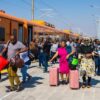
How Extreme Weather is Testing Tanzania’s $2 Billion Electric Railway Dream
On a rainy Wednesday morning, in Dodoma, the capital of Tanzania, the Standard Gauge Railway (SGR) terminal bustled with a steady flow of passengers. Women ushered toddlers along. Snack bags dangling on their hands. Tourists dragged wheeled suitcases across the floor. Students scrolled through smartphones as they returned to campus. Each had been attracted by the speed, reliability and comfort of the electric train.« Previous Page — Next Page »





The Week with IPS

NEXT STOP - SDGs
Tracking global progress towards a sustainable world
Tracking global progress towards a sustainable world
