Languages
Thursday, October 22, 2026



News and Views from the Global South
Sustainable Development Goals
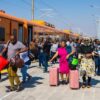
How Extreme Weather is Testing Tanzania’s $2 Billion Electric Railway Dream
On a rainy Wednesday morning, in Dodoma, the capital of Tanzania, the Standard Gauge Railway (SGR) terminal bustled with a steady flow of passengers. Women ushered toddlers along. Snack bags dangling on their hands. Tourists dragged wheeled suitcases across the floor. Students scrolled through smartphones as they returned to campus. Each had been attracted by the speed, reliability and comfort of the electric train.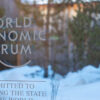
Davos: Meaningful Dialogue Requires a Collective Stand Against Military, Economic and Diplomatic Bullying
“The ‘spirit of dialogue’, the theme for this year’s meeting in Davos, which begins January 19, has been painfully and increasingly absent from international affairs of late. President Trump’s first year back in office has seen the United States withdraw from multilateral bodies, bully other states and relentlessly attack the principles and institutions that underpin the international justice system.
What Next? United States Exits Key Entities, Vital Climate Treaties in Major Retreat from Global Cooperation
President Donald Trump has escalated efforts to further distance the United States from international organizations and entities focused on climate, the environment, and energy. This strategy is in step with his administration’s established approach to undermine and redirect funds and international cooperation away from climate and clean energy programs.
Gaza: Physicians Call For Unimpeded Aid To Restore Reproductive Healthcare
Israel must lift all restrictions on medicine, food and aid coming into Gaza, rights groups have demanded, as two reports released today (Jan 14) document how maternal and reproductive healthcare have been all but destroyed in the country.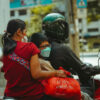
Tracking the Invisible: Monitoring Air Pollution from Space
Take a deep breath. Did you know that in many countries in Asia and the Pacific, the air we breathe falls short of the safety standards for air quality set by the World Health Organization? While the start of a new year signals new beginnings, it also marks the continuation of the recurring air quality crisis across many countries in the region.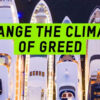
Richest 1% have Blown Through their Fair Share of Carbon Emissions for 2026 –in just 10 Days
The richest 1% have exhausted their annual carbon budget – the amount of CO2 that can be emitted while staying within 1.5 degrees of warming - only ten days into the year, according to new analysis from Oxfam. The richest 0.1% already used up their carbon limit on the 3rd January.
Experts Urge Rapid Adaptation as India Braces for ‘Stronger’ Cyclones, Quakes
Despite early warnings reportedly reaching communities before the cyclones (Ditwah and Senyar) struck coastal regions in Sri Lanka and Southeast Asia late in November 2025, over 1,500 people lost their lives and hundreds went missing even as millions were impacted by these disasters, which caused massive destruction. Scientists say that these disasters reflect a changing climate system, which is making cyclones more hazardous than what we considered “typical” in the past.
Excluding Food Systems From Climate Deal Is a Recipe for Disaster
As they ate catered meals, COP30 negotiators had no appetite for fixing broken food systems, a major source of climate pollution, experts warn. Food systems are the complete journey food takes—from the farm to fork—which means its growing, processing, distribution, trade and consumption and even the waste.
United States Withdrawal From Organizations Triggers Global Alarm
President Donald Trump's executive order to stop United States support for 66 international organizations, including 31 United Nations (UN) groups, has faced strong opposition from these organizations, the global community, humanitarian experts, and climate advocates, who are concerned about the negative effects on global cooperation, sustainable development, and international peace and security.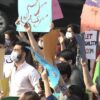
Consent Ignored, Convictions Rare: Pakistan’s Courts Under Fire
As 2026 dawns, women in Pakistan are left grappling with a stark reality: rape and marital rape continue to be misinterpreted by judges in the country’s highest courts.
Maternal Deaths Spike in War-Torn Ukraine
“It was an emergency caesarean section when the life of the pregnant woman was at risk. We did the operation with just flashlights and no water, and against a backdrop of constant explosions,” says Dr Oleksandr Zhelezniakov, Director of the Obstetrics Department at Kharkiv Regional Clinical Hospital, in eastern Ukraine.
Living with nature, the climate lesson from Brazil’s caatinga
“The work of collecting seeds saved me from depression,” caused by her daughter's suicide at the age of 29, said Maria do Desterro Soares, 64, who lives in the poor rural community of Jatobá in northeastern Brazil.
In Kenya, Smallholder Farmers Push Back Against Corporate Control of Agriculture
For the past two years, Samuel Ndungu, a smallholder farmer, has been growing organic food and supplying it to the local market in Githunguri, just outside Nairobi.
Better Economic Measurement Is About Wiser Use, Not Just More Data
We live in a galaxy of data. From satellites and smartwatches to social media and swipes at a register, we have ways to measure the economy to an extent that would have seemed like science fiction just a generation ago. New data sources and techniques are challenging not only how we see the economy, but how we make sense of it.
Climate Justice Denied by Delays
Opinions have been divided over the annual UN climate conferences. While some see COP30 in Belém, Brazil, as confirming their irrelevance, others see it as a turning point in the struggle for climate justice.
Rescued from Fire: the World in 2025
Our traditional “year-ender” usually kicks off with a grim litany of world disasters and crises over the past 12 months, highlights IPS partners and contributors and culminates in a more positive-sounding finale. This time I’d like to begin on a more personal note intended also as a metaphor.
Escalating Food Insecurity in Asia-Pacific Undermines Health, Economic Growth, and Stability
2025 marked a notable year of progress in reducing global hunger; yet climate pressures, economic instability, and ongoing conflicts continue to push agri-food systems to their limits, undermining food availability. In a new report, UN agencies raise the alarm on how these factors are particularly pronounced in the Asia-Pacific region, which accounts for 40 percent of the world’s undernourished.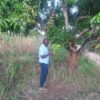
Farmers Can Now Measure and Benefit From Fruit Tree Carbon Trade
Farmers can now know and benefit from their contribution to climate change thanks to a formula that can be used to calculate the amount of carbon stored in fruit trees.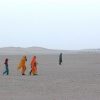
Refugees Forced to Fill Gaps as Funding, Power and Legal Recognition Move Out of Reach
The global refugee system is entering a period of deep strain. The delivery of protection and assistance is undergoing a transformation due to funding cuts, institutional reforms, and shifting donor priorities.
Venezuela Needs More Local Data To Understand the Impacts of Climate Change
A group of 55 researchers gathered and analyzed 1,260 bibliographic references to compile the Second Academic Report on Climate Change in Venezuela. Their final conclusion is that more local studies are still needed to record the direct impacts across different Venezuelan regions and, in particular, to provide data to design the adaptation plans necessary to address climate change.
Sindh People’s Housing Redefines Post-Disaster Adaptation Success
By any comparison, the statistics for Sindh People's Housing for Flood Affectees (SPHF) are phenomenal. In 2022, photographs from the region showed people treading carefully through waist-deep water with their few belongings grasped firmly above their heads in an attempt to escape the flooding caused by 784 percent more than average monsoon rains.« Previous Page — Next Page »





The Week with IPS

NEXT STOP - SDGs
Tracking global progress towards a sustainable world
Tracking global progress towards a sustainable world
