Languages
Saturday, October 3, 2026



News and Views from the Global South
Sustainable Development Goals

Lawmakers Urged to Consider Emerging Drivers of Child Marriage
Closing the chapter on child marriages is still a distant ambition in the Southern African Development Community (SADC) region, and despite great strides at developing and passing legislation to eradicate it, existing and emerging drivers are still at play, making youngsters vulnerable to the practice.
Financing Tropical Forests now is a COP30 Solution that’s Already Working
As the world prepares for COP30 in Belém, all eyes are on Brazil’s proposed Tropical Forests Forever Facility (TFFF)—a bold plan to reward countries for keeping forests standing. It represents a vital part of the long-term vision we need for global forest protection.
Humor, Courage, and Coffee: Inside Asia’s Independent Media Resistance
In Pakistan, journalism is a risky profession—and the danger only intensifies if you’re a woman, young, and a freelancer, says 30-year-old Saba Chaudhry, a journalist from a village near Narowal, in Punjab province.
Asia-Arab Parliamentarians Forge Regional Pathways for Gender Justice and Youth Empowerment
Inclusive legislation, empowered youth, and anti-violence policies are inseparable aspects of sustainable development and were the key messages at a conference of the Inter-Regional Meeting of Asian and Arab Parliamentarians on Population and Development held in Cairo on October 24, 2025.
Challenging Elites, Defending Democracy: Oxfam’s Amitabh Behar Speaks Out
Speaking to IPS on the sidelines of the International Civil Society Week in Bangkok (November 1–5), Amitabh Behar, Executive Director of Oxfam International and a passionate human rights advocate, highlighted his concerns about rising inequality, growing authoritarianism, and the misuse of AI and surveillance. Yet, he expressed optimism that, even as civic spaces shrink, young people across Asia are driving meaningful change. He also shared his vision of a just society—one where power is shared, and grassroots movements lead the way.
Defending Democracy in a “Topsy-Turvy” World
It is a bleak global moment—with civil society actors battling assassinations, imprisonment, fabricated charges, and funding cuts to pro-democracy movements in a world gripped by inequality, climate chaos, and rising authoritarianism. Yet, the mood at Bangkok’s Thammasat University was anything but defeated.
Food Systems Are the Missing Link in Social Development
Food has always been political. It decides whether families thrive or fall into poverty, whether young people see a future of opportunity or despair, whether communities feel included or pushed aside. Food is also a basic human right – one recognized in international law but too often unrealized in practice. Guaranteeing that right requires viewing food not as a form of emergency relief, but as the cornerstone of sustainable social development.
As Civil Society Is Silenced, Corruption and Inequality Rise
From the streets of Bangkok to power corridors in Washington, the civil society space for dissent is fast shrinking. Authoritarian regimes are silencing opposition but indirectly fueling corruption and widening inequality, according to a leading global civil society alliance.
Guatemalan Peasants Overcome Drought in the Dry Corridor
Water scarcity that relentlessly hits the rural communities in eastern Guatemala, located in the so-called Central American Dry Corridor, is a constant threat due to the challenges in producing food, year after year. But it is also an incentive to strive to overcome adversities.
Will COP30 Reenergize Nigeria’s Great Green Wall Project?
In 2017, 45-year-old Jabiru Muhammed could hardly contain his excitement when the village head of Batu in Jigawa State, northwestern Nigeria, announced that their community would work with officials from the National Agency for the Great Green Wall (NAGGW) to plant trees across a large stretch of land in the village.
Adaptation Finance Shortfalls Leave Developing World Exposed
Hurricane Melissa made landfall in Jamaica yesterday—the strongest hurricane to impact the island on record since 1851—with expectations of tens of thousands of people being displaced and devastating damage to infrastructure. The tropical storm, slightly downgraded but nevertheless devastating, made landfall in Cuba today as UNEP’s newly released Adaptation Gap Report 2025: Running on Empty shows that the finance needed for developing countries to adapt to the climate crisis is falling far behind their needs.
Indigenous Communities Are the Frontlines of Climate Action—It’s Time COP Listened
I had hoped to attend this year’s Conference of the Parties (COP) in person, to stand alongside fellow Indigenous leaders and advocate for the rights of our communities.
Tanzania’s Pandemic Fund Ushers in a New Era of Health Preparedness
When COVID-19 hit Tanzania in 2020, Alfred Kisena’s life was torn apart. The 51-year-old teacher still remembers the night he learned that his wife, Maria, had succumbed to the virus at a hospital in Dar es Salaam. He wasn’t allowed to see her in her final moments.
George Soros Receives Prize for Work Supporting Roma, Sinti Rights
Billionaire philanthropist George Soros has been awarded the European Civil Rights Prize of the Sinti and Roma for his decades of work supporting Roma rights.
The Time for a Decade of Island Resilience is Now
As biodiversity loss including ocean degradation, pollution and climate change threaten our planet, islands, and particularly global small island nations, often don't get the spotlight they deserve. Often labeled as vulnerable, the world’s small island nations are in fact powerful beacons of resilience.
Tackling the Hidden Toll of Breast Cancer in the Pacific Islands
The burden of breast cancer, the most common cancer among women, is global, and the projected increase in cases in the coming decades will affect women in high- and low-income countries in every region.
In Zimbabwe, Secondhand Clothes From the West Are Collapsing the Local Textile Industry
Shamiso Marambanyika assists a male customer in selecting a pair of jeans on a Saturday morning in Mutare, a city in the eastern part of Zimbabwe.
The Dangers of Green Mining
Even amidst the regressive resistance of the current U.S. administration, the world is shifting toward a green energy future. As governments pledge to phase out fossil fuels, companies tout electric vehicles, and financiers pour billions into solar, wind and batteries, it seems the necessary transition from fossil fuels to clean energy is finally picking up pace.
New Climate Goal: To Quadruple Sustainable Fuels
Quadrupling the production and use of sustainable fuels by 2035 is the goal of a new international initiative to drive energy transition and mitigate the climate crisis, which will be launched during Brazil's climate summit in November.
International Day for Climate Action, 2025

We are in a climate emergency. The Earth is already over 1.3 °C warmer than pre-industrial times. 2024 was the hottest year ever recorded.
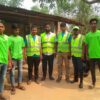
Community Volunteers Working to Safeguard Bangladesh’s Last Wild Elephants
When wild elephant herds come down from the hills in search of food, Sona Miahm, with community volunteers, steps forward to help prevent human-elephant conflicts.« Previous Page — Next Page »


The Week with IPS

NEXT STOP - SDGs
Tracking global progress towards a sustainable world
Tracking global progress towards a sustainable world
