Languages
Thursday, August 6, 2026



News and Views from the Global South
Sustainable Development Goals

COP16 Delivers on Indigenous Peoples, Digital Sequencing, But Fails on Finance
The curtains fell on the 16th Conference of the Parties of UN Biodiversity (COP16) on Sunday without any formal closing. In a voice message, David Ainsworth, the Communications Director of the UNCBD, confirmed that the COP was suspended due to a lack of quorum in the plenary and would be resumed sometime later. However, before being suspended, the parties managed to adopt a historic decision to open the door for Indigenous Peoples (IPS) and local communities (LCs) to influence the global plan to halt the destruction of biodiversity.
Lead for Learning: Decisive Leadership Urgently Needed To Improve Education Globally
Global education is facing a critical moment amid severe setbacks. Millions of children are out of school, learning levels are falling, and millions are leaving school without the skills they need. New out-of-school figures reveal that global progress in reducing the number of out-of-school children has been just 1 percent since 2015, leaving 251 million behind.
Defending Biodiversity in Armed Conflict: Can COP16 Meet the Expectations?
José Aruna, a forest defender from Sud Kivu province in the Democratic Republic of the Congo (DRC), remembers the night in September 2019 when a group of heavily armed men barged into his house in the middle of the night. Aruna and his wife—6 months pregnant at the time—were in bed when he heard sounds of boots on the front yard and quickly knew something was about to happen.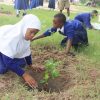
Tanzanian Students Drive Climate Action Through Tree Planting
At Gabimori primary school, located at Nyamagaro ward in Tanzania’s northern Rorya district, a 15-year-old Florence Sadiki kneels among polyethylene bags, carefully examining the seedlings she and her classmates have nurtured from tiny sprouts “We’ve planted many trees to make our school look better and to help fight climate change,” she says.
A Triple Planetary Crisis Scarring Africa’s Landscapes
Some of the creeping impacts of this triple crisis are possibly the most debilitating: Africa is the most severely impacted region by desertification and land degradation, with approximately 45% of its land area affected. In the Horn of Africa and the Sahel alone, it imposes food shortages on more than 23 million people. Just last month, more than 700,000 people were affected by floods in Central and West Africa, and tens of millions in southern Africa are facing drought.
Small Farmers Reap Growing Benefits From Solar Energy in Chile
The production of solar energy by means of panels installed on small farmers' properties or on the roofs of community organisations is starting to directly benefit more and more farmers in Chile.
Food Security Is Key To Making ‘Peace with Nature’
As countries are meeting in Cali, Colombia, for the 2024 UN Biodiversity Conference (CBD COP 16), the fate of biodiversity hangs in the balance, and with it, the sustainability of our food systems.
Scientific Research Can Play a Key Role in Unlocking Climate Finance
Climate finance will be at the epicenter of the discussion at the UN Climate Change Conference 2024 (COP29). The focus will be on strengthening the fund and defining the conditions under which the countries of the Global South will be able to access this money. However, little is said about the scientific research that is required to gather the evidence and data to prove the loss and damage caused by the impact of climate change in developing countries.
Seeds of Resilience Despite Massive Destruction in Gaza
It was two weeks before October 7—when Hamas attacked Israel—that Prime Minister Benjamin Netanyahu stood behind the rostrum in the United Nations General Assembly hall clutching a crude map of what he called the "new Middle East," a visual that erased the land of Palestine.
By Choosing What We Eat, We Choose the World We Want To Live In
“How we prepare and eat food should not be at the expense of our biodiversity,” says 3-Michelin-starred chef Mauro Colagreco, who is on a mission to change our relationship with food and what we choose to eat. Colagreco, the owner of Mirazur, an award-winning restaurant in Menton, France, is a tribute to gastronomy. Among other world rankings, Mirazur's fine food and service have earned it first place in the World's 50 Best Restaurants. In the 2020 edition of the "100 Chefs" world ranking, Colagreco's peers named him the Best Chef in the World and Chef of the Year in 2019.
IMF isn’t doing enough to support Africa: billions could be made available through special drawing rights
At the 2021 UN Climate Summit, Barbados prime minister Mia Mottley called for more and better use of special drawing rights (SDRs), the International Monetary Fund’s reserve asset.
The Impact of Global Megatrends on Poverty in Asia & the Pacific
In the coming decades, the Asia-Pacific region faces a series of challenges that threaten to exacerbate poverty. Among these, climate change, demographic shifts, particularly population ageing and the rise of digital technologies stand out as three interconnected global megatrends.
Without Accelerated Action, We Will Miss the Chance to Limit Warming to 1.5°C, Says UNEP Chief Climate Advisor
Anne Olhoff, Chief Climate Advisor at UNEP, underlined the urgent need for accelerated climate action ahead of COP29 in an exclusive interview with IPS. “The next six years are crucial—without accelerated action, we will miss the chance to limit warming to 1.5°C,” she warned.
UNEP’s 2024 Emissions Gap Report Warns: ‘No More Hot Air, Please’
The United Nations Environment Programme’s (UNEP) Emissions Gap Report 2024 delivered a stark reminder that the world is still far from meeting its climate commitments.
Unlocking Urban Climate Finance: Key insights from Indonesia
Over half of Asia-Pacific's population now live in cities. While urbanization brings people closer to opportunities and better services, many urban dwellers are also experiencing the adverse impacts of climate change such as floods, urban heat and infectious diseases. Urban activities are among the major contributors to greenhouse gas (GHG) emissions.
Egyptian Parliament Moves to Strengthen Support for People with Disabilities and the Elderly
In a significant move to address the challenges faced by people with disabilities and the elderly, six Egyptian parliamentary committees met in Cairo on October 12 to discuss national strategies and legislative efforts.
Meet the Young Women Arrested for Fighting Corruption in Uganda
Until recently, Margaret Natabi would never have dreamed of taking her anti-corruption fight on the streets of Uganda’s capital, Kampala.
Syrian Displaced Children Go Hungry, Stunting Their Growth
Children in northern Syria are suffering from hunger, illness, and malnutrition as a result of poverty, poor living conditions for most families, and the collapse of purchasing power amid the soaring prices of all essential food commodities. Displacement and a lack of job opportunities make this worse.
The IMF Just Made the Case for its Own Irrelevance
This month, the International Monetary Fund (IMF) had an opportunity to end one of its most reviled policies and lift billions of dollars of debt off the backs of crisis-stricken developing countries. It chose not to.
COP16 – Is This Our Last Chance to Save Nature?
As COP16 approaches, we have been reflecting on the state of our planet in 2024; the word "crisis" feels insufficient to describe the devastation we're witnessing.
Capacity Building Is Key to Africa’s Digital Sequencing Success Story
Christian Tiambo has always wished to uplift local farmers’ communities through cutting-edge science. As climate change wreaked havoc on local agriculture, Tiambo, a livestock scientist at the Centre for Tropical Livestock Genetics and Health (CTLGH) and at the International Livestock Research Institute (ILRI), focused on conserving and developing livestock that could withstand environmental stress.« Previous Page — Next Page »


The Week with IPS

NEXT STOP - SDGs
Tracking global progress towards a sustainable world
Tracking global progress towards a sustainable world
