Languages
Tuesday, September 29, 2026



News and Views from the Global South
Financial Crisis

OECD Tax Reform Proposal Could Be Better
The OECD Secretariat published its proposed ‘unified approach’ to reform international tax rules to address tax challenges posed by digitalization on 9 October 2019. Under current rules, there is little chance of a company being taxed without its physical presence in the country concerned. But digitalization enables many businesses to remotely conduct economic activities affecting a national economy without a direct physical presence.
Austerity, the “New Normal”
While this week Ministers of Finance and economists meet in Washington to confront global economic challenges at the IMF and World Bank Annual Meetings, the majority of the world population lives with austerity cuts and see their living standards deteriorating. World leaders must reverse this trend.
The Rise of Phantom Investments
According to official statistics, Luxembourg, a country of 600,000 people, hosts as much foreign direct investment (FDI) as the United States and much more than China. Luxembourg’s $4 trillion in FDI comes out to $6.6 million a person.
Countercyclical Fiscal Policy Needed to Counter Global Economic Downturn
A conjuncture of developments, short- and medium-term, have conspired to further slow the world economy. In recent months, the International Monetary Fund (IMF), among others, has acknowledged that global economic prospects are worsening, forcing it to make not one, but at least five consecutive growth forecast revisions, all downward.
The Social Impact of Economic Inequality
Increasing economic inequality is a defining challenge of our time. In recent years, it has triggered analysis and reflection by many scholars, politicians and others on its causes and consequences on economic growth and efficiency, politics and democracy, human rights, individual behaviors, access to health, social cohesion and environmental degradation. The perception that the top 1% of income earners are gaining at the expense of the other 99% has resulted in widespread public debates in many countries on the social and political repercussions of inequality.
Developing Economies’ Subordinate Financialization
Rapid financial globalization is due not only to financial innovations, but also to choices made by national policymakers, often with naïve expectations, trusting promoters’ promises of steady net inflows of financial resources.
Ensuring Fairer International Corporate Taxation
Large transnational corporations (TNCs) are widely believed to be paying little tax. The ease with which they avoid tax and the declining corporate tax rates over the decades have deprived developing countries of much needed revenues besides undermining public faith in the tax system.
Trade, Currency War Weapons Double-Edged
The US-China trade war has flared up again less than two weeks after US President Donald Trump delayed new tariffs of US$160 billion on Chinese imports until December, purportedly to avoid harming the holiday shopping season.
South Must Also Set International Tax Rules
Recently, Christine Lagarde, outgoing Managing Director of the International Monetary Fund (IMF), argued that developing ‘countries need a seat at the table’ to design rules governing international corporate taxation. This acknowledges recent IMF findings that developing countries lose approximately USD200 billion in potential tax revenue yearly, about 1.3 per cent of their GDP, due to companies shifting profits to low-tax locations. Oxfam estimated in 2018 that extreme poverty could be eradicated for USD107 billion annually, i.e., about half the lost revenue.
Bretton Woods Institutions: Enforcers, Not Saviours?
According to their own internal evaluations, both the World Bank (WB) and the International Monetary Fund (IMF) have huge credibility deficits due to the policy conditionalities and advice they have dispensed to developing countries in recent decades.
Migration and Human Solidarity
The migrant and refugee crisis has become a serious test for the unity of Europe as a political project. The inflow of destitute migrants and refugees has tested Europe’s political unity to an unprecedented extent. With a long-term solution to the migrant and refugee crisis nowhere in sight, the adverse impact of the current situation has the potential to unfold further and to give rise to a broader crisis with long-term implications, affecting Europe and the MENA region alike.
Bretton Woods Institutions: From Solution to Problem
July 2019 saw the 75th anniversary of the historic conference of 44 countries held at the Bretton Woods (BW) resort in New Hampshire during July 1-22, 1944. Conference At BW, John Maynard Keynes, representing the UK, and Harry Dexter White, for the USA, both sought a new international monetary system following the Great Depression, which many attributed to the functioning of the gold standard before World War II.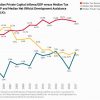
Foreign Private Investment in Low-Income Countries: More Important Than You Think
In a world of stagnating public aid, limited fiscal space, and rising public debt in low-income countries (LICs), can they realistically expect to rely more on private finance from foreigners? What does the evidence suggest?
Privatization Increases Corruption
International financial institutions (IFIs) have typically imposed wide-ranging policy reforms – called ‘conditionalities’ – in exchange for country governments to secure access to financial assistance. While IFIs may demand anti-corruption policies, other IFI policy conditionalities, such as the privatization of state-owned enterprises (SOEs), can create new rentier opportunities, undermining government will and capacity to curb corruption.
Facebook and Friends Threaten to Libralize the World
On 17 June, a Facebook white paper proposed a new global digital currency it plans to launch in the first half of 2020. The Libra will be managed by a ‘not for profit’ Swiss-based Facebook-led consortium of ‘for profit corporations’, with Uber, eBay, Lyft, Mastercard and PayPal among its founding members.
Industrial Policy Finally Legitimate?
For decades, the two Bretton Woods institutions have rejected the contribution of industrial policy (IP), or government investment and technology promotion efforts, in accelerating and sustaining growth, industrialization and structural transformation. Finally, two International Monetary Fund (IMF) staff members, Reda Cherif and Fuad Hasanov, have broken the taboo. They embrace industrial policy, arguing against the current conventional wisdom that East Asian industrial policies cannot be successfully emulated by other developing countries.
Financialization Undermines Real Economy
The relationship between finance and the real economy is arguably at the root of the contemporary economic malaise. Unlike earlier acceptance of simple linear causation, recent recognition of a curvilinear relationship between finance and economic growth, implying ‘diminishing returns’, has important implications.
A Bad Free Trade Agreement Is Worse than Nothing
With growing economic conflicts triggered by US President Donald Trump’s novel neo-mercantilist approach to overcoming his nation’s economic malaises, many voices now argue that bad free trade agreements are better than nothing. After US withdrawal following Trump’s inauguration in early 2017, there is considerable pressure on signatory governments to quickly ratify the Comprehensive and Progressive Trans-Pacific Partnership (CPTPP), the successor to the TPP.
Financialization Promotes Dangerous Speculation
Financialization has involved considerable ‘innovation’, often of opaque, complex and poorly understood financial instruments. These instruments typically have large debt components involving leveraging, deepening connections across markets and borders.
Driving Financialization
The emergence and growth of financialization from the 1980s has been driven by several factors operating at various levels – national and international, ideological and political, and of course, technological. The 1971 collapse of the Bretton Woods (BW) international monetary system arguably paved the way for financial globalization.
Transforming Society, Financialization Destroys Social Solidarity
Finance has not stopped at dominating the real economy. The tentacles of finance have reached into significant, if not most parts of society. Gerald Davis characterises modern society, where finance is dominant, as a ‘portfolio society’, in which aspects of social life have been securitized and transformed into a kind of capital or investment to be managed.« Previous Page — Next Page »


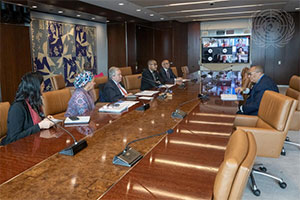 Secretary-General Meets with Members of Debt Expert Group. Credit: UN Photo/Eskinder Debeb
Financial crises are often defined by banking panics, recession, loss of market value, and deflation. Various financial crises at the turn of the 20th century, such as the Asian Crisis of 1997-1998 and the 2007-2008 Global Financial Crisis, have had immense impacts on the world economy. The COVID-19 pandemic also caused a financial crisis when mass lockdowns triggered staggering unemployment rates, a stagnation of economic growth, and led to the 2020 stock market crash. With the Russian invasion of Ukraine, the world has also witnessed a global energy crisis with shortages and increased prices in oil, gas, and electricity markets. According to UNCTAD’s World of Debt 2025, global public debt surpassed $100 trillion in 2024, with developing country debt growing twice as fast as developed economies since 2010. Burdens of debt servicing come with economic slowdowns and demands of austerity from lenders, with some economists arguing that this will lead to a new “lost decade” for the Global South. IPS brings you worldwide coverage of these financial developments and how we should manage these crises.

The Week with IPS

NEXT STOP - SDGs
Tracking global progress towards a sustainable world
Tracking global progress towards a sustainable world
