Languages
Wednesday, September 30, 2026



News and Views from the Global South
Financial Crisis

The World Has Lost Its Compass
The terrible feeling I had on waking up and seeing the Italian voting results at the recent European elections was that my country was suddenly full of strangers. How could the majority of Italians reconfirm a government which has been the most inefficient in history, quarrelling on everything every single day and looking with total indifference to the looming problem of how to establish the next budget without clashing with the European Union or squeezing Italian citizens? Its irresponsible debate on the Italian finances has now led to a spread (difference of value) of 290 points with the Germans.
Finance’s New Avatar
Over recent decades, the scope, size, concentration, power and even the purpose and role of finance have changed so significantly that a new term, financialization, was coined to name this phenomenon. Financialization refers to a process that has not only transformed finance itself, but also, the real economy and society. The transformation goes beyond the quantitative to involve qualitative change as finance becomes dominant, instead of serving the needs of the real economy.
Public-Private Partnerships Fad Fails
After the failure and abuses of privatization and contracting-out services from the 1980s, there has been renewed appreciation for the role of the state or government. Earlier promoters of privatization have taken a step backward, only to take two more forward to instead promote public-private partnerships (PPPs).
Cyclones and Struggling Economy Could Impact Mozambique’s Elections
Mozambique, which was affected by an unprecedented two tropical cyclones over a matter of weeks, is still reeling from the impact a month after the latest disaster. But resultant devastation caused by the cyclones could impact the country’s elections as concerns are raised over whether the southern African nation can properly hold the ballot scheduled for later this year.
Devastating Epidemic of Crime & Insecurity in Latin America & Caribbean
Development is a very uneven process, accompanied by heterogeneity in outcomes across sectors, across regions and across income groups. Such process, Albert Hirschman elegantly established about 60 years ago, constantly generates tensions and demands for redistribution of resources and power. In this sense, conflict is inherent to development.
Privatization Solution Worse than Problem
Privatization has not provided the miracle cure for the problems (especially inefficiencies) associated with the public sector. The public interest has rarely been well served by private interests taking over from the public sector. Growing concern over the mixed consequences of privatization has spawned research worldwide.
America First as a Threat to Mulitlateralism
On 25 April, Joseph Biden announced his candidacy for the US presidency, declaring that his decision was based on fears of Trump being re-elected:
Neoliberal Reforms Strengthening Monopoly Power and Abuses
Over the last four decades, growing concentration of market power in the hands of oligopolies, if not monopolies, has been greatly enabled by ostensibly neo-liberal reforms, worsening wealth concentration and gross inequalities in the world.
Coping With World Bank-Led Financialization
The World Bank has successfully promoted its ‘Maximizing Finance for Development’ (MFD) strategy by embracing the United Nations’ Sustainable Development Goals, internationally endorsed in September 2015. It has also secured support from the G20 of twenty biggest economies, and effectively pre-empted alternative approaches at the third UN Financing for Development summit in Addis Ababa in mid-2015.
Privatization Promotes Collusion and Corruption
At the risk of reiterating what should be obvious, the question of private or public ownership is distinct from the issue of competition or market forces. Despite the misleading claim that privatization promotes competition, it is competition policy, not privatization, that promotes competition.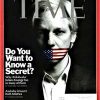
Lost in the Cyberworld? The Enigmatic Mr Assange
Trump´s electoral success was preceded by a rise of chauvinistic politics in most of Europe, paired with electoral triumphs of far-right candidates in several other countries. A development accompanied by revelations of corrupt leaders laundering and transferring illegally obtained money, aided by financial institutions finding the means to do so. The world seems to move away from a rule-based order to a state of affairs dominated by might and wealth. World leaders´ private business dealings thrive within a global environment where laws intended to protect human rights are becoming increasingly ineffective. Foreign policies appear to be adapted to private gains and personal vendettas. Global financial systems seem to be crafted to facilitate kleptocracy and money laundering, while repression and violence smite whistle-blowers and daring journalists. Endeavours supported by propaganda and smear campaigns orchestrated by political/financial consultants and private investigation firms. All this is made possible through complicated schemes using the internet.
CORRECTED VERSION: World Bank Dispossessing Rural Poor
The World Bank’s Enabling the Business of Agriculture (EBA) project, launched in 2013, has sought agricultural reforms favouring the corporate sector. EBA was initially established to support the New Alliance for Food Security and Nutrition, initiated by the G8 to promote private agricultural development in Africa.
World Bank Financialization Strategy Serves Big Finance
The World Bank has successfully built a coalition to effectively advance its ‘Maximizing Finance for Development’ (MFD) agenda. The October 2018 G20 Eminent Persons Group’s (EPG) report includes proposals to better coordinate various international financial institutions (IFIs) in promoting financialization.
The Crucial Role of the Military in the Venezuelan Crisis
In January 2019 Venezuela’s opposition-led National Assembly swore in congressman Juan Guaidó as the country’s interim president. Guaidó’s claim to power is a severe blow against the already weakened government of Nicolás Maduro, whose re-election as president in May 2018 was widely rejected by the international community and deemed illegitimate by over 50 foreign governments.
Has Privatization Benefitted the Public?
In most cases of privatization, some outcomes benefit some, which serves to legitimize the change. Nevertheless, overall net welfare improvements are the exception, not the rule. Never is everyone better off. Rather, some are better off, while others are not, and typically, many are even worse off. The partial gains are typically high, or even negated by overall costs, which may be diffuse, and less directly felt by losers.
World Bank Financializing Development
The World Bank has successfully legitimized the notion that private finance is the solution to pressing development and welfare concerns, including achieving the Sustainable Development Goals (SDGs) through Agenda 2030. A recent McKinsey report estimates that the world needs to invest about US$3.3 trillion, or 3.8 per cent of world output yearly, in economic infrastructure, with about three-fifths in emerging market and other developing economies, to maintain current growth.
Belt and Road Initiative vs Washington Consensus
With the Washington Consensus from the 1980s being challenged, President Donald Trump withdrawing the United States from the Trans-Pacific Partnership (TPP), and China pursuing its Belt and Road Initiative (BRI), most notably with its own initiatives such as the multilateral Asian Infrastructure Investment Bank (AIIB), the political and economic landscape in East Asia continues to evolve. Jomo Kwame Sundaram was interviewed about likely implications for developing countries in the region and beyond.
Promoting Privatization
Privatization has been central to the ‘neo-liberal’ counter-revolution from the 1970s against government economic interventions associated with Roosevelt and Keynes as well as post-colonial state-led economic development. Many developing countries were forced to accept privatization policies as a condition for credit or loan support from the World Bank and other international financial institutions, especially after the fiscal and debt crises of the early 1980s. Other countries voluntarily embraced privatization, often on the pretext of fiscal and debt constraints, in their efforts to mimic new Anglo-American criteria of economic progress.
The Crisis in Venezuela
My mission to Venezuela in November/December 2017 was the first by a UN rapporteur in 21 years. It was intended to open the door to the visit of other rapporteurs and to explore ways how to help the Venezuelan people overcome the protracted economic and institutional crisis.
Millions of Venezuelans in Need of Protection
The international community must extend protections for Venezuelans in light of a growing humanitarian crisis with no end in sight. Human Rights Watch has urged governments in the Americas to provide temporary protection to the millions of Venezuelans fleeing a severe humanitarian crisis.
Ignorance-Inspired Brexit Imperial Nostalgia
As the possible implications of Britain’s self-imposed ‘no-deal’ exit from the European Union loom larger, a new round of imperial nostalgia has come alive. After turning its back on the Commonwealth since the Thatcherite 1980s, some British Conservative Party leaders are seeking to revive colonial connections in increasingly desperate efforts to avoid self-inflicted marginalization following divorce from its European Union neighbours across the Channel.« Previous Page — Next Page »


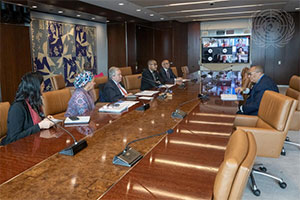 Secretary-General Meets with Members of Debt Expert Group. Credit: UN Photo/Eskinder Debeb
Financial crises are often defined by banking panics, recession, loss of market value, and deflation. Various financial crises at the turn of the 20th century, such as the Asian Crisis of 1997-1998 and the 2007-2008 Global Financial Crisis, have had immense impacts on the world economy. The COVID-19 pandemic also caused a financial crisis when mass lockdowns triggered staggering unemployment rates, a stagnation of economic growth, and led to the 2020 stock market crash. With the Russian invasion of Ukraine, the world has also witnessed a global energy crisis with shortages and increased prices in oil, gas, and electricity markets. According to UNCTAD’s World of Debt 2025, global public debt surpassed $100 trillion in 2024, with developing country debt growing twice as fast as developed economies since 2010. Burdens of debt servicing come with economic slowdowns and demands of austerity from lenders, with some economists arguing that this will lead to a new “lost decade” for the Global South. IPS brings you worldwide coverage of these financial developments and how we should manage these crises.

The Week with IPS

NEXT STOP - SDGs
Tracking global progress towards a sustainable world
Tracking global progress towards a sustainable world
